
Pakistan’s double game? Iran may have copied Saddam Hussein’s 1991 war move with Islamabad’s help
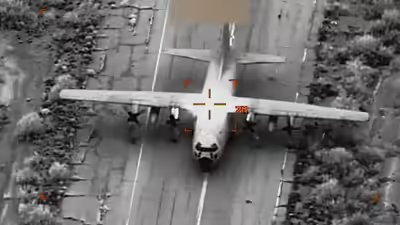
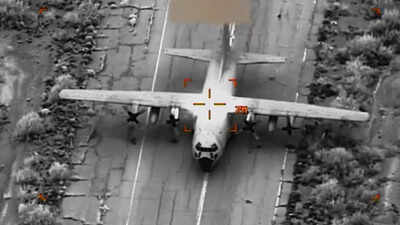
NEW DELHI: Fresh questions have emerged over Pakistan‘s role in the ongoing US-Iran conflict after allegations surfaced that Tehran moved military aircraft to Pakistani airbases to shield them from American strikes. The tactic mirrors one Saddam Hussein used during the First Gulf War.The question was raised after a post by US Senator Lindsey Graham suggested that Pakistan may have hosted Iranian military aircraft following the US-Israeli air campaign against Iran. The allegation has renewed scrutiny over Islamabad’s dual role as both mediator and possible logistical facilitator during the conflict.Pakistan later acknowledged that Iranian military aircraft were present on its soil but rejected reports that they were moved to avoid US strikes. In a statement on Tuesday, Islamabad said the aircraft arrived during the ceasefire period after initial peace talks and that their presence had “no linkage whatsoever to any military contingency or preservation arrangement.”According to Pakistan’s foreign office, aircraft from both Iran and the United States landed in the country after the ceasefire to facilitate diplomatic personnel, security teams and administrative staff linked to talks held in Islamabad on April 11 and 12. It added that some aircraft remained because future rounds of negotiations were expected, but never materialised.The clarification followed a CBS News report claiming that multiple Iranian aircraft, including an Iranian air force RC-130 reconnaissance aircraft, flew to the Nur Khan Airbase near Rawalpindi, close to the Pakistan army headquarters, days after US President Donald Trump announced a ceasefire in early April. The report prompted Graham to call for a “complete re-evaluation” of Pakistan’s role as a mediator in the conflict.
A historical precedent from the Gulf War
If the allegation that Iran moved aircraft to Pakistan proves true, it would echo a striking wartime precedent from 1991.During the Gulf War, as a US-led coalition launched Operation Desert Storm against Iraq, Saddam Hussein ordered a significant portion of the Iraqi air force to be flown to Iran to prevent destruction on the ground.Iraq was then facing a 42-country coalition that had overwhelming air superiority and had begun systematically destroying Iraqi military infrastructure.At the time, Iraq possessed one of the world’s largest militaries, built up during the eight-year Iran-Iraq war. As coalition airstrikes intensified, Baghdad transferred 115 military aircraft to Iran, according to archival accounts cited by the Wilson Center.The aircraft included advanced fighters and bombers such as Mirage F-1s, Sukhoi-24s, Sukhoi-22s, MiG-23s and MiG-29s — enough to equip a small national air force.The move was seen as an attempt to preserve Iraq’s remaining air capability after coalition strikes had crippled its air force and air defence systems.However, the strategy backfired diplomatically. After the war ended, Iran returned only a fraction of the aircraft to Iraq, keeping most as compensation for damages suffered during the Iran-Iraq war. The issue remained a point of contention between Baghdad and Tehran for years.
Why Iran may be following the same tactic
The current allegation comes as Iran’s air force appears to have suffered severe attrition during the recent US-Israeli campaign. American and Israeli officials have claimed to have destroyed key Iranian air assets, while Israeli military footage has purportedly shown the destruction of an advanced Iranian trainer aircraft by an F-35.With Tehran unable to effectively contest allied air dominance, relocating valuable aircraft outside its territory would be a logical wartime contingency, particularly if the goal is to preserve strategic assets for the post-conflict period.Pakistan, however, insists the presence of Iranian aircraft was tied solely to diplomatic logistics during ceasefire talks and not to military asset protection. It also pointed out that senior-level diplomatic exchanges with Iran continued after formal talks stalled, including visits by Iranian foreign minister Abbas Araghchi, which required existing logistical arrangements to remain in place.Whether the aircraft were there for diplomacy or for preservation, the optics are politically sensitive. Islamabad had positioned itself as a mediator between Washington and Tehran.If it is perceived as simultaneously providing operational sanctuary to Iranian military assets, that role could come under greater international scrutiny.