Oil tankers and naval warships are the new targets as the US-Iran war enters a dangerous phase
More than six months since the launch of pre-emptive strikes by Israel and the US into Iran on 28th February, the war in Iran is entering a dangerous and unpredictable phase. The expectation was that the ‘Operation Economic Outcast’ launched by the US against Iran on 24th August, aimed at choking it economically, would signal an end to the kinetic war, at least for some time. However, the signals coming out of the region point to the contrary. While the key point of contention remains the Strait of Hormuz (its opening/blockade) and the ability of both Iran and the US to bypass the blockade, the means to contest it have changed dramatically over the past few days. What was till now a conflict based primarily on US airstrikes countered by Iranian missiles and drone attacks on American military infrastructure in the region is now rapidly becoming a confrontation involving warships, oil tankers, and military bases in the world’s most important energy shipping corridor.And in the latest of the series of such developments, on 9th September, Iran claimed that it fired anti-ship ballistic missiles on two U.S. Navy Arleigh Burke-class destroyers — USS Delbert D. Black and USS John Paul Jones, claiming a successful hit and significant damage to both warships. Iran also claimed to have successfully targeted eight oil tankers and 10 vessels that it accused of attempting to cross a “prohibited and unsafe” zone in the Strait of Hormuz. On land, Iran claimed that its missiles successfully targeted American fighter aircraft maintenance and storage facilities in Jordan. While the US CENTCOM HQ immediately dismissed the claim of a successful hit, it did acknowledge that Iran had fired missiles onto US warships. CENTCOM, in turn, claimed that it destroyed five Iranian oil tankers and even released video of the overnight strikes.These strikes on oil tankers and US warships signal a new phase in this protracted war. The question is whether this too will soon be replaced by another new faceoff, or will it lead to another deadly phase of death and destruction across the region. To better comprehend its context, a brief insight into how it started may be helpful.
The current faceoff
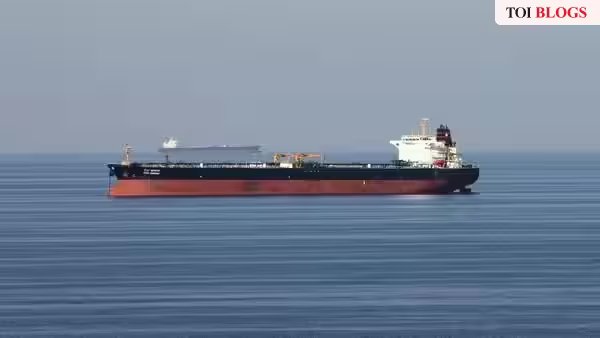
The current tit-for-tat strikes on tankers started on 1st September when two super-tankers carrying Saudi oil were struck by unknown projectiles within minutes while transiting outbound through the Strait of Hormuz, under US naval and air escort. The US retaliated by targeting Iranian missile batteries along the southern coast and, in doing so, one missile shrapnel reportedly struck a wedding ceremony in the coastal township of Kuhestak, located in Sirik county, in which 67 people were injured and four killed, including two children, as reported by the Iranian Red Crescent Society (IRCS). JD Vance, US Vice President, reacting to the report, called it sceptical but promised to have it investigated. Recalling the US missile strike on the first day of the war, in which 165 schoolgirls were killed in Minab, Iran called this current strike a war crime and launched a massive missile strike into US bases in Jordan, Kuwait, Iraq and Bahrain. Primary among the targets was Camp Titin, a primary US Marine Corps operating facility in southern Jordan, which was targeted for the first time. Despite claims of intercepting most of the 12 missiles fired at the base, significant damage was reported at this base in Jordan. Elsewhere, in Iraq, the US base in Erbil was targeted, while in Bahrain, the logistics base and storage facilities of Headquarters of the Fifth Fleet bore the brunt of the strikes.Under what is being called as the new “tanker-for-tanker” policy of President Trump, on 2nd September, the US military struck two Iranian government oil tankers in the Persian Gulf. Three more were struck on 5th September. Iran, in turn, fired two missiles at two American warships, including the aircraft carrier, which were successfully intercepted. However, as per reports, the US naval warships repositioned themselves in the Oman Sea, well out of Iranian missile range. Confirming the strikes and counterstrikes, US Secretary of State Marco Rubio said, “Iran continues to try to hit US naval ships, and for every time they do that or try to do that, they’re going to lose tankers.”Continuing with the exchange of strikes, Iran has claimed that in addition to targeting two Naval destroyers, it has also struck Al-Azraq Air base in Jordan on the night of 8/9 September, a base where F-16, F-15 and F-35 fighter aircrafts are stored and maintained.In addition, the capture of a US uncrewed submarine on 8th September is being flaunted as a prize catch by Iran. The captured vessel is a 19-foot-long Dive-LD autonomous underwater vehicle which can operate for up to 10 days without returning to base and is designed to dive to depths of 6,000 metres to carry out missions including mine countermeasures, seabed mapping, intelligence gathering and the inspection of underwater cables and pipelines.
A continuously reinforcing cycle of violence
The US has justified its strikes as retaliation for Iranian strikes on Saudi tankers and argued that any Iranian oil tanker slipping through the blockade will fuel its war economy and will defeat the purpose of Operation ‘Economic Blockade’. Iran, on its part, cannot afford to dilute its hold on the Strait of Hormuz, as it is the only leverage in the war right now. Plus, the targeting of a wedding event has obviously crossed a red line once again.This situation is creating a self-reinforcing cycle. Every time Iran attacks an American military target or an oil tanker escorted by an American military escort, the US responds by striking an Iranian economic asset. Iran then retaliates against US military bases or oil tankers, and now even warships. The US is forced to respond again, and Iran retaliates. Every round raises the stakes of the next one. The videos of US Black Hawk helicopters being evacuated by road from the Al-Salti military base in Jordan, probably damaged by Iranian missiles and the American retaliatory strikes in coastal areas of Sirik and Qeshm in the early hours of 10th September, confirm this dangerous trend.Three big differences are, however, being observed in the past two weeks. First, Iran is retaliating faster than earlier times and, in fact, in some cases even while the US strikes are on. Second, Iran has now adopted a strategy of proactive defence wherein it is no longer waiting for the US to strike but has struck US bases in Jordan, Kuwait and Bahrain pre-emptively. Third, the number of missiles escaping the US air defence is increasing, indicating the depleting inventory of interceptors as well as the advanced technology of Iranian missiles. Plus, Israel has, like over the past two months, kept itself out of the conflict except in Lebanon, where, too, it has been careful not to cross Iran’s red lines of targeting Beirut, etc.The danger from the current escalation is not only the choice of targets but, once again, changing goalposts by either side. Soon after the US indicated its preference for a new objective to throttle Iran- by economic means- the revert back to military means indicates a lack of confidence in measures being imposed as well as a lack of clarity in defining goals and objectives. Iran, on its part, is playing a dangerous game of escalation by targeting US naval ships. Iran’s Supreme National Security Council Secretary, Mohsen Rezai, has said that “In the coming days, a restricted zone will be announced outside the Strait of Hormuz. This zone will begin from the line of the US Navy’s blockade and extend to areas in the Persian Gulf. Any ship that enters this new zone will be placed on the sanctions list.” Iran has also claimed that for every 203 tankers targeted by the US, it will target 20 ships in the region.
Conclusion
Iran is clearly escalating and has repeatedly signalled that it will not back down to growing US pressure. By rebuilding the ability to fire missiles from new and multiple locations, it is demonstrating the strength of Iran’s war machinery. The aim is clearly to inflict damage and not just project deterrence.On the other hand, the depleting number of missile interceptors makes US military bases an easy target for Iranian missiles. With the US mid-term elections nearing and gasoline prices in the US increasing sharply, Iran also seems to be looking at disrupting Trump’s election prospects too. With this in context, the US too cannot be seen to be weak, and therefore, it will be forced to retaliate forcefully. The Iranian attempt to target and damage a naval warship is a clear red line for the US, and any successful attempt by Iran may draw a massive retaliatory military action by the US. The current standoff is therefore dangerous and unpredictable.The Strait of Hormuz remains the key, and Iran cannot accept dilution of its control, at least without imposing huge costs on the US. The key question for the US is no longer whether or how Iran will respond to renewed escalation, but how far both sides are prepared to climb an escalation ladder that is rapidly climbing and which neither side appears capable of controlling.Will this phase result in further escalation where critical energy infrastructure, water desalination plants, undersea cables or data centres are targeted by either side, or will it end with another MoU or return to the 14-point MoU, is a big dilemma facing both the warring nations. Meanwhile, the price of crude oil is inching back to US$ 100 per barrel, traffic across the Strait of Hormuz remains paralysed, and the unending war of attrition continues.
Disclaimer: Views expressed above are the author’s own.