Not just venom, the surprising metals inside scorpions’ structure make their sting stronger |
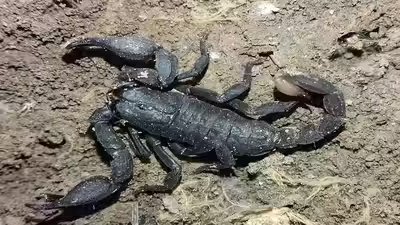
Scorpions are always judged for their venom. Their distinctive curved tails and stingers make these species among the most recognisable predators in the animal world. For years, researchers have focused on the chemical properties of scorpion venoms. However, new studies demonstrate that the power of scorpions goes beyond the properties of their poisons.According to a paper published in the Journal of the Royal Society Interface, a scorpion reinforces its claws and stingers with different metals such as zinc, iron, manganese, and calcium. The location of those metals is precisely chosen by nature to strengthen the parts of its body.Surprisingly, it appears that scorpions have engineering skills, too.Metal hidden in the exoskeleton of scorpionsThe body shell of scorpions is covered with chitin, which is a compound found in insect and arthropod cuticles. Chitin is quite strong, yet elastic enough, making the bodies of the species more advanced. In high-stress areas, chitin becomes more sophisticated.It has been observed that metals have been incorporated into the scorpion’s structure throughout the developmental process. Such fortified structures are termed heavy-element biomaterials and exhibit ceramic-like properties compared to the biological tissues of scorpions.Lead author Sam Campbell stated that metal enrichment is a trait that’s passed down from parent to offspring in the scorpion family tree. Based on the study that focused on pinpointing where metal enrichment occurs and why it happens in certain places, it was noted that the metals help scorpions grip prey and strike precisely and powerfully.Two weapons for different tasksScorpions rely on two tools for killing and consumption. The claws, known scientifically as chelae, grab the prey and crush them to pieces, while their stingers, also called telson, are used for injecting venom. Both have different physical constraints.In this regard, scorpions make a trade-off in the allocation of metals between these two weapons. In other words, a high amount of metal concentration in one tool implies a low concentration of metals in another.In particular, zinc had a strong trade-off effect among the analysed metals. Scorpions with high levels of zinc in their claws tend to have low zinc in their stingers, and vice versa. It further proves the notion that evolution influences both behaviour and physical design.
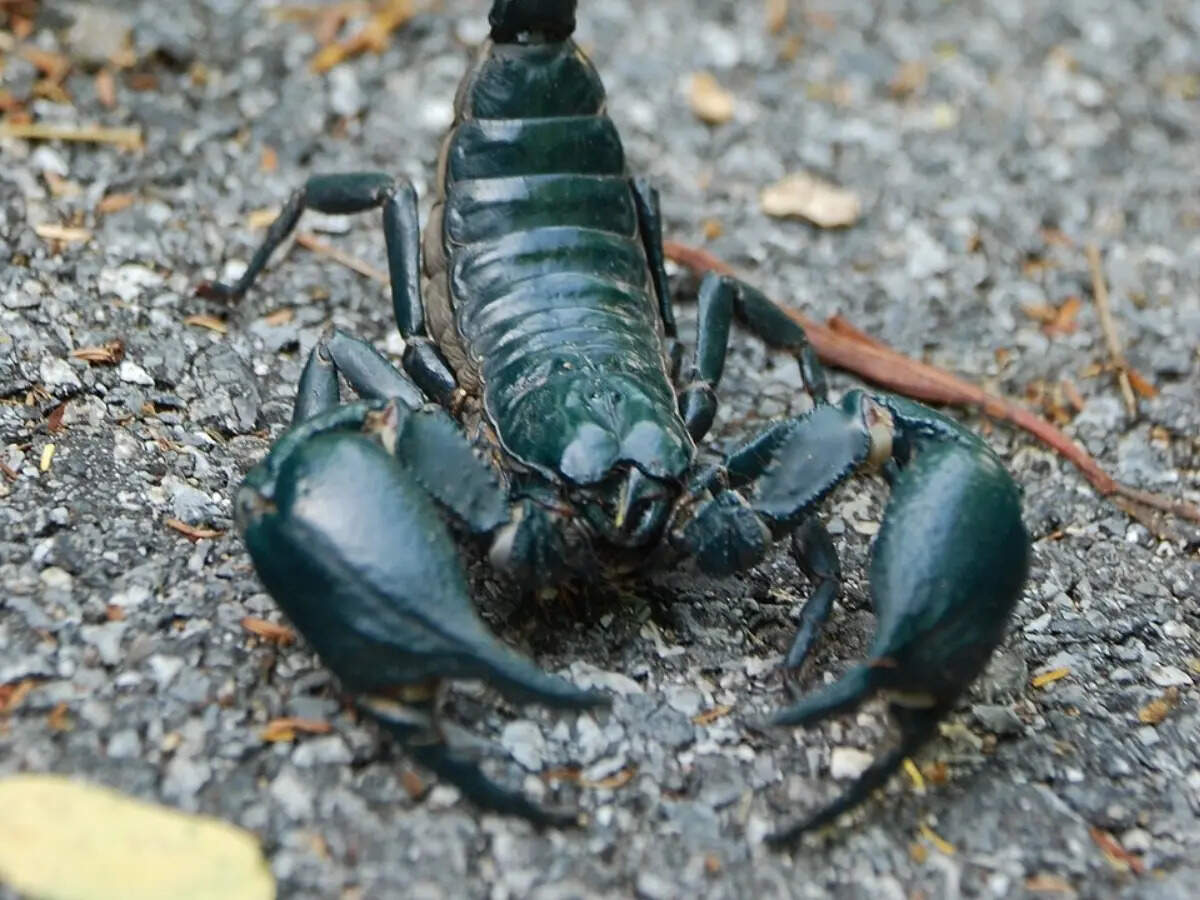
The hidden metal inside scorpions that they turn into natural weapons. Image credit – Wikimedia
Why are some claws made of more metal?Another curious discovery concerns the shape of claws. The thinner and less robust claws contain more zinc. In contrast, thick and strong claws contain less zinc.At first glance, the explanation seems counterintuitive, but it becomes apparent when you think about it. Thin claws require additional strengthening to withstand stress. Campbell noted that this suggests zinc may serve a purpose beyond adding hardness, perhaps contributing even more to strength.According to the findings, Zinc can increase the resistance of thin claws, ensuring that they remain intact when seizing prey.Striking discovery about the scorpion’s stingerWhen it comes to the stinger, there is an abundance of metals in the tip, where the scorpion penetrates its prey. However, at half of the stinger’s length, the amount of metal falls dramatically.It creates a transition from a hard to a soft component. What is more fascinating is that the majority of the broken stingers found in museums break precisely at that spot. Scientists speculate that this section may absorb shock waves when the stinger strikes its target.In another study, Edward Vicenzi from the Smithsonian’s Museum Conservation Institute explained that this discovery about the stringers would not be possible without advanced imaging techniques.Metals may aid venom delivery in scorpionsIt was also revealed that zinc was present on the walls of certain venom ducts within the stinger. It may also play an important chemical function alongside its structural one.Zinc is a vital component of enzymes found in many animal venoms. Since it is located near the venom path, it may help activate or stabilise the toxin during injection.Although further research is needed on this relationship, it is clear that the two processes complement each other.An extended evolution periodScorpions date back to more than 300 million years ago. In all this time, they have developed both venom and morphology to thrive in various conditions. The studies have also offered a novel means of measuring the metal content of scorpion stingers, the heavy-element biomaterial ratio.According to senior author Hannah Wood, the study provides some new avenues for future work. The researcher noted that the method provides insight into the mechanism of how metal enrichment occurs throughout the evolutionary tree.Many questions remainIt remains unclear as yet how scorpions obtain these metals. One possibility is diet. Environmental factors such as soil composition may also be involved.Additional uncertainties concern whether or how metal utilisation is influenced by age, environment, and predatory behaviour.Clearly, scorpions are not simple creatures. Not only are their sting mechanisms organic, but they are also sophisticated mechanical systems that utilise chemistry and evolution.