
Meet Bert Mueller, the American who moved to India in 2011 and turned a $250,000 investment into a $23 million Mexican food chain in Bengaluru; California Burrito now has 103 stores, with plans to reach 300 by 2030


When Bert Mueller first considered bringing Mexican-inspired cuisine to India, the options were limited. Now, more than a decade later, the American entrepreneur has built California Burrito into a business generating $23 million in annual revenue, proving that an idea born out of curiosity can grow into a substantial enterprise.Mueller, who grew up in Silver Spring, Maryland, moved to India in December 2011. What began as a decision to explore a country vastly different from his own eventually led him to launch California Burrito in October 2012, with an initial investment of $250,000 raised from friends and family.According to CNBC Make It, the 35-year-old entrepreneur now lives in Bengaluru, where his business has expanded to 103 stores. The journey, however, involved much more than opening restaurants. It required understanding Indian consumers, adapting to local conditions and building a supply chain that could deliver the flavours he wanted.
From a study-abroad experience to building a business in India
Mueller’s connection with India began during his college years at the College of William & Mary in Virginia, where he double-majored in music and public policy. When he had the opportunity to study abroad, he wanted to explore somewhere different from the destinations many of his peers were choosing.“I’m a bit of a contrarian, and I wanted to go somewhere that was radically different than the US. So I decided that India was the place to be,” he said.His first visit proved to be a transformative experience. While some students on the programme struggled with the food and adjusting to a different environment, Mueller found himself comfortable navigating the country.An experience during that trip also planted the seed for his future business. He recalled visiting the home of a friend of Mexican origin who was preparing food for the family she was staying with. Seeing the family enjoy the meal made him consider whether Mexican-inspired cuisine could find an audience in India.“As soon as I saw that, I thought, you know, that maybe this was something I could do. I could bring Mexican inspired cuisine to India,” he said.
How a $250,000 investment became a $23 million business
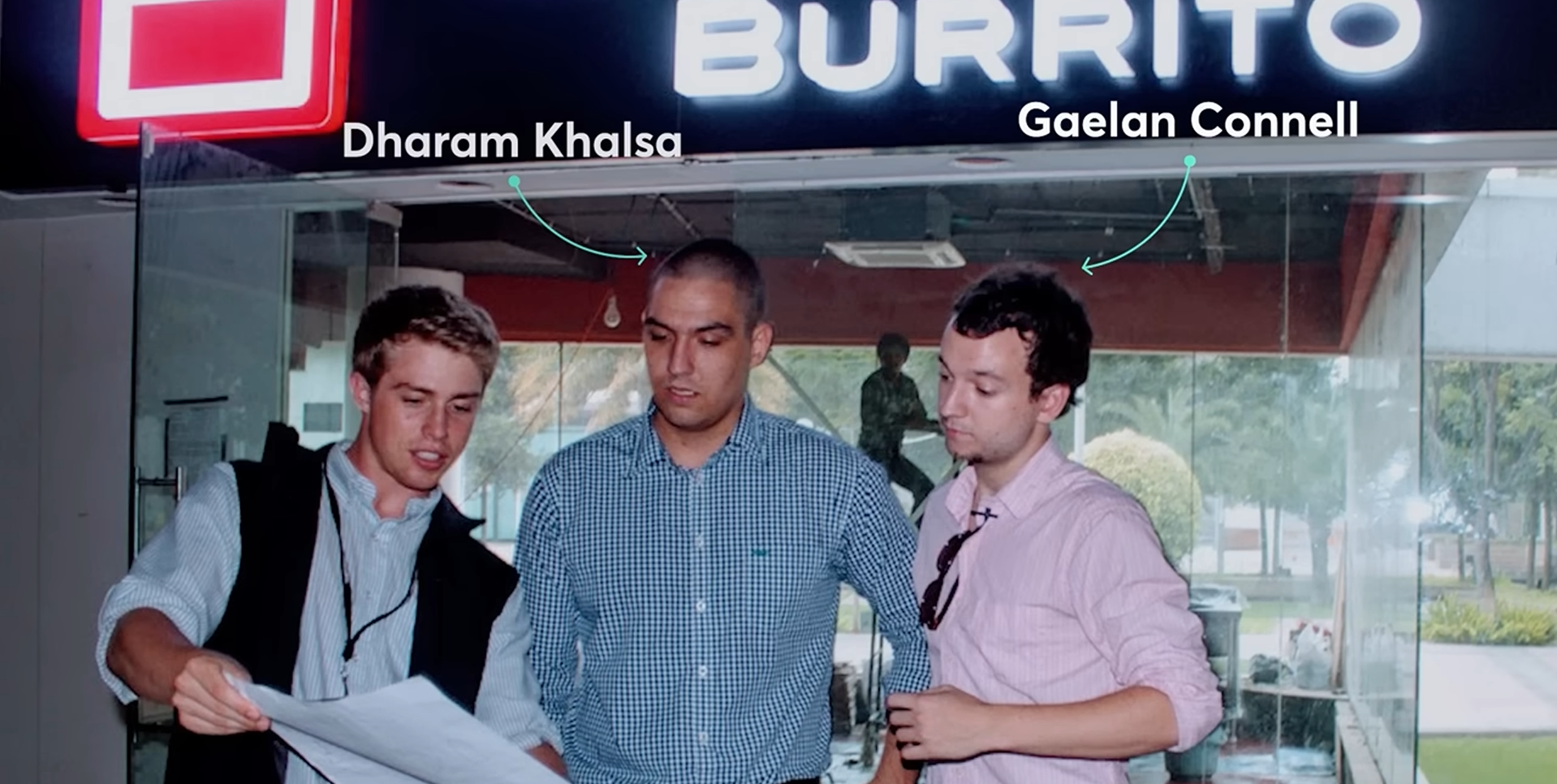
California Burrito has expanded to 103 stores since opening its first outlet in 2012. (Photo: CNBC Make It)
When Mueller began exploring the idea, he found few established options in the Mexican-inspired restaurant segment. He recalled that Taco Bell was the main name he could identify when he first considered the opportunity.“We started out in India was very challenging, but I never doubted that I had made the right decision,” he said.Mueller initially estimated that he would need around $100,000 to open the first outlet. He eventually raised $250,000 from friends and family, with two childhood friends joining him in the venture.California Burrito opened its first store in October 2012, and the outlet performed well. The business gradually expanded, taking more than 12 years to grow from one restaurant to 103 stores.The financial journey has been significant. Mueller said the business generated approximately $500,000 in its first financial year. Last year, revenue reached $23 million, equivalent to around ₹195 crore at an exchange rate of ₹85 to the dollar.For Mueller, the growth reflects the opportunity he saw in a market where Mexican-inspired food was still relatively unfamiliar to many consumers.
Building a supply chain to get the flavours right
Expanding the business meant solving a challenge that went beyond opening new outlets: sourcing ingredients that could deliver the taste Mueller associated with Mexican and Californian cuisine.He explained that Indian tomatoes, onions and beans can differ considerably in flavour from those available in the United States. Developing a reliable supply chain, therefore, became an important part of building the brand.“Over the past 13 years, we’ve worked hard to make the food taste like you would get it in California, or taste like you get it in Mexico,” he said.In 2018, the company imported around 500 Hass avocado trees from California and planted them to support its ingredient requirements. The effort faced an unexpected setback when elephants entered the farm and trampled around 60 trees.The experience highlighted the practical difficulties of building an agricultural supply chain in India. Nevertheless, Mueller continued working towards a food offering that could appeal to Indian customers while retaining a distinct flavour profile.He said the challenge was to create food that was approachable for Indian consumers without losing the characteristics that set Mexican-inspired cuisine apart.
The business behind the $23 million revenue
Mueller also offered a glimpse into California Burrito’s cost structure. According to his breakdown, food and packaging account for approximately 37% of revenue, while labour contributes around 12%.Real estate accounts for about 9%, marketing approximately 4% and corporate overhead around 5%. Other operating expenses make up the remaining costs.Mueller estimated that the business operates at a bottom-line margin of around 10%. This provides an indication of how the company manages its expenses while operating a network of more than 100 stores.The next stage of expansion is already on the horizon. Mueller said the company aims to reach 300 stores by 2030. At that point, it would potentially consider listing the business through an initial public offering (IPO) in India.The proposed expansion would mark another major milestone for a company that began with a single outlet and funding from the founder’s personal network.
Learning to live with India’s unpredictability
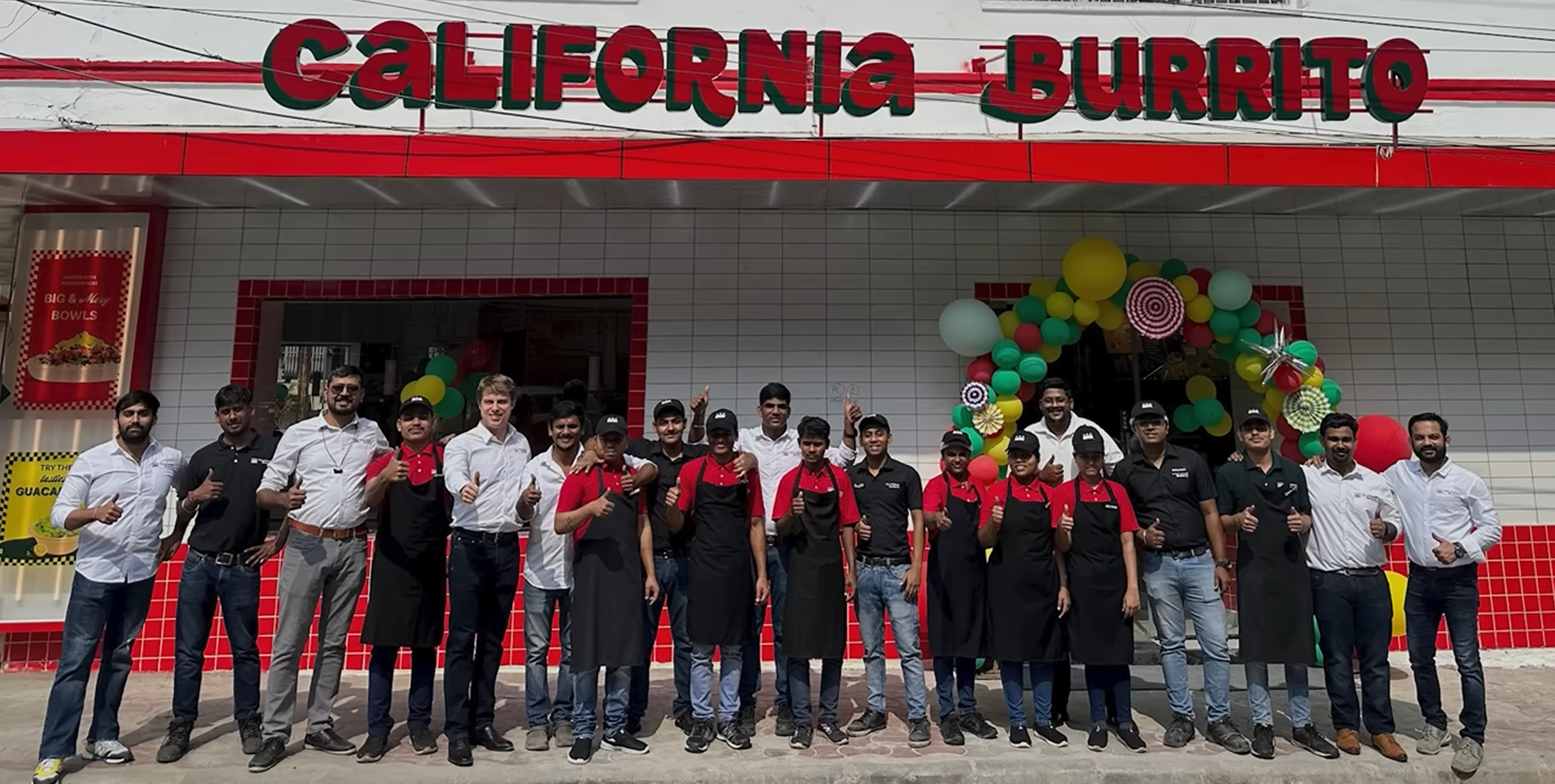
Bert Mueller turned a $250,000 investment into a business generating $23 million in annual revenue. (Photo: CNBC Make It)
Building a business has also meant adapting to life in India. Mueller acknowledged that the country can be challenging for newcomers, particularly when it comes to getting things done and navigating everyday unpredictability.“Coming to India to do business is a big learning curve. First, India is a learning curve. Then business in India is a further learning curve,” he said.For him, patience has become an essential part of the experience.“Usually, you know, they say fortune favours the bold. I would say India favours the patient,” he said.Mueller also believes that India’s unpredictability is part of what makes living there appealing.“If you find monotony dull, if you find comfort boring, then India is a perfect place to be. Nothing is predictable,” he said. “Every day is different.”He has also experienced some of the health challenges associated with living in a different environment. After spending around 13 years without major health problems, he contracted dengue in August and typhoid the following January.Despite the challenges, he said India has helped him grow as a person and that he remains happy with his decision to move.
A home away from home
Mueller’s life in Bengaluru reflects his effort to make India home. He lives in a three-bedroom duplex apartment that costs him around $1,200 a month. Several pieces of furniture have been passed down from his grandparents, giving the space a familiar connection to his family history in the United States.He also maintains a small garden and patio, where he enjoys his morning coffee beneath an avocado tree.Away from the business, Mueller describes himself as frugal. He estimated that he spends between $150 and $200 a month on groceries, with eating out adding another $200 on average, and potentially more during busier months.These everyday details offer a glimpse into the life he has built over the past decade and a half, balancing entrepreneurship with a lifestyle that feels familiar despite the geographical distance from his childhood home.
‘A wonderful place to be’
For Mueller, the appeal of India extends beyond the business opportunities. He sees himself as part of a larger period of economic and social transformation, one that has allowed him to witness changes in people’s lives firsthand.“India is on a growth story that other countries have already gone through, and to be able to witness the transformation and change that people’s lives are experiencing is really powerful,” he said.His journey from an American college student exploring a different culture to the founder of a 103-store restaurant chain has been shaped by his willingness to adapt, experiment and build a business around an emerging opportunity.“I think India’s stretched me as a person, and it’s really a wonderful place to be. I’m very happy living here,” he said.With California Burrito targeting 300 stores by 2030 and a possible IPO on the horizon, Mueller’s India story is far from over.


