
Meet B.K. Mitra: The forgotten artist who painted Hindu gods for generations of readers

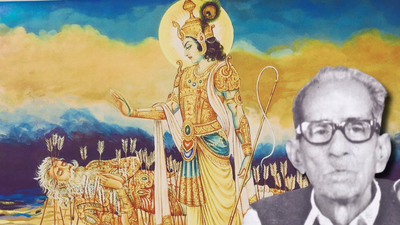
Before religious images could be created digitally, artists relied on paper, paint and painstaking handwork to give visual form to stories from the Ramayana, Mahabharata and Hindu scriptures. Among those artists was B.K. Mitra, or Binay Kumar Mitra, whose paintings became closely associated with the religious books and publications of Gita Press.For decades, his images appeared in Gita Press books and magazines, giving readers familiar visual representations of Hindu gods and mythological episodes. Yet the name behind many of those paintings remains little known outside art and religious publishing circles.According to Dainik Jagran and some media reports, Mitra created around 4,500 paintings based on episodes from the Ramayana and Mahabharata during his more than four-decade association with Gita Press.
From drawing on walls with charcoal to painting for Gita Press
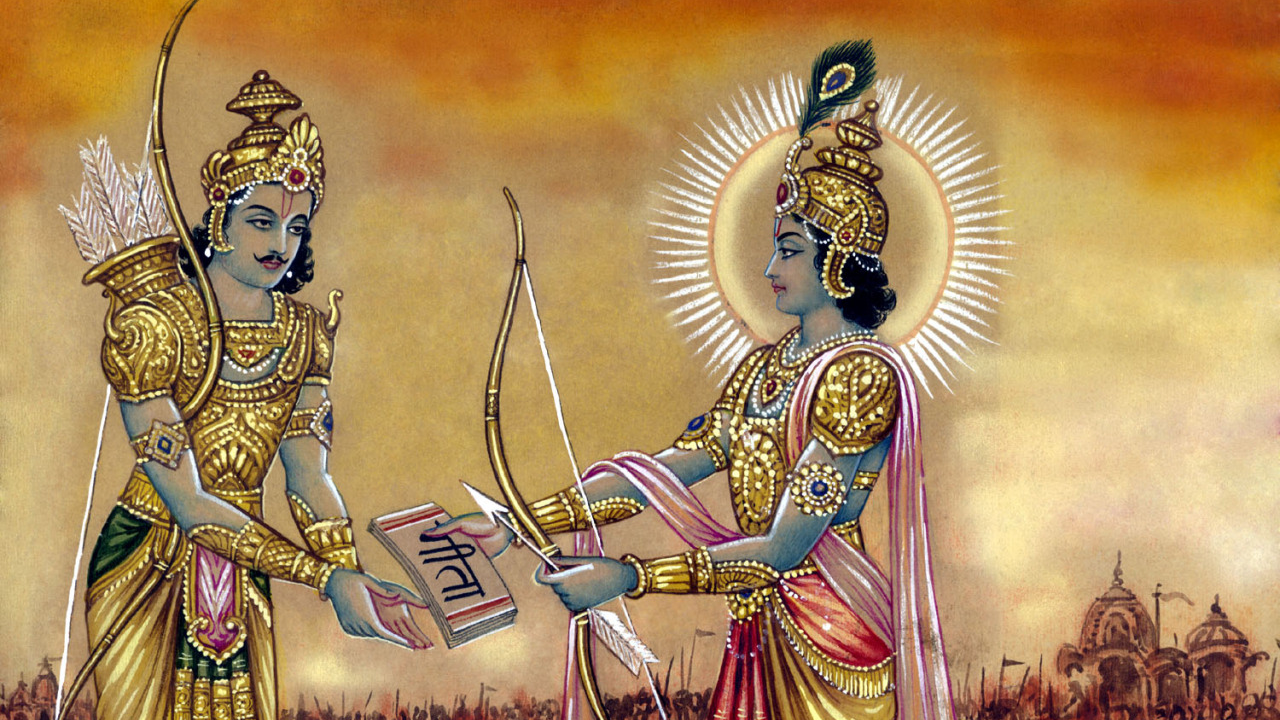
Krishna giving Message to Arjuna. Artist: B.K. Mitra. (via Twitter: Gita Press, Gorakhpur, India)
Mitra was born in Banaras, where his father, Akshay Kumar Mitra, worked as the private secretary to the Kashi Naresh. He was the youngest of five brothers. His interest in drawing developed early. Two of his elder brothers, Upendra and Tejendra, were also artists. Upendra, in particular, influenced him because he made religious paintings. Mitra, however, did not begin with an art studio or expensive supplies. As a child, he often drew on neighbours’ walls using pieces of charcoal because he did not have access to proper paper, pencils or colours.The drawings were not always welcomed. He was frequently scolded for drawing on walls. But he continued to practise. His first known paid commission came from one of those neighbours. According to a Dainik Jagran report, a neighbour who was arranging his daughter’s wedding asked Mitra to draw a banana tree and Lord Ganesha at the entrance of the house. Mitra completed the work and was paid three rupees. The money was important to the young artist. He used his first earnings to buy paper, pencils and an eraser. From then on, he gradually moved his work from walls to paper. He began making drawings for auspicious occasions and used the money he earned to buy more art materials. Mitra did not have a formal guru during this early period.
A meeting that changed his career
Mitra’s path to religious publishing began in 1925. Prabhudutt Brahmachari, a religious figure associated with the Jhunsi Ashram near Allahabad, visited Banaras and noticed Mitra’s artistic ability. Impressed by his work, Brahmachari took him to the ashram, where Mitra began making religious paintings. It was at the Jhunsi Ashram that Mitra met Hanuman Prasad Poddar, popularly known as ‘Bhaiji.’Poddar was closely associated with Gita Press and was the editor of its influential religious magazine ‘Kalyan.’ He was looking for an artist who could create illustrations for the publication. According to Dainik Jagran, Poddar saw Mitra’s work during his visit to the ashram and asked Brahmachari if Mitra could join him. After receiving permission, Poddar brought Mitra to Gorakhpur. The partnership became a defining chapter in Mitra’s career.
More than 4,500 paintings for religious publications
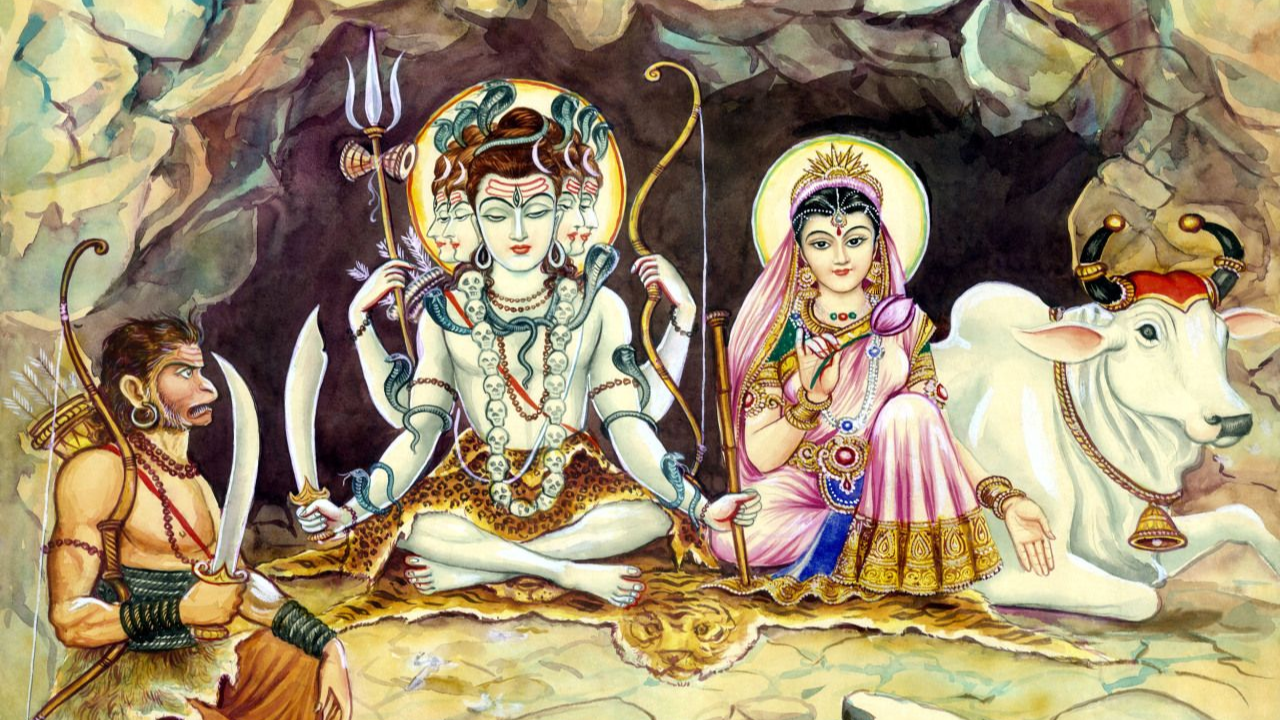
Mitra spent more than four decades associated with Gita Press.
Mitra spent more than four decades associated with Gita Press. During this period, he worked on paintings depicting episodes from Hindu religious traditions, particularly the Ramayana and Mahabharata. According to Dainik Jagran, Mamta Srivastava, a lecturer in fine arts at Digvijaynath L.T. College in Gorakhpur, said Mitra created approximately 4,500 paintings based on religious episodes during his association with Gita Press.His work was not limited to individual illustrations. His paintings became part of the visual identity through which generations of readers encountered religious stories in printed form. Some of his paintings can still be seen at Gita Press’s Leela Bhawan in Gorakhpur.
His work continued through his students
Mitra also left behind a line of students who continued working in the same tradition. Artists including Jagannath and Bhagwan were among his disciples and helped carry forward the artistic tradition at Gita Press. His contribution therefore went beyond the thousands of individual paintings he produced.
Why B.K. Mitra remains largely unknown
The paintings became widely circulated, but the artist’s name did not become equally familiar. For many readers, the images in religious books were simply part of the publication. The illustrator often remained in the background while the artwork itself became familiar across generations. Mitra’s story is unusual for another reason. He began by drawing with charcoal on other people’s walls and eventually became one of the artists whose work reached readers through one of India’s best-known religious publishing houses.


