Marvel: ‘Spider-Man: Brand New Day’ rebuilt the web. Can Robert Downey Jr get everyone back into the Church of Marvel? |
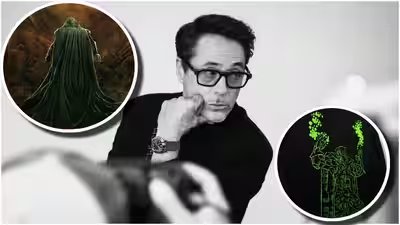
Note: The following post contains spoilers about various Marvel movies, including Spider-Man: Brand New Day.The spider plays a pivotal role in the mythos of human redemption. The legend goes that Robert the Bruce, the King of Scots, was ready to throw in the towel after losing repeatedly at the hands of the English. Alone in a cave, he saw a spider failing to weave a single line of silk. It failed five times before succeeding on the sixth attempt and building a web. In this particular anecdote, the spider’s triumph over adversity inspired Bruce to follow the maxim “if at first you don’t succeed, try, try, try again”, and he went on to defeat the English at the Battle of Bannockburn in 1314.The parable of Spider-Man in the superhero industry is a little different from Bruce’s spider. If the Scottish king was inspired by the spider to grab an opportunity, Spider-Man’s acquisition by Marvel – while discarding other characters – would become the leitmotif of missed opportunities. But then again, who needs a ‘spider’ when you have a Robert: not Bruce but, in this case, Robert Downey Jr.If everyone today worships at the Church of Marvel – a congregation that dwarfs many organised religions or political movements by its sheer vastness and size – it’s because of Robert Downey Jr’s iconic portrayal of a half-forgotten hero created during the height of the counterculture movement during the Vietnam War.But how did we get here?The Marvel origin storyLike all comic-book stories, this too has a remarkable origin story.In the 1980s, the comic industry was booming in America. But there were those who recognised that a bust was in the offing. One such naysayer was Sandman writer Neil Gaiman, who warned that the comic industry would face a tulip-style bubble burst. His Cassandra-like prediction came to pass: comic sales crashed and Marvel Comics itself was on the verge of collapse after corporate debacles.In 1998, a broke Marvel, emerging from bankruptcy, was in serious need of moolah and proposed selling Sony the rights to all its characters, including Iron Man, Thor, Ant-Man and others, for a paltry $25 million. Sony refused because, and the phrase lives in infamy, “no one gave s*** about anybody other than Spider-Man”.A deal was made with Sony to the tune of $10 million per Spider-Man film, and the first Spider-Man, featuring Tobey Maguire, was released in 2002 and did reasonably well.Blade ended up with New Line Cinema. X-Men and the Fantastic Four ended up with 20th Century Fox. But none of them filled Marvel Studios’ coffers, and the company was chafing at the thought of others making money from its top characters.
The miracle of Mar-a-Lago
Then a miracle occurred at Mar-a-Lago, long before Donald Trump contemplated becoming the leader of the free world, where the idea of the Marvel Cinematic Universe was born. Trump even made an appearance during the meeting, which could make it Marvel’s first unofficial post-credits cameo, but he was keener on discussing his upcoming show The Apprentice instead.In 2003, a talent-agency executive named David Maisel met Marvel owner Ike Perlmutter at a lunch arranged by his business partner, Avi Arad, with a simple idea: why not produce the movies under your banner, keep them interconnected and do it without risking Marvel’s cash? This was a time when Captain America was on his way to Warner Bros and Thor to Sony. Somehow, Maisel managed to get Marvel to pause those negotiations, stop leasing out characters and regain those it had lost: Iron Man, Black Widow, Thor and Hulk.The 2005 financing deal with Merrill Lynch allowed Marvel to make its first few movies, and in 2009, Maisel approached Disney chief Bob Iger about buying Marvel. Disney eventually paid $4.3 billion, which looks like pocket change now. Kevin Feige, whom Maisel had made head of production, would eventually gain greater autonomy. Avi Arad even boasted that it was “a cheap price”.
Marvel Man
So, Iron Man became Marvel’s first independent production, and even then, the Marvel board was sceptical as Maisel bet the future of the company on a former drug addict, Robert Downey Jr, whose starry days were far behind him, and a director of comedies, Jon Favreau.Instead, it became, to quote the guys from the Honest Trailers franchise on YouTube, a formula for printing money: “Take a half-forgotten B-list actor, make him play a half-forgotten B-list hero, fight a generic villain, fall in love with a generically strong female character, make a bunch of quips, shoot a blue beam, cram Stan Lee in there somewhere….”Perhaps it was Robert Downey Jr’s charisma that made Iron Man such a hit, given the fact that the character was created as a sort of dare by Stan Lee and Co during the height of the Vietnam War: a capitalist warmonger who stood for everything wrong about America amid the counterculture movement.It’s a dichotomy that appeared very hard to capture, but it was a role Downey Jr was born to play. He created the modern Jungian archetype of the superhero with his sculpted goatee and Scotch on the rocks as he sat in a Humvee blasting AC/DC’s Back in Black from a CD player — remember those? — and told soldiers not to post images on MySpace. It was a breakout year for superhero movies, with Christopher Nolan’s The Dark Knight also hitting theatres. Nolan’s film will live long in the memory for Heath Ledger’s neurotic portrayal of the Joker. It was perhaps the better movie, but it was Iron Man that created the new modern-day movie studio.A lot has changed since then.The USA isn’t even in Afghanistan anymore, having handed the country over to the Taliban in 2021, and Donald Trump is now the 47th President of the USA in a protracted post-credits cameo that has gone on too long for the world’s liking. No one has CDs anymore, and Christopher Nolan, after one more Batman movie, moved on to movies about dreams, space, atomic bombs and ancient Greece.But Marvel Studios’ success has changed the film industry as we know it, with actors now locked into contracts lasting multiple films, reminiscent of the old studio system that existed in Hollywood, Shakespearean actors making meaningless cameos and an entire industry of content creation based on guessing what Marvel will do next.Today, the world consists mostly of Marvel acolytes and a few heretics like Martin Scorsese or Quentin Tarantino.But most can no longer resist Marvel’s advances.There was no Huntington-style clash of civilisations. The Church of Marvel attracted worshippers from every organised and non-organised religion: Abrahamic or non-Abrahamic, crypto-Communist or capitalist, pagan or otherwise. Fans of the world united to make the MCU the biggest franchise of all time, whose universal grammar was accessible to everyone across the world irrespective of their race, gender or economic status. From a poor kid in sub-Saharan Africa to an electrician in India to a matador in Spain, all worshipped at the altar of the Church of Marvel and the Gospel of the MCU.Every sentence sparks a particular memory.“I love you 3000.”“I am Groot.”“Doth mother know you weareth her drapes?”“I can do this all day.”“Genius. Billionaire. Playboy. Philanthropist.”And perhaps the greatest of them all: “On your left.”From 2008 to 2019, the MCU entered the global lexicon, becoming the lingua franca of the world and creating movies of varying genres, from family feuds (Thor), world-war nostalgia and spy thrillers (Captain America) and Afrofuturism (Black Panther) to space opera (Guardians of the Galaxy).It reintroduced old classics. Black Sabbath’s Iron Man would now be as linked to Tony Stark as it would to Ozzy Osbourne. Thor’s face had us playing Led Zeppelin’s Immigrant Song in our heads. Guardians of the Galaxy introduced a host of classic tunes to a younger generation. AC/DC was cool again thanks to the Iron Man movies. The Ramones’ Blitzkrieg Bop became known as the Spider-Man song.At some point, it seemed like Marvel started casting on a dare.Remember the fat guy from The Office? He will be Star-Lord, and you will love him. Like Vin Diesel? He will play a tree that says only one line. Bradley Cooper? He will be a raccoon and still have the emotional arc of the entire movie.As Christopher Markus, one of the writers of Avengers: Endgame, told The New Yorker: “The expression ‘preach to the choir’ often implies a certain niche-ness. There was a very gratifying, unduplicatable sense with that movie that the choir was nearly global.”And it seemed all hunky-dory when the entire Avengers assembled against Thanos’ army in the portals scene that is perhaps still the greatest scene ever witnessed on a big screen.But then it all began to fall apart.
Not so Marvellous
Avengers: Endgame was both Marvel’s greatest triumph and the end of the story that had held the universe together. Tony Stark was dead. Steve Rogers was now a family man. The Infinity Saga was done, with Marvel managing to give us something no global franchise ever had before: a satisfying conclusion to a global fan phenomenon.So, what next?Marvel’s solution was more Marvel, and between 2021 and 2023, the studio released 10 films and 13 shows. Watching the films was no longer enough to know what was going on. One now had to watch the television shows, keep track of alternative timelines, parallel universes and characters who had appeared in post-credits scenes.For example, anyone who watched Endgame will remember Wanda grieving over Vision, so it was rather odd when, in Doctor Strange in the Multiverse of Madness, she had gone full Scarlet Witch and was tearing the multiverse down.It became homework instead of a linear storyline, and people’s brains started losing focus the moment someone said multiverse. We hit the bottom of the barrel with Eternals and The Marvels.The magic of the continuity disappeared amid too many threads. The Marvels managed a paltry $206 million against a $270 million budget, becoming the lowest-grossing MCU movie and falling even below The Incredible Hulk. Thunderbolts tried hard to convince us that we had the new Avengers even though they could hardly hold a wall up between themselves, let alone a movie. Despite all the hype, The Fantastic Four: First Steps continued the Fantastic Four curse of being unable to make a decent film about Marvel’s first family.Disney’s chief finally admitted what was obvious upon casting a cold eye: quantity had “diluted quality”, and Marvel had “suffered greatly” from it.The Church was bleeding worshippers, with the faithful facing a Nietzsche-like conundrum: was God (the superhero movie) finally dead?The problem became bigger after Marvel tried to make Kang the new villain of the Multiverse Saga, only for him to be removed after his personal life became too problematic. Kevin Feige finally admitted what was evident to all schoolchildren: Kang wasn’t Thanos. And then Marvel did the only thing it thought would work: break the glass window to get Robert Downey Jr back, not as Tony Stark but as Victor von Doom. The movie would be directed by the Russo brothers, who had given Marvel its best tales, and the Doomsday cast would include old favourites like Steve Rogers, Thor, Loki and Ant-Man, as well as the original Fox X-Men, bringing in thespians like Patrick Stewart, Ian McKellen and company.
The Spider-Man appeal
But if the question remained whether Marvel was still, to borrow a line from Thor, “worthy”, there would need to be some proof in the pudding. Would audiences again line up to see their favourite superheroes, or was the fatigue real?Spider-Man: Brand New Day has shown that the spirit and flesh are both willing. It earned $360 million during its North American opening weekend, surpassing Endgame, while its $927 million global opening was second only to Endgame. It crossed $1 billion in six days and is on its way to becoming the second-biggest superhero movie since Endgame.Some of it is down to Spider-Man and his relatability. Peter Parker doesn’t have a billionaire funding him; he has to worry about rent, New York traffic and girl trouble. He has to hold down an actual job. With great power comes even more responsibility for him. Also, Tom Holland makes a very relatable Peter Parker. Despite being in his 30s, he looks young enough to pass as a teenager or college kid. The mask helps because anyone can imagine being Spider-Man, which is perhaps why he even ends up in Mumbai during the rains or at student protests in Ranchi. That universal appeal has allowed the franchise to survive three actors – all of whom teamed up in the last movie – multiple reboots, the disastrous villain universe and the oddly divorce-like bureaucratic custody arrangement between Sony and Disney. Even when the Church of Marvel began losing followers, Spider-Man retained his congregation.What Brand New Day demonstrates is that superhero fatigue is neither universal nor irreversible. Audiences will still turn up for a character they love, provided the film gives them an emotional reason to do so. The answer was not another celestial threat, another geography lesson about the multiverse or another list of programmes to watch beforehand. It was Peter Parker, alone, forgotten and trying once again to work out who he was supposed to be. It was relatable, with all of us feeling the pain of a young man whose girlfriend and best friend no longer remembered him and whose contacts were either a police officer or a PTSD-suffering maniac who couldn’t stop murdering people.It also helped that Tom Holland, Jon Bernthal and Zendaya were in the other summer blockbuster about a man’s eternal quest to get home. The Hulk is also back in his full form, and Marvel has managed to introduce one of the most important X-Men into the universe: Jean Grey.The MCU began in a cave in Afghanistan as audiences fell in love with a damaged billionaire who would rather die than let anyone else have the last word. Brand New Day puts the characters back into the universe and then counts on you to come back for a giant congregation while bringing you old gods and new ones: the X-Men, the Fantastic Four, the Avengers and all the others. Spider-Man has rebuilt the web. Now it’s up to Robert Downey Jr to show that he can rebuild the Church of Marvel. He has done it as a protagonist, but can he do it as an antagonist too?