
India’s women-owned business map has a western tilt | India Business News
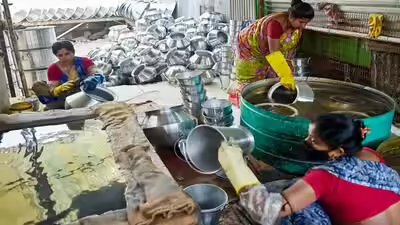
The green shoots of nari shakti are now visible in India’s labour and enterprise data. But ASUSE 2025 also tells a more uneven story that women-owned enterprises are not rising uniformly across urban India. Gujarat and Maharashtra cities dominate the top ranks in female-owned proprietary establishments, while several northern cities sit near the bottom.The Indian economy is often seen through its most visible symbols of manufacturing hubs, startup buzz, boardroom decks, IT parks and glossy promotional showreels. But the engine of 1.4 billion people is also powered by quieter hustlers, people working out of the back room of a house after the children have moved out, a tailoring corner carved out of a renovated attic, a snacks unit run from a garage, a stall in the local market, a beauty parlour that began with one chair and a mirror, a tiffin service whose first customers were neighbours.Many of these entrepreneurs are short of capital, but rarely short of hope or ideas. And increasingly, many of them are women. If Hindi cinema gave us Shashi in English Vinglish, turning laddoos into dignity, many women in India are living that story one order at a time.
The economy outside the corporate frame
A new city-level report by the National Statistics Office, based on ASUSE 2025, offers a rare view of this ecosystem. ASUSE, or the Annual Survey of Unincorporated Sector Enterprises, tracks India’s unincorporated non-agricultural economy, excluding construction, across manufacturing, trade and other services. This is the world outside the corporate frame of small shops, service units, petty manufacturers, traders and other non-company establishments. The 2025 city-level report studies this universe across 46 million-plus cities.The report says these 46 cities account for about 13% of establishments, 16% of workers and 21% of GVA in India’s unincorporated non-agricultural sector. It also includes indicators such as establishments, workers, female workers and female-owned proprietary establishments.
The western tilt in women’s enterprise
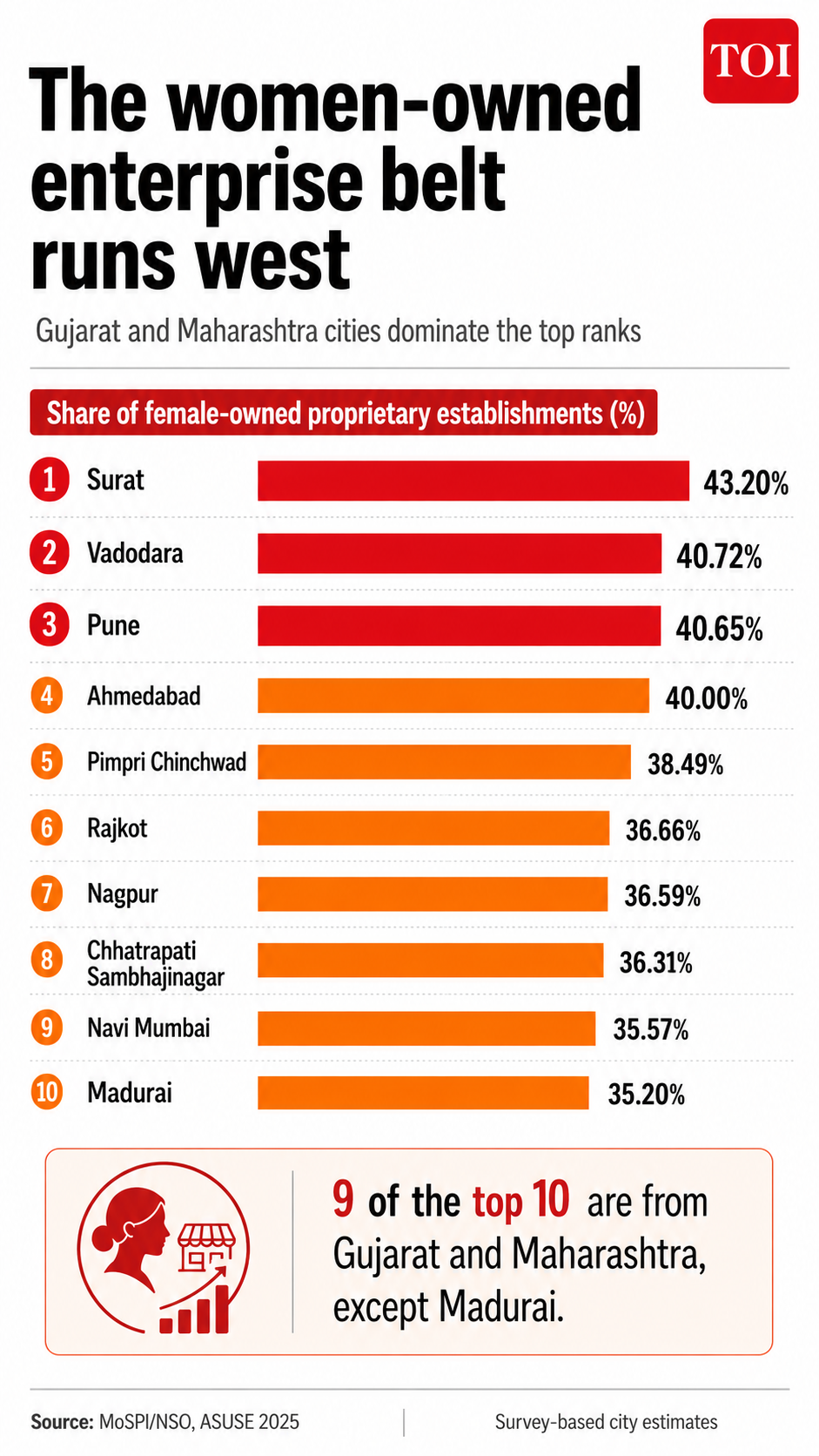
Among million-plus cities, Surat leads with 43.20% female-owned proprietary establishments. Vadodara follows with 40.72%, Pune with 40.65%, Ahmedabad with 40.00% and Pimpri Chinchwad with 38.49%. The top 10 is dominated by Gujarat and Maharashtra cities, with Madurai the major exception.
Dominant in West
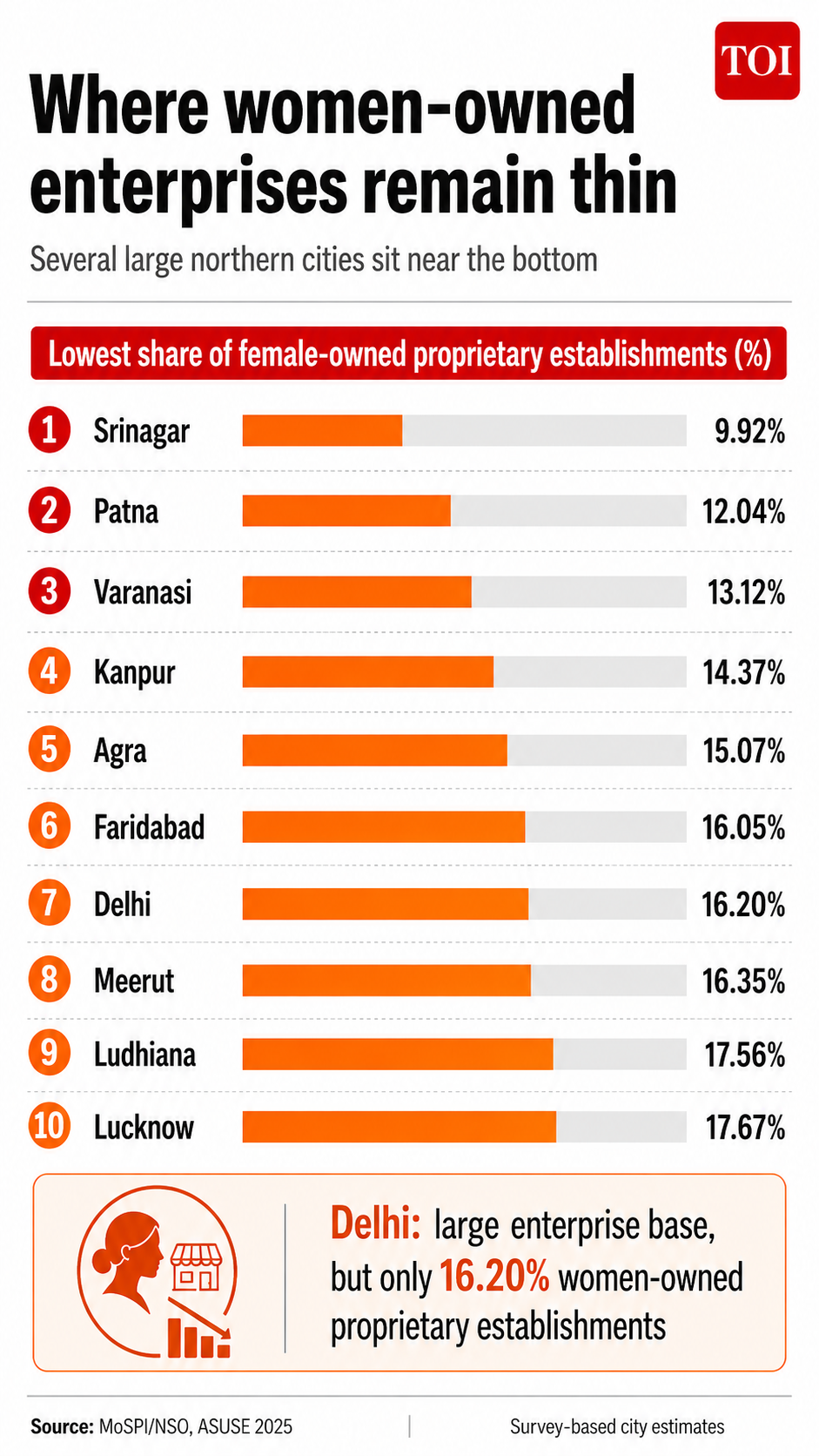
That fits what we know intuitively about western India’s business culture of family enterprise, deeply entrenched community networks, dhando instincts and a long tradition of small-scale risk-taking. But the data does not prove why this is happening. It only shows where women’s ownership is more visible.The contrast is just as important. At the bottom are Srinagar at 9.92%, Patna at 12.04%, Varanasi at 13.12%, Kanpur at 14.37%, Agra at 15.07%, Faridabad at 16.05%, Delhi at 16.20%, Meerut at 16.35%, Ludhiana at 17.56% and Lucknow at 17.67%. Delhi, Kanpur, Lucknow, Ludhiana and Varanasi each have dense commercial lives. Yet, in ASUSE’s estimates, female-owned proprietary establishments form a much thinner slice of their small-business base. Whether this reflects household norms, access to credit, market structures or other local factors is beyond what ASUSE can establish. But the pattern is worth noticing.
Where women enterprise runs thin
Big city, small share
Delhi’s paradox is especially telling. It has one of the larger establishment bases in the ASUSE city set, but only 16.20% of proprietary establishments are female-owned. Kolkata has the largest estimated base among the 46 cities, with about 8.84 lakh establishments, but female-owned proprietary establishments stand at 25.31%. Greater Hyderabad has about 6.08 lakh establishments, but female ownership is 24.53%. Surat and Ahmedabad, by contrast, combine scale with high female-owned shares. Scale, in other words, does not automatically create inclusion.
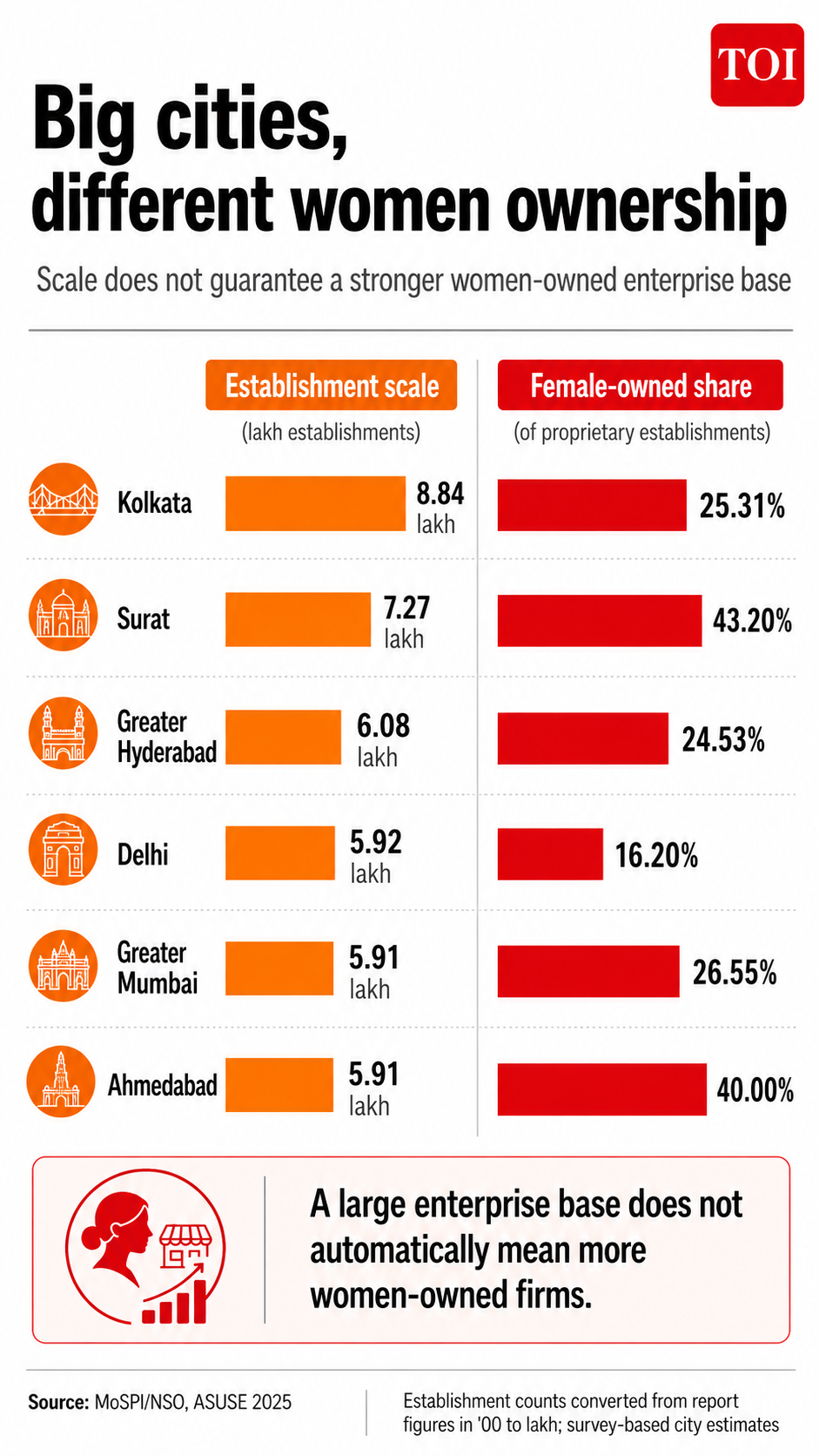
Different women ownership patterns in big cities
The wider labour market data strengthens that reading. The PLFS Annual Report 2025 shows female labour force participation for those aged 15 and above at 40.0%, against 79.1% for men. Female worker population ratio stood at 38.8%, against 76.6% for men. So while women’s economic participation has risen, the gap remains substantial.
The unpaid-work wall
The Time Use Survey 2024 explains part of the invisible wall. Among those aged 15–59, 75% of men and 25% of women participated in employment and related activities in a 24-hour reference period. Female participants aged 15–59 spent about 305 minutes a day in unpaid domestic services. In caregiving, 41% of women participated, compared with 21.4% of men; women participants spent about 140 minutes a day on caregiving, compared with 74 minutes for men. This is the unglamorous arithmetic of empowerment. A large share of women are pushed out of paid work not because they lack skill or ambition, but because unpaid domestic and caregiving responsibilities still claim too much of their time. Surat stands out on both counts with impressive 43.20% female-owned proprietary establishments and 41.39% female workers. Vadodara and Pune are also strong on both indicators. Greater Visakhapatnam tells a different story that female-owned proprietary establishments are at 30.65%, but female workers account for 42.51%. Delhi, Srinagar and Varanasi are weak on both ownership and female worker share.
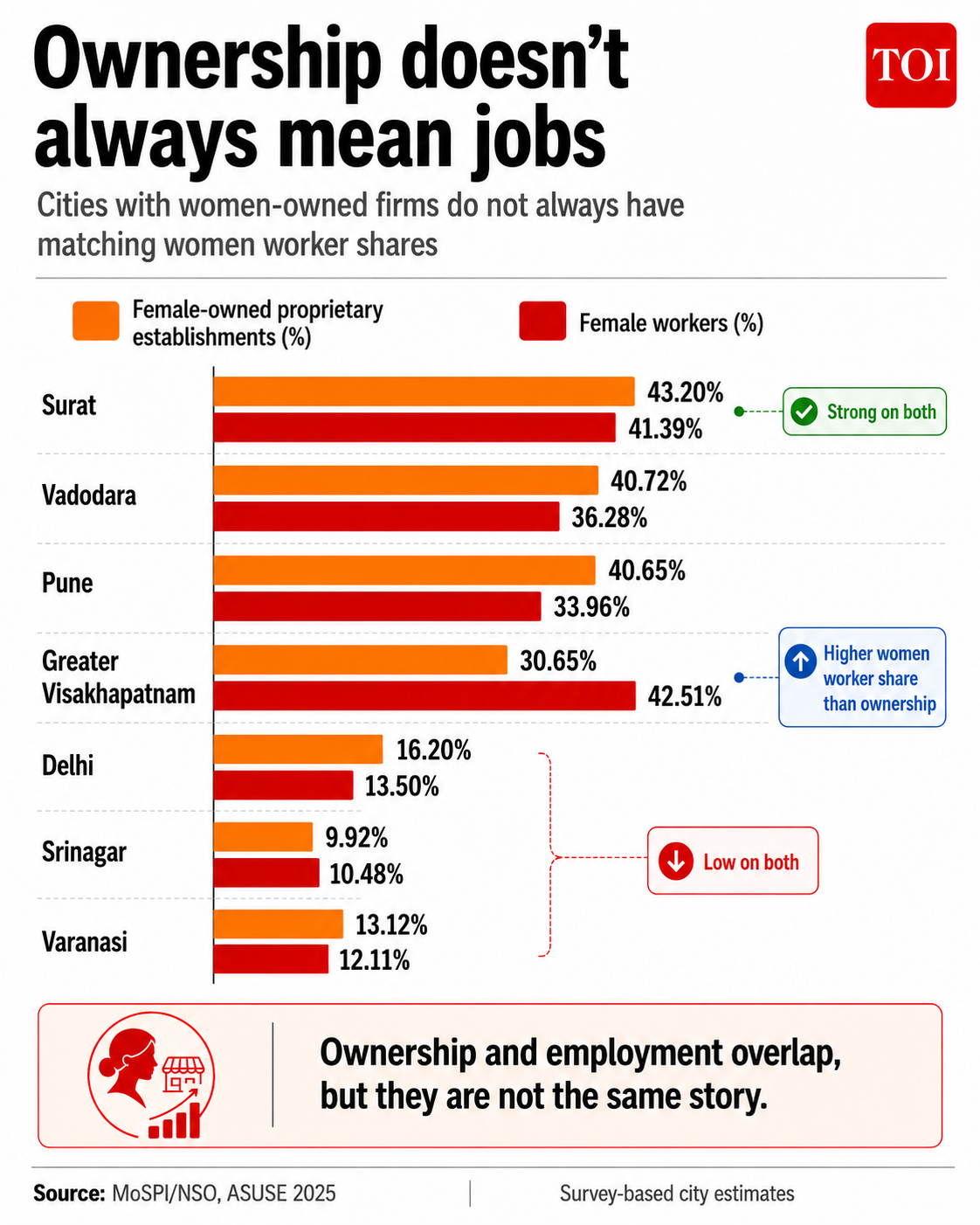
Ownership doesn’t always mean jobs
Policy push, but with caveats
The MSME ministry’s dashboard shows women account for over 3.39 crore MSME registrations, against 5.42 crore for men, as of July 2, 2026. Its Yashasvini campaign has also pushed registration of women-owned MSMEs on Udyam and Udyam Assist portals, with PIB noting that over 12.5 lakh registrations have been facilitated since the campaign began. The sectoral picture adds another layer. Surat is manufacturing-heavy, with manufacturing forming 43% of its enterprise composition, and has the highest female-owned share. Vadodara is services-heavy, with other services at 63%, and also scores high. Pune and Ahmedabad lean towards services. Madurai is trade-heavy and still does well. Srinagar is also trade-heavy, but sits at the bottom.
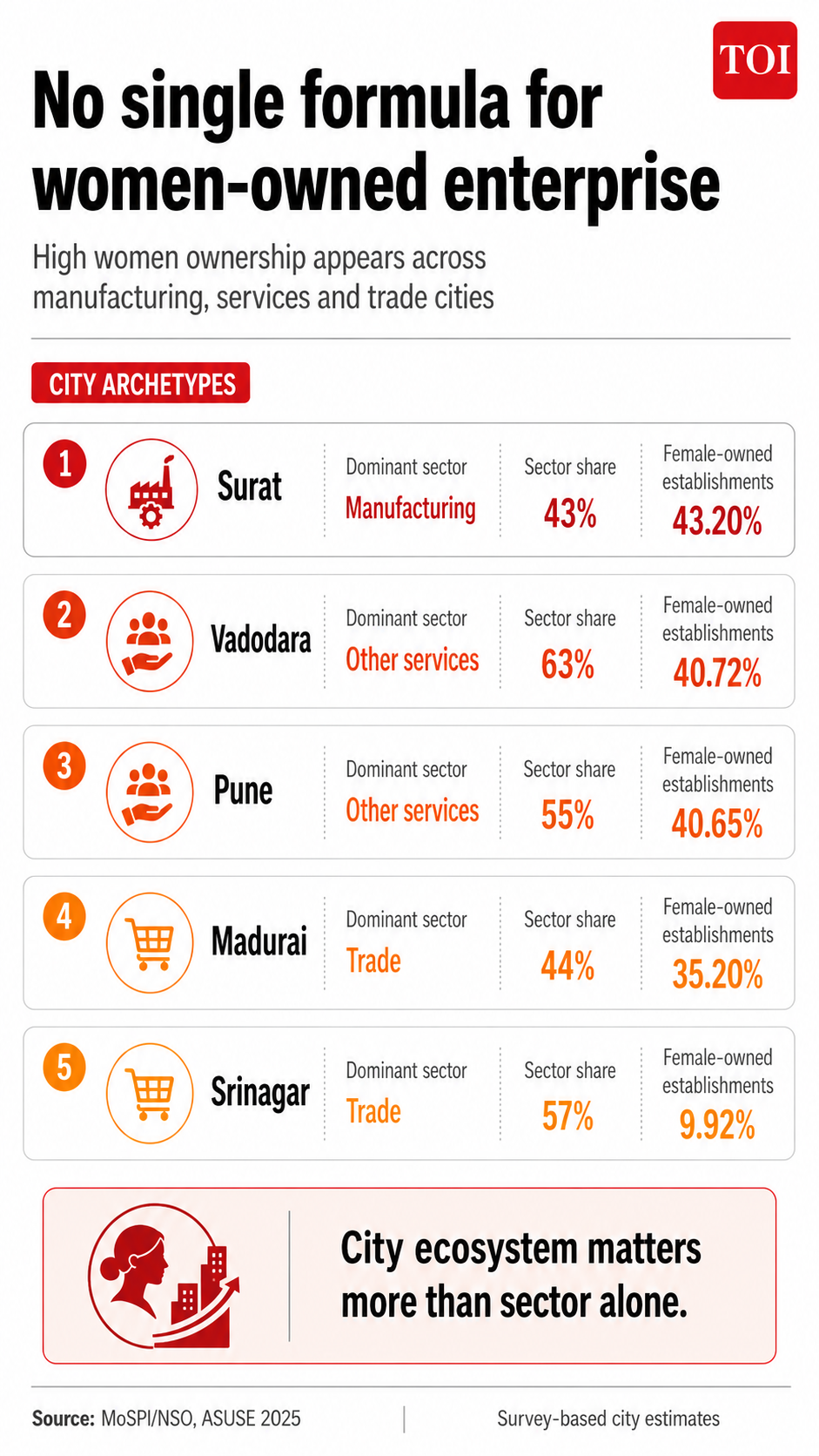
City ecosystem matters more
So there is no single sector where women thrive uniformly. The data indicates that the city ecosystems matter more than anything. Skill is merely not enough, access and privilege also plays a big role. However, ASUSE itself asks users to treat city-level estimates with caution because they are survey-based and subject to sampling variability.
Beyond slogans, the ecosystem test
Even with that caveat, the broad picture is clear. Is nari shakti a buzzword? In parts of urban India, clearly not. But it is not yet a national condition. It is a patchwork where the flames of empowerement glow brightly in the west, dims in parts of the north and is complicated everywhere. What’s undeniable, is that the next phase of women’s empowerment will require more than ceremonial language. Government schemes and registration drives can help, but the deeper movement will come through a thousand quiet rebellions.India’s next woman entrepreneur may not begin in a startup hub. She may begin in the room that became empty after her son left for a job. If the ecosystem works, that room may become a business. Privilege is power. But in life’s Shark Tank, not everyone gets the option to pass.