
Indian scientists join world’s biggest sky survey that could transform our understanding of the universe | Pune News
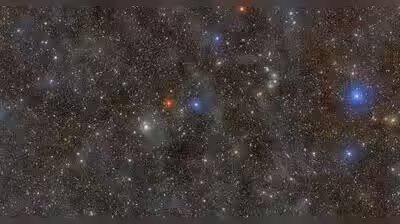
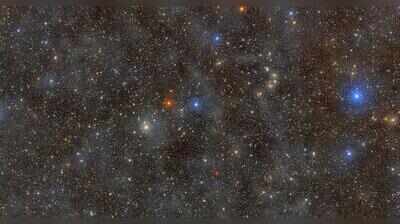
Pune: One of the world’s most ambitious astronomical surveys has officially begun, with Indian scientists playing a key role in a project that is expected to reshape our understanding of the universe over the next decade.The NSF–DOE Vera C. Rubin Observatory in Chile has started its 10-year Legacy Survey of Space and Time (LSST), which will use the world’s largest digital camera to repeatedly photograph the night sky, capturing everything from nearby asteroids to exploding stars, black holes and billions of distant galaxies. The project is expected to produce one of the largest collections of astronomical data ever created, allowing scientists to study how the universe changes over time and helping answer some of its biggest mysteries.Researchers from the Pune-based Inter-University Centre for Astronomy and Astrophysics (IUCAA), and the National Centre for Radio Astrophysics (NCRA-TIFR) are among the scientists contributing to the international collaboration.Surhud More of IUCAA, who serves as the Rubin-IUCAA programme manager, said the survey marks the beginning of a new chapter in astronomy. “The Rubin LSST survey promises the start of a new era for astronomy. Whether your interests are in understanding the formation of the solar system, discovering exploding stars, finding black holes that rip stars apart, making a map of dark matter over half of the sky, or understanding how the universe is going to evolve in the future, it has you covered,” he said.Another major contribution from Indian researchers will be in the study of gravitational lensing, a phenomenon predicted by Albert Einstein, in which the gravity of massive objects bends light coming from distant galaxies, creating multiple images of the same object.Anupreeta More, co-chair of the LSST Strong Lensing Science Collaboration, said the observatory is expected to discover more than 10,000 such gravitational lenses. “Due to lensing, some of the rare transients like supernovae or kilonovae can appear unusually brighter, but will also seem to occur more than once, giving us the ‘deja vu’ experience. Such gravitationally lensed transients are not just a magnificent spectacle, but help us in measuring the age and expansion rate of the universe,” she said.Indian scientists are also looking forward to using Rubin’s data to study galaxies on an unprecedented scale. Yogesh Wadadekar of NCRA-TIFR, who is part of the LSST Galaxies Science Collaboration, said the telescope will provide extremely deep images that will help scientists study nearly 20 billion galaxies, each with its own history stretching back billions of years.“As a member of the GSC, I particularly look forward to the very deep images from Rubin LSST that will allow us to study as many as 20 billion galaxies of every shape and size. This unprecedented dataset will allow for thousands of questions on galaxy evolution to be asked, and answered. Looking forward to an exciting decade of discovery,” he said.Scientists said that the Rubin observatory will scan the southern sky repeatedly for 10 years, recording changes that are impossible to capture with conventional telescopes. For Indian researchers, the survey offers a rare opportunity to contribute to discoveries, ranging from the formation of the solar system to the evolution of galaxies and the fate of the universe itself, placing them at the forefront of one of the most important global astronomy projects of this decade.