
In 2015, Canada sank a 113-metre retired warship off British Columbia; five years later, monitoring had recorded more than 170 marine species on the wreck

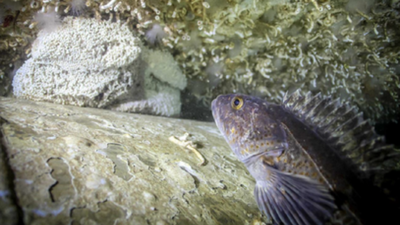
A retired Canadian warship that was deliberately sunk off British Columbia in 2015 has become an artificial reef supporting a growing community of marine life. The former HMCS Annapolis, measuring 113.1 metres in length, was placed on the seabed at Halkett Bay Marine Park near Gambier Island to create additional habitat in an area affected by decades of log-boom storage. According to the Artificial Reef Society of British Columbia (ARSBC), five years of biodiversity monitoring eventually documented more than 170 species of marine flora and fauna living on the wreck. Canada’s Environment and Climate Change Canada records confirm that the vessel was approved for disposal at sea under a permit issued under the Canadian Environmental Protection Act.
From warship to reef
The Annapolis was a former Canadian naval destroyer escort that had been decommissioned before eventually being acquired by the Artificial Reef Society of British Columbia. After extensive preparation and environmental cleanup, the 113.1-metre vessel was sunk on April 4, 2015, at Halkett Bay Marine Park. The ship was placed in about 32 metres of water, creating a large vertical and horizontal structure on what had previously been a relatively flat seabed.The Canadian government’s disposal-at-sea permit specified that the ship had to be cleared of materials that could create floating debris or marine pollution. Petroleum-based products, including fuel oil, hydraulic fluids and lubricants, had to be removed before the vessel was disposed of. The permit also required the ship to meet Environment Canada’s cleanup standards before sinking. The vessel was ultimately scuttled using explosive cutting, which allowed water to enter the hull and send the ship to the seabed.
Life arrived quickly
The wreck did not remain an empty structure for long. The ARSBC established the Annapolis Biodiversity Index Study, or ABIS, to document how marine organisms gradually colonised the ship. The monitoring initially relied on observations and photographs submitted by recreational divers. From 2016, a dedicated group of citizen-science divers began collecting observations more consistently, allowing researchers and marine taxonomists to track changes in the biological community over time. By early 2016, nearly 50 marine species had already been recorded on the Annapolis. Over the following years, the list continued to expand as organisms occupied different parts of the ship and established themselves on its surfaces.
More than 170 species
By the time the ABIS report was published in June 2021, the taxonomic record for the wreck had grown to more than 170 species of marine flora and fauna. The ARSBC reported that representatives of all marine phyla found in British Columbia waters were present on the Annapolis. The five-year monitoring period also documented several rockfish species, including juveniles. These observations were significant because the artificial reef had been created partly to provide additional habitat for rockfish and lingcod, populations of which had experienced declines in Howe Sound. The monitoring also recorded lingcod egg masses on the ship. Lingcod guarding eggs is one of the signs that the wreck is providing more than a temporary surface for marine organisms; it can also support important stages of reproduction.
A changing underwater ecosystem
An artificial reef does not instantly become a mature ecosystem. Instead, colonisation happens gradually as organisms find surfaces on which to attach, shelter and feed. The ABIS observations followed this progression on the Annapolis. Early growth included microbial and algal films, followed by invertebrates and increasingly diverse fish communities. As organisms established themselves, they also created new habitat for other species.The ship’s complex structure provides both exposed surfaces and sheltered spaces that are difficult to find on a relatively featureless seabed. That physical complexity can help create niches for organisms with different habitat requirements. The ARSBC has continued to receive observations from divers even after the formal ABIS programme ended. Its reports note that new species can continue to appear and existing populations can increase as the artificial reef matures.
What the wreck shows
The Annapolis project provides a long-term example of how a carefully prepared artificial structure can become part of a marine ecosystem. It also demonstrates the value of monitoring such projects rather than judging their ecological effects immediately after installation. The more than 170 species recorded on the wreck do not, by themselves, mean that the artificial reef has restored the broader Howe Sound ecosystem. The ARSBC itself notes that rockfish and lingcod numbers remain depressed across Howe Sound. Instead, the observations show that the Annapolis has developed into a substantial habitat for marine life at its specific location.What began as the final resting place of a retired warship has therefore become something very different beneath the surface: a large artificial habitat whose biological community has continued to develop year after year.


