In 1984, Romanian dictator ordered the construction of a giant palace in Bucharest demolishing 10,000 homes; today, the Palace of the Parliament stands as the world’s heaviest building that is slowly sinking every year
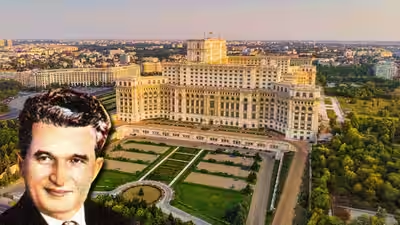
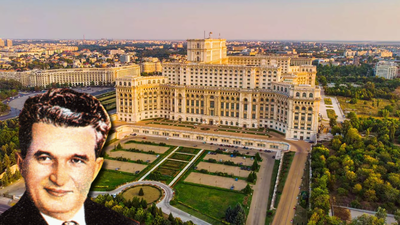
In Romania’s Bucharest, there is a government building so large that its construction changed the shape of the city around it. The Palace of the Parliament, originally called the House of the Republic and later known as the People’s House, was built during the rule of Romanian dictator Nicolae Ceaușescu. Construction began in 1984 and continued long after his communist regime ended. Today, it is the heaviest administrative building in the world and one of the largest buildings ever constructed.But the story of the palace is not only about its size. To build it, a large part of historic Bucharest was demolished, tens of thousands of people were moved from their homes and numerous churches and historic buildings disappeared.
A project born from Ceaușescu’s vision for Bucharest
Ceaușescu’s plan for a new political and administrative centre took shape after the devastating earthquake that struck Romania in 1977. The disaster badly damaged Bucharest and gave the dictator an opportunity to push ahead with a sweeping redevelopment of the capital. His vision had also been influenced by his 1971 visit to North Korea and China. Accounts of Bucharest’s redevelopment note that Ceaușescu was impressed by the monumental scale and political architecture he saw in Pyongyang.The new Bucharest was intended to have the same kind of imposing government architecture and enormous boulevards. The palace was planned as the centrepiece of this new political-administrative district.
A historic neighbourhood was demolished
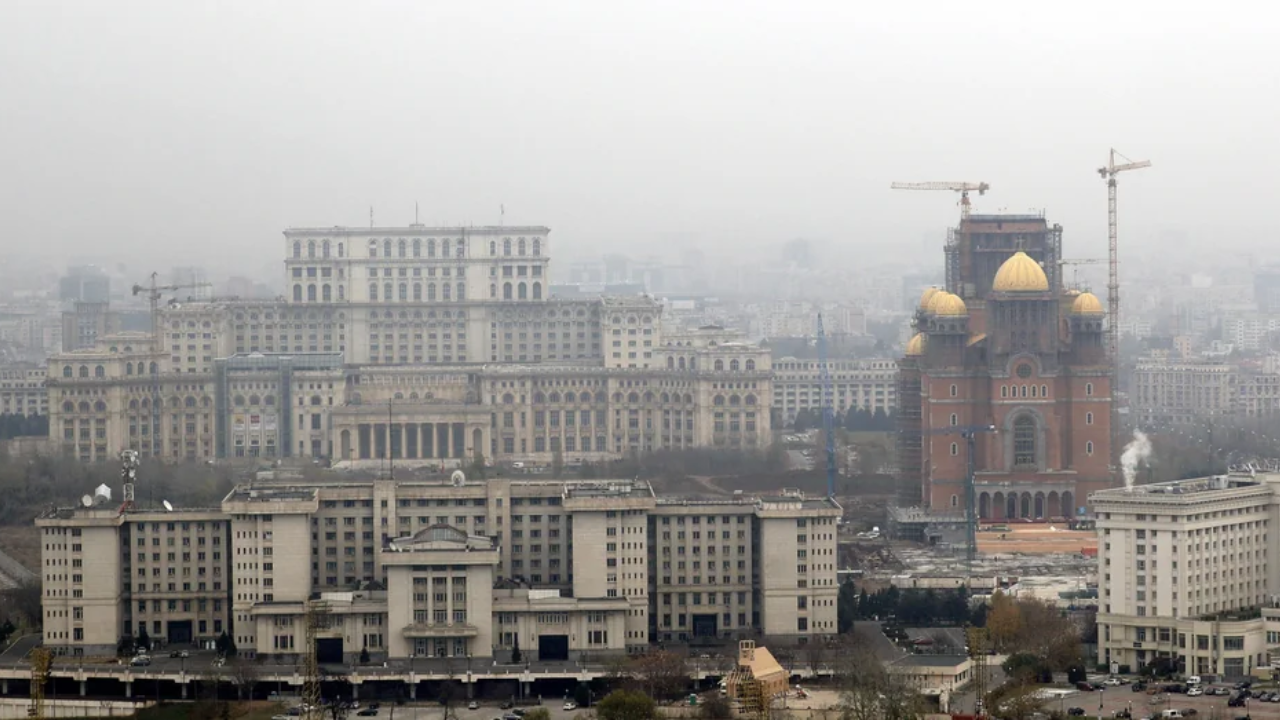
About 10,000 homes were demolished, around 20 churches were destroyed and 57,000 families were moved as the area was cleared for the palace.
The price of the project was paid first by the neighbourhood that stood on the site. The Uranus-Izvor area was one of the older parts of Bucharest, with houses, gardens, churches, monasteries and other historic buildings. Radio Romania International reports that about 90% of the Uranus district was eventually lost during Ceaușescu’s systematisation program.According to Romania Insider, about 10,000 homes were demolished, around 20 churches were destroyed and 57,000 families were moved as the area was cleared for the palace, surrounding apartment blocks and the new boulevard system. The destruction also reached the Republicii Stadium. The historic stadium was demolished and covered with earth to make way for the project. Parts of its western stand still survive beneath the present-day complex.The area that disappeared covered roughly 7 square kilometres, with about 40,000 people relocated from the affected area.
700 architects and more than 100,000 people
The palace was not designed by one architect working alone. Anca Petrescu, then only 28, became the chief architect after winning the competition organised for the project. She led a team of hundreds of architects. Historical accounts put the number of architects supervised by the project team at around 700. The construction effort was enormous.According to the Romanian Parliament’s official website, more than 100,000 people contributed to the project. During the busiest periods, nearly 20,000 workers were active in three shifts, allowing construction to continue around the clock. Between 1984 and 1990, around 12,000 soldiers also took part in the work. The project continued for years despite Romania’s severe economic problems under Ceaușescu.
A million cubic metres of marble
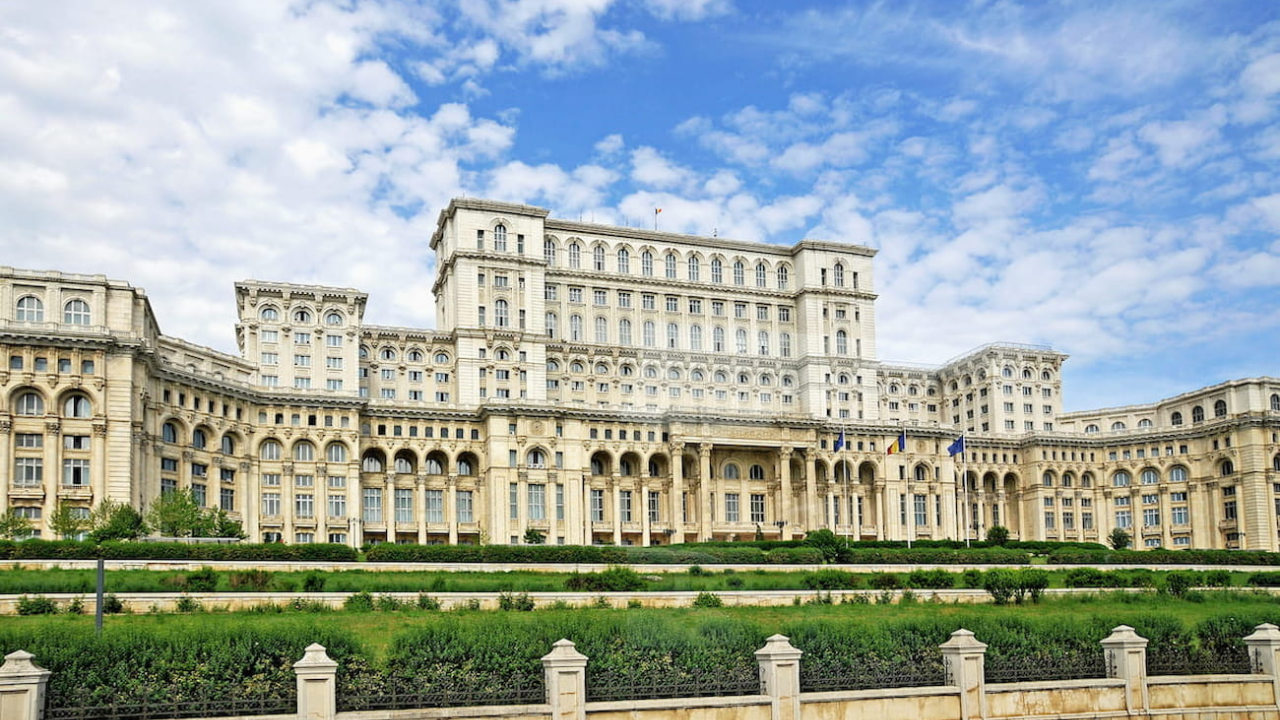
It is 270 metres long, 245 metres wide and 84 metres high above ground.
The final building is difficult to comprehend even in numbers. The Palace of the Parliament covers about 365,000 square metres. It is 270 metres long, 245 metres wide and 84 metres high above ground, with another 16 metres extending below ground level, according to the Romanian Parliament’s conference centre. The materials used were equally extraordinary.The Romanian Parliament says the building contains approximately:
- 1 million cubic metres of marble
- 700,000 tonnes of steel
- 550,000 tonnes of cement
- 2 million tonnes of sand
- 3,500 tonnes of crystal
- 900,000 cubic metres of wood
- 200,000 cubic metres of glass
- 2,800 chandeliers
- 220,000 square metres of carpets
Most of the materials were sourced from Romania. The palace contains about 1,100 rooms, although many have never been regularly used.
Ceaușescu never saw the finished palace
The dictator who ordered the building never saw it completed. When the Romanian Revolution brought down Ceaușescu’s communist regime in December 1989, construction was still unfinished. The palace was about 60% complete at the time. Work continued after the fall of communism, but at a slower pace, and the building was eventually completed in 1997.Ceaușescu and his wife Elena were executed on December 25, 1989, after a brief military trial. The unfinished building was inherited by the new Romanian state. Instead of being abandoned, it was eventually turned into the country’s parliamentary centre. Today, the Palace of the Parliament houses Romania’s Chamber of Deputies and Senate, along with conference and other institutional spaces.
It became a world record holder
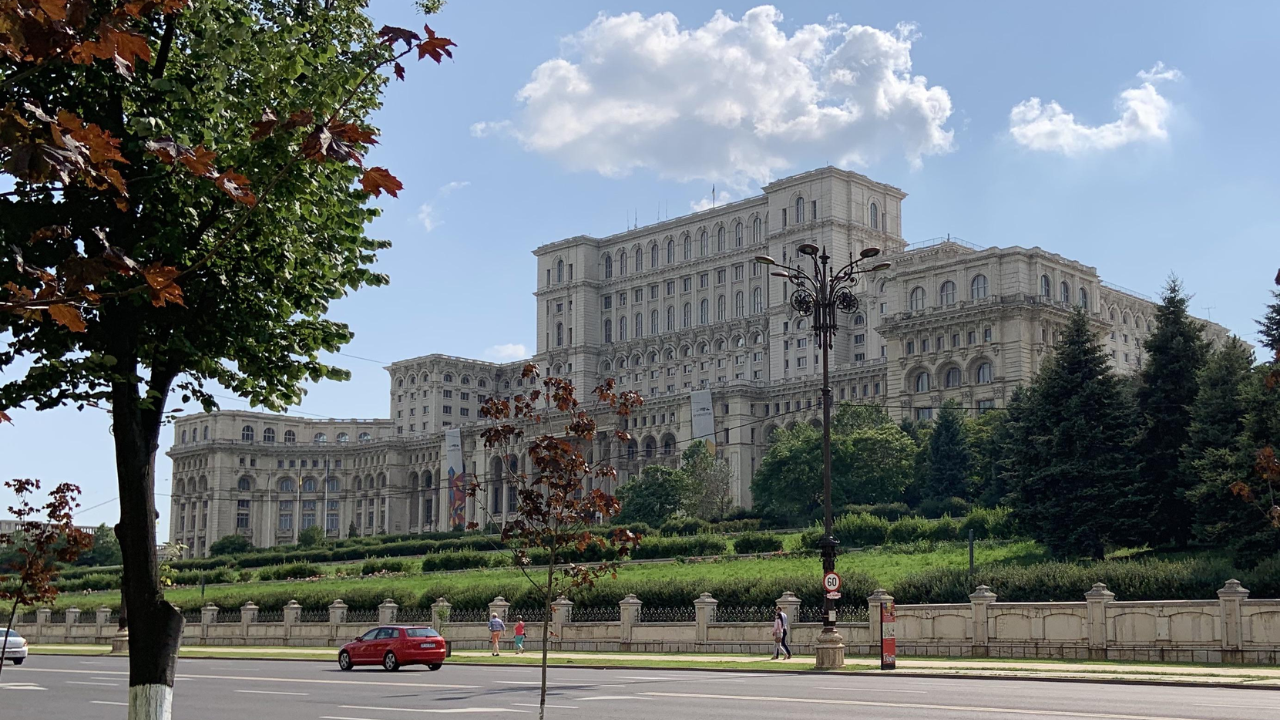
Its enormous size is also reflected in its estimated volume of about 2.55 million cubic metres.
The palace’s scale has earned it several unusual records. The Romanian Parliament describes it as the world’s heaviest administrative building and says it ranks first in the world among civilian administrative buildings by floor area, while ranking third worldwide by volume. Its enormous size is also reflected in its estimated volume of about 2.55 million cubic metres.The building’s scale, however, has also created a practical problem: there is simply too much of it. Some estimates suggest that around 60-70% of the building is not regularly used, although the exact figure varies depending on how unused space is defined.
The palace is still slowly sinking
There is another unusual fact about the building. The Palace of the Parliament reportedly sinks by around 6 millimetres every year. According to accounts of the building’s construction and subsequent measurements, its immense weight is causing the layers of sediment underneath it to gradually settle. That does not mean the building is in immediate danger of disappearing into the ground. It is a gradual process associated with the enormous weight of the structure.A historic neighbourhood once stood where the palace now rises. Homes, churches, monasteries, gardens and streets were removed to create space for Ceaușescu’s vision of a monumental capital. More than 30 years after the fall of communism, the Palace of the Parliament remains at the centre of Bucharest, enormous, expensive to maintain and still partly unused.