In 1980, a Canadian fisherman began building with discarded bottles; four years later, he had completed a house, tavern and chapel
Édouard T. Arsenault received a postcard from his daughter Réjeanne in the summer of 1979, which showed a glass attraction she had visited on Vancouver Island. The image gave the retired Prince Edward Island fisherman and carpenter an idea, who began collecting empty bottles from around his community, with supplies coming largely from a local restaurant and community dance halls. Friends, relatives and neighbours added more. Over the following winter, Arsenault worked in the basement of his Cap-Egmont home, washing the bottles, removing their labels and sorting them, and in the spring of 1980, at age 66, he began building. The project started as a hobby, but it eventually produced three separate structures made from more than 25,000 recycled bottles. The official history of the Bottle Houses says Arsenault worked on the project from 1980 until the spring of 1984.
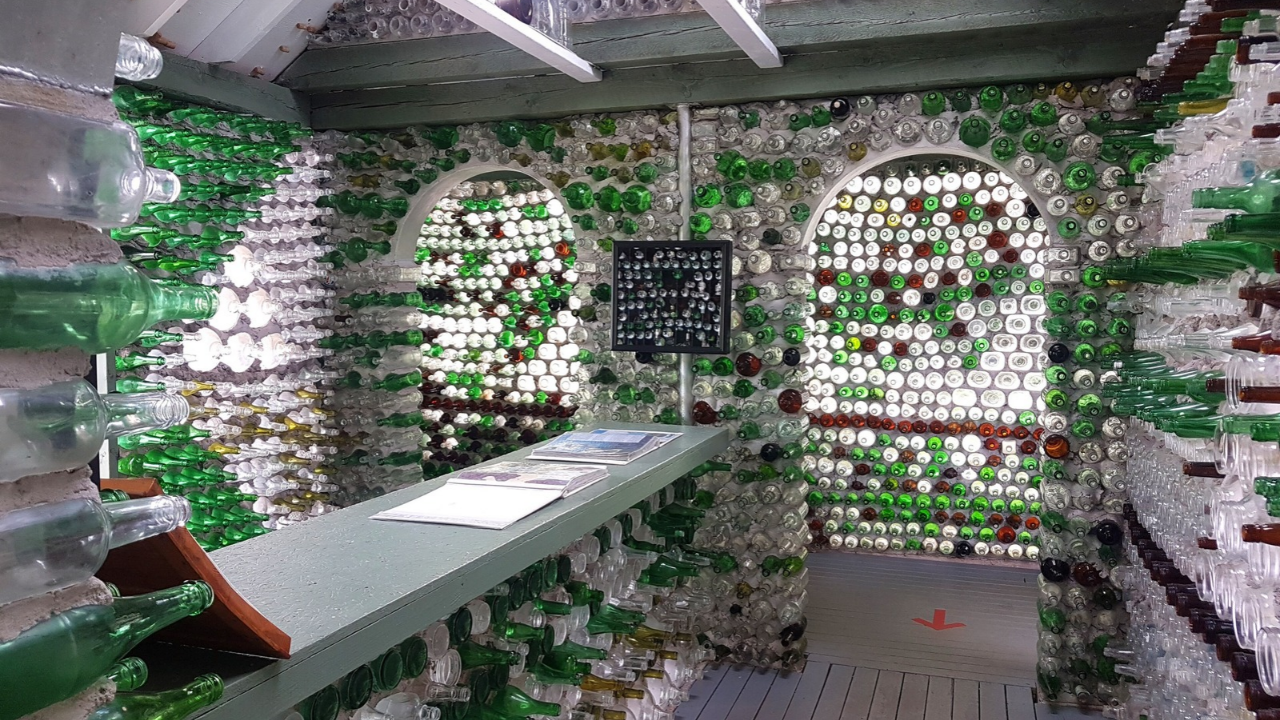
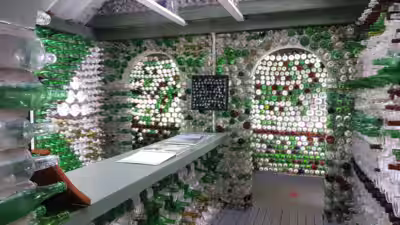
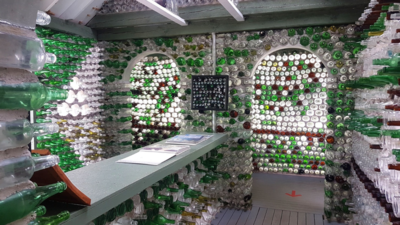
Inside view of The Six Gabled House, the first of the three structures | Wikimedia Commons
The first house took about 12,000 bottlesArsenault’s first structure was the Six Gabled House, which was built in 1980. The Bottle Houses site says it used approximately 12,000 bottles and measured 20 feet by 14 feet. The building had three main sections, while its walls were assembled from bottles of different colours and sizes. As the work progressed, visitors began stopping to look at what he was building. Their interest persuaded Arsenault to continue, and the first Bottle House opened to the public in 1981. The next building came in 1982, which was the tavern, a hexagonal structure that used approximately 8,000 bottles. Arsenault also kept some unusual bottles out of the walls, displaying them inside instead. His third major structure was the chapel, completed in 1983 with approximately 10,000 bottles. The Bottle Houses’ own description lists the Six Gabled House, tavern and chapel as the three principal bottle structures.From a retirement project to a visitor attractionArsenault spent years adding bottles as they became available, then cementing them into the structures, and his background made the construction work familiar territory. Born in Cap-Egmont in 1914, he had worked as a fisherman and carpenter, building fishing boats and doing construction work during the off-season. He had also served as the last resident keeper of the Cap-Egmont lighthouse before it was automated in 1957. The bottle project became his main creative work after retirement. By the spring of 1984, more than 25,000 bottles of different shapes, sizes and colours had been incorporated into the three buildings. Arsenault died on May 31, 1984, shortly after the project was completed. His daughter Réjeanne later became associated with operating the attraction, and the site remains identified with both the late founder and the family that continued its story.
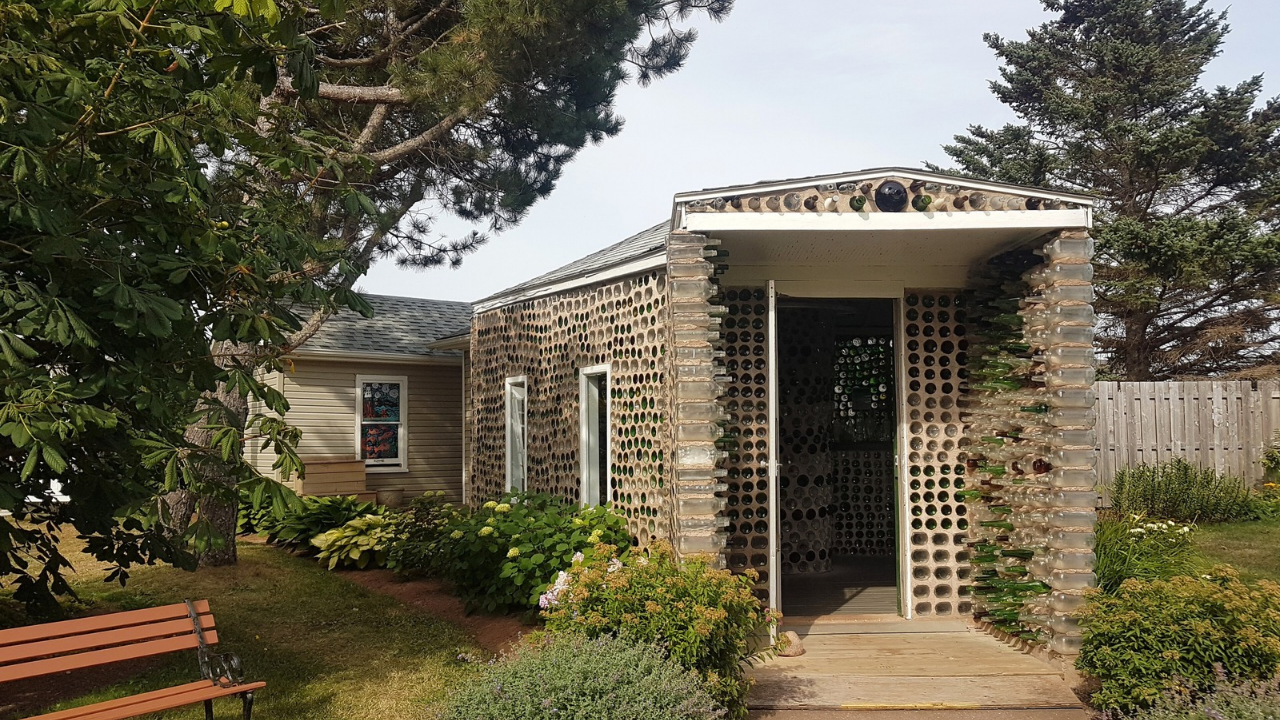
The Tavern (1982) | Wikimedia Commons
The bottle village is still open in Prince Edward IslandToday, the buildings stand at 6891 Route 11 in Cap-Egmont as the Bottle Houses and Gardens. Tourism Prince Edward Island describes the attraction as a group of life-size buildings made from 25,000 recycled glass bottles, with gardens, bottle art and a replica of the lighthouse where Arsenault once worked. The tourism authority lists the site as a seasonal attraction, with dates and hours subject to its annual operating schedule. The Bottle Houses’ current website also lists the Six Gabled House, tavern and chapel as part of the visitor site. What began with a postcard and a winter spent cleaning discarded bottles is now a permanent roadside attraction on Prince Edward Island’s North Cape Coastal Drive.