
“I’d rather follow my religion than break it”: 12-year-old Hindu boy chooses religion over football after being asked to remove tulsi mala in Australia

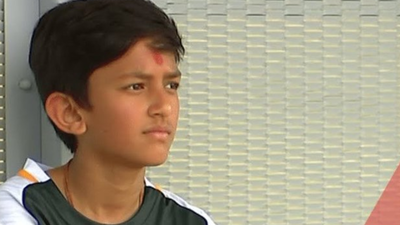
A 12-year-old Hindu footballer of Indian origin was asked to remove the tulsi mala he was wearing before a match in Brisbane, Australia, after a referee deemed it unsuitable for play. The incident, reported by The Australia Today and later examined by ABC’s Media Watch, sparked a debate over religious expression, sporting rules and how the episode was initially reported. Shubh Patel, a young player with Toowong Soccer Club, had been wearing the kanthi mala since he was five. According to reports, he had already played around 15 matches while wearing it and had never previously been asked by a coach or teammate to remove it. When the referee instructed him to take it off before the game, Shubh refused.
‘I would rather follow my religion’
For Shubh, the mala was not simply an accessory. He follows the Swaminarayan tradition and considered the kanthi an important part of his religious practice.He explained that removing it for a football match would go against his beliefs. He also said the mala made him feel comfortable, confident and protected.Rather than take it off, Shubh chose not to play and sat on the sidelines as his teammates continued with the match.The decision quickly drew attention, particularly because he had been allowed to play in previous games while wearing the same mala.
Football Queensland apologises
Following the incident, Football Queensland, the governing body for football and futsal in the state, launched an investigation and apologised to Shubh’s family and Toowong Soccer Club. The organisation stressed that football in Queensland was intended to be an inclusive sport that respected people from different cultures and religions. The controversy also led to Shubh being allowed to play while wearing the religious necklace.
But was the mala actually banned because of religion?
This is where the story became more complicated. FIFA’s Law 4 of the Laws of the Game prohibits players from wearing jewellery such as necklaces, rings and bracelets during matches for safety reasons.That means the referee’s instruction was not necessarily a rule targeting Hindu religious symbols. The broader sporting rule against jewellery was the basis for asking Shubh to remove the mala.
A clash between faith and a universal safety rule
The episode nevertheless raised a genuine question about how sporting organisations should deal with religious items that players consider essential to their faith.For Shubh, taking off the mala was not an ordinary compromise. For the referee, however, the issue was governed by a general safety rule that applies to necklaces and other jewellery. What began as a brief incident involving a young footballer therefore became a much larger discussion about religious identity, sporting regulations and the responsibility of media outlets to provide the full context behind a controversial decision.


