How tiny pollen grains helped solve a brutal murder: The fascinating science behind nature’s invisible crime scene evidence
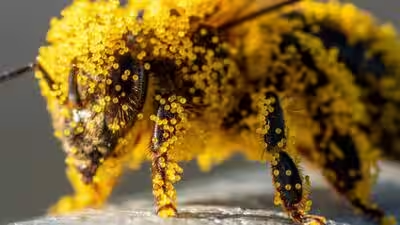
Blood, fingerprints, and weapons aren’t the only evidence investigators look for at a crime scene; pollen is another. Pollen grains are one piece of evidence that has helped solve some of the highest-profile murder cases in recent years, one grain at a time. The tiny grains that might be invisible to the naked eye actually shine bright and reveal a lot to the experts.
A murder solved with pollen
In 2014, gang member Mauha Huataki Fawcett was convicted of Manning’s murder and sentenced to life in prison.
Mellory Manning, a 27-year-old woman was assaulted and murdered in 2008 while working as a prostitute in Christchurch, New Zealand. The police conducted an investigation and interviewed hundreds of people but months later, they still lacked leads. They approached an unusual specialist, Dallas Mildenhall, a white-haired scientist in his 70s working as a forensic palynologist, a pollen and spores expert who had helped solve numerous murders all over the globe.One of the major reasons why the investigation was stuck was that the police could not say where the woman had been killed. “They were very suspicious early on of a gang called the Mongrel Mob because they were involved in prostitution, they had this sort of warehouse hangout not far from where the body was found. And yet they didn’t have the evidence to make that connection. All they had was supposition,” wrote David Wolman, in Matter magazine. Mildenhall took pollen samples from Mellory’s nasal passages and clothing and began researching.He was examining a kind of pollen grain that normally contains only a single pore. But Mildenhall “noticed a pollen grain that looked like it had two pores.” Mildenhall examined the pollen taken from Manning’s corpse and noted multiple examples of these highly unusual, two-pored pollen grains. He shared his theory with the police: An herbicide had caused a mutation in the pollen, giving it more than one pore.Sure enough, the area right next to the Mongrel Mob hangout and warehouse had been sprayed at the time of the year. The police told Mildenhall to reexamine pollen samples collected from the gang’s warehouse, where he ended up finding significant concentrations of this two-pored pollen grain. In 2014, gang member Mauha Huataki Fawcett was convicted of Manning’s murder and sentenced to life in prison.
Pollen: The silent and grainy evidence
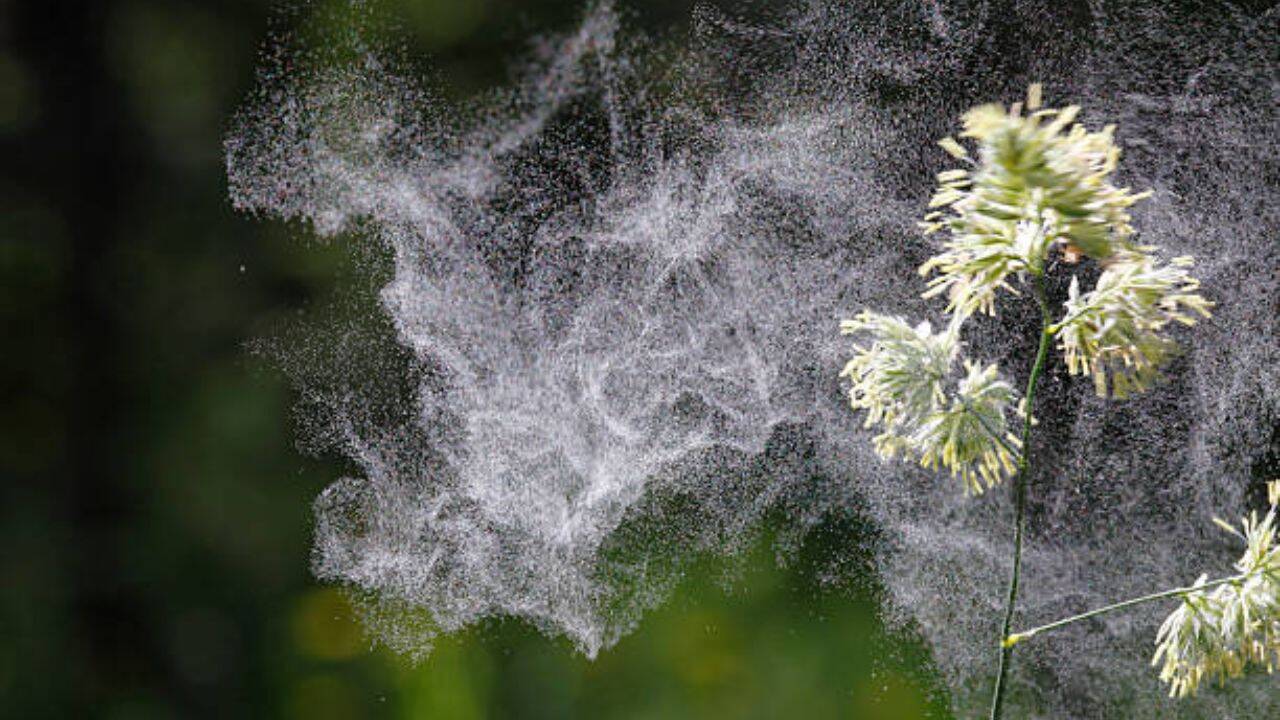
for biologists, pollen is evidence that has helped catch thieves and murderers.
Pollen can play a crucial part in solving cases. To most, pollen is the yellow stuff that bees collect or the material plants need to complete fertilisation and produce the food we eat. Others end up hating pollen for the allergies it gives. But for biologists, pollen is evidence that has helped catch thieves and murderers.The technique of using pollen as evidence is relatively new. It was first used in 1959 to solve a murder in Austria. While countries such as New Zealand have been using it for several decades, it is now being used in countries including the UK, Australia, Canada and the US.
But why is pollen such a good forensic secret?
Many types of pollen and spore-producing plants spread a large amount of these palynomorphs into the air. Once in the air, they are carried by air currents and eventually fall to the ground in a thin coating called “pollen rain.” In some areas, the amount of pollen and spores that spread is so great that the exposed land or water turns yellow. This coating is a snapshot of the area and becomes its “pollen print.” They can be used to identify and locate a region, like in the Manning murder.Since most pollen and spores are microscopic in size, and can become trapped on any type of surface, they remain invisible to humans. Pollens are also resistant to decomposition due to a cell wall composed of cellulose and sporopollenin – one of the most chemically resistant organic molecules known. A person would have no idea of all the pollen they have on their clothes and thus it makes it impossible for them to be able to remove the pollen evidence from their clothes and belongings.A forensic palynologist can tell where the pollen or spores found at a crime scene or on a criminal came from and use them as evidence to link the suspect or an object to a crime scene. There are nearly one-half million different plant species that produce either pollen or spores and each of these can be identified as coming from the parent plant. While some can be identified with simple microscopes others require special tools such as electron microscopes (SEM) or transmission electron microscopes (TEM), according to the Arizona State University.But the evidence isn’t used more often. This is because much like other forensic evidence, it can be hard for judges and juries to understand. Moreover, studying pollen grains is a difficult and time-consuming work with scientists possessing the expertise rare in the world, as much as the two-pored pollen.