Gitanjali Rao: From a child prodigy detecting lead in water to making her way to MIT and writing history with the Stephen Hawking Junior Medal at 19
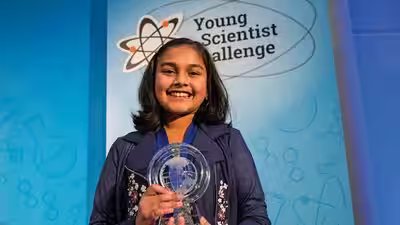
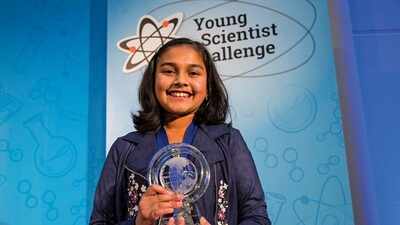
When most kids were still trying to win gold stars for papier-mâché volcanoes, Gitanjali Rao was watching the Flint water crisis unfold on TV and thinking, “Why do families have to guess if their water is safe?”Per MIT News, she was merely nine years old when she started researching ways to help, and not long after, built a handheld device called Tethys that could detect lead in drinking water and send the results to a phone. Her invention didn’t just bring her science fair glory; it landed her on the cover of TIME, introduced her to a world of science competitions, and set her on a path to MIT. Now, at 19, Rao’s story has another chapter: she’s the very first winner of the Stephen Hawking Junior Medal, which honors young people who make science clearer and more inspiring for everyone.
Who is Gitanjali Rao, really?
Gitanjali grew up outside Denver, already hooked on chemistry and biology by grade school. The news from Flint, the lead poisoning, the uncertainty, hit her hard. She dove into research, and somewhere in those early experiments, she stumbled upon the idea of using carbon nanotubes (which had been used to detect gases) to sense lead in water. That spark turned into months of tinkering and, eventually, Tethys, which is a small device that anyone could use, connected by Bluetooth, and smart enough to give instant results.She wasn’t satisfied with “good enough.” In fact, her invention took the top prize at the Discovery Education 3M Young Scientist Challenge, netted her $25,000 to push the project forward, and led her to work with the city’s water department to refine the design. The tech mattered, but the real breakthrough was about access, making sure testing wasn’t something only experts with labs could do. For Rao, innovation only counts if it responds to real life, not just scientific curiosity.But she didn’t stop with water. She invented Epione, a tool to help spot early signs of opioid addiction. Then came Kindly, an app that fights cyberbullying by identifying toxic language online and giving users a chance to rethink before hitting “send.” In 2020, TIME named her the first “Kid of the Year.” Her projects kept growing, and so did her desire to encourage other young people to see themselves as part of the solution. She started running invention workshops for students worldwide, always repeating her core message: you don’t need a PhD to make a difference.The Stephen Hawking Junior Medal she picked up in 2025 is about more than personal glory. The award is linked to Hawking’s legacy, not just his revolutionary work with black holes, but his commitment to open science for everyone. The medal recognizes contributions to science communication, a nod to people who translate complicated ideas into stories anyone can follow. Rao fits right in, as she turns tough science into something approachable, even exciting.Now, she’s at MIT, studying bioengineering and business, walking the same campus as Nobel champs. But if you look closely, her story is pretty much that of a nine-year-old kid, supercharged: spot a problem that no one else is tackling, dig in, invent something new, then turn right around and teach others how to do the same.At the heart of it, Gitanjali Rao’s story of genius and success is less about prodigy and more about perseverance, and less about prizes and more about people. She sees a world full of problems, like contaminated water, online hate, young adults lost to science, and each time, she throws out the old story that someone else should fix it.Her message for every young person? Start where you are, use what you know, and try your own solutions. You don’t have to wait. Some of the best innovations start with a simple, stubborn question: “Why can’t we do better?”