
Egg or soya? Delhi NCR Doctor explains the protein debate, comparing quality, bioavailability and digestibility |
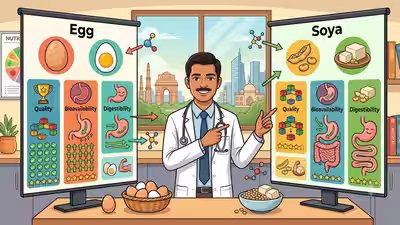
A packet of dry soya chunks can make an egg look almost protein-poor. On paper, 100 grams of dry soya chunks can provide around 50 grams of protein, while 100 grams of egg provides roughly 13 grams.But that comparison comes with a detail that can easily get lost in the numbers: dry soya is not eaten in its dry state. Once soaked or cooked, it absorbs water and its weight increases significantly. So the “50 grams of protein” figure on the packet does not mean you are eating 50 grams of protein every time you have a bowl of cooked soya.That is one reason the egg-versus-soya debate is more complicated than simply comparing the numbers on two nutrition labels.In a recent social media post, Dr. Shubham Vatsya, Director and Head, Institute of Gastroenterology & Hepatobiliary Sciences, ISIC Multispeciality Hospital, Delhi spoke about eggs, soya and the question of protein quality. He pointed out that an egg contains all nine essential amino acids that the body cannot produce on its own. “Egg is the gold standard protein. The bioavailability of every protein is compared with egg,” Dr Vatsya said in the discussion. Eggs provide vitamin B12, choline, selenium and vitamin A.But soya is not an inferior proteinThis is where the conversation gets interesting for vegetarians.Soya is one of the important plant-based complete proteins, meaning it also contains all nine essential amino acids. Dr Vatsya specifically highlighted soya as plant sources of complete protein. However, soya contains lower levels of methionine compared to animal proteins.So while eggs have very high protein quality and bioavailability, dismissing soya simply because it is plant-based would also be misleading.So which one should you eat?The more useful answer is: both can have a place in a high-protein diet.Eggs offer highly digestible, complete protein along with several micronutrients. Soya offers complete plant protein and can be particularly useful for people who follow vegetarian diets.The choice can therefore depend on dietary preference, overall protein requirements, the rest of the diet and how the food is prepared.The bigger takeaway from Dr Vatsya’s discussion is that the protein debate should move beyond a simple “egg versus soya” battle. “So, don’t ask which one is “better”. Choose based on your overall diet, protein needs and preference. Both can easily fit into a healthy, high-protein Indian diet,” he says.A food’s protein content matters. But so do protein quality, digestibility, serving size and the other nutrients that come with it.And that makes the most eye-catching number on the packet only the beginning of the conversation.