Divers recovered a bell, signal light and binoculars from Titanic’s sister ship after more than a century underwater | World News
More than a century after the HMHS Britannic sank in the Aegean Sea during the First World War, a team of specialist divers has recovered several objects from the wreck, including a lookout bell, a navigation light and a pair of binoculars. The operation, conducted in May 2025 with approval from Greece’s Ministry of Culture, marked the first time selected artefacts had been brought to the surface from the ship. According to the Greek Ministry of Culture’s Ephorate of Underwater Antiquities, the recovered objects are undergoing conservation before their planned public display in Greece.
What did divers recover from Titanic ’s sister ship Britannic
The most notable discoveries include the ship’s observatory bell, a red navigation light from its port side and a pair of observation binoculars. Divers also recovered a porcelain washbasin, detached ceramic tiles from the Turkish bath, silver-plated serving trays and equipment associated with the ship’s first- and second-class accommodation.The Ephorate of Underwater Antiquities, which published its findings from the 2025 research expedition on 15 September 2025, confirmed that these objects were among the items successfully brought up from the wreck. The recovery offered a rare opportunity to preserve objects that had remained underwater since the ship’s sinking in November 1916.The discoveries are significant because they represent different aspects of life aboard Britannic, from the practical equipment used to operate the vessel to the fittings and personal items associated with its passengers.
How did Britannic become a hospital ship during the First World War
Britannic was built by the White Star Line as one of its Olympic-class ocean liners, alongside Titanic and Olympic. It was launched in 1914 and was slightly larger and newer than Titanic, according to Popular Mechanics. However, the outbreak of the First World War changed the ship’s intended role before it could establish itself as a passenger liner.The British Admiralty requisitioned Britannic and converted it into a hospital ship. Designated HMHS Britannic, it was used to transport and care for wounded servicemen during the conflict.On 16 November 1916, while travelling off the Greek island of Kea towards the hospital station on Lemnos, the vessel struck a German mine. The Ephorate of Underwater Antiquities states that the ship sank in less than an hour.There were 1,065 people aboard, and 30 died when two lifeboats were swept into the ship’s still-turning propellers. Although the loss of life was tragic, most people on board survived.The circumstances of the sinking gave Britannic a different history from Titanic, which sank after striking an iceberg in April 1912. Both ships belonged to the same famous liner family, but Britannic’s final voyage was shaped by the demands of wartime medical service.
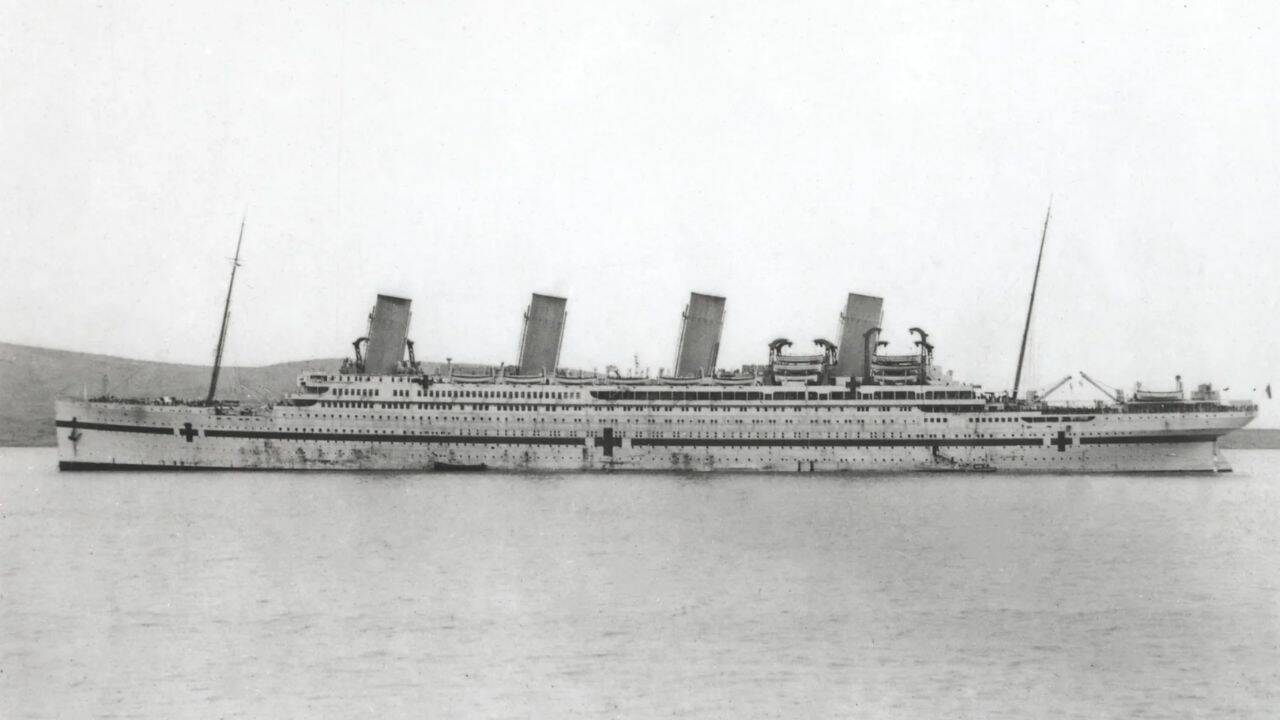
The hospital ship HMHS Britannic. Image Credit: Ephorate of Underwater Antiquities
The underwater recovery was very challenging
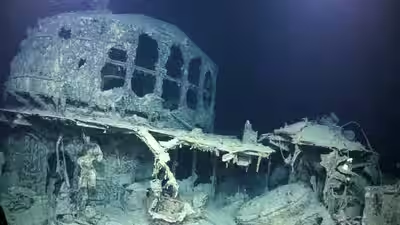
The wreck lies more than 120 metres below the surface of the Aegean Sea, close to Kea. Popular Mechanics describes the site as roughly 400 feet deep and about 45 miles south-east of Athens. Its depth, strong currents and poor visibility make exploration difficult and restrict access to specialist divers.The May 2025 expedition involved an 11-member team of professional deep-sea divers. British historian Simon Mills, founder of the Britannic Foundation, organised the research, while experienced diving specialists managed the safety and practical arrangements. Greece’s Ephorate of Underwater Antiquities supervised the operation and oversaw the handling of the recovered objects.According to the Ephorate, the divers used closed-circuit diving equipment to work at the wreck. These systems recycle breathing gas rather than releasing every breath directly into the water, making them suitable for specialised deep dives.Even with careful planning, the team could not recover every object identified in advance. The official report explains that the condition and position of certain items prevented their removal. Strong currents, limited visibility and the fragile state of the wreck added to the difficulties.The expedition therefore focused on selected objects that could be retrieved safely, rather than attempting to remove everything of interest from the site.
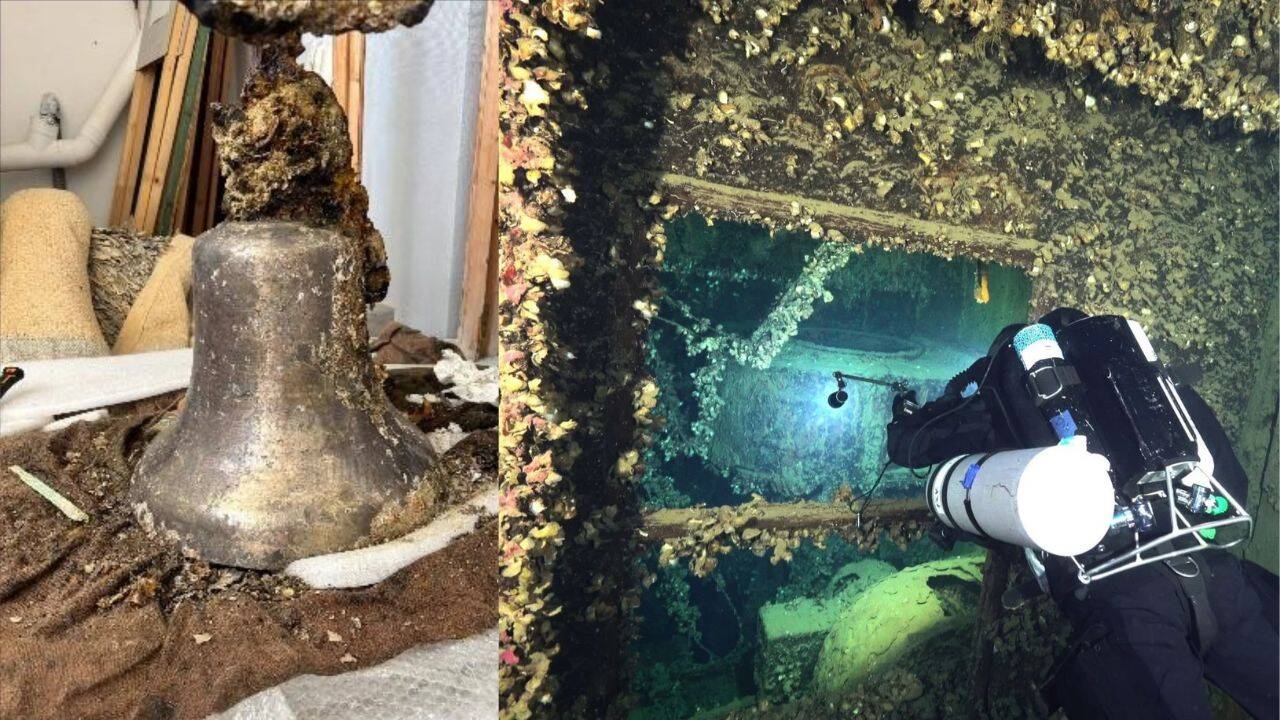
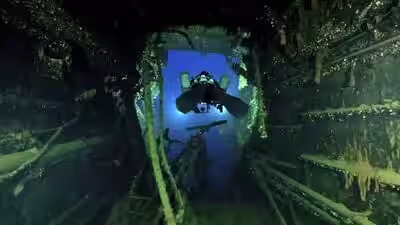
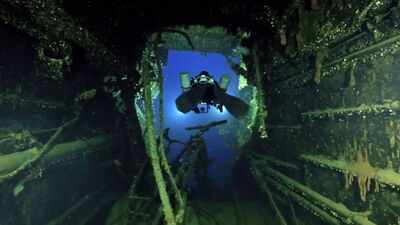
(Left) Watchtower observatory Bell; (Right) Diver at the shipwreck. Image Credit: Ephorate of Underwater Antiquities
How were the recovered objects brought to the surface
The divers used specially designed lift bags to raise the selected artefacts from the seabed. Once recovered, the objects were placed in protective containers, and cleaning began to remove marine organisms that had accumulated on their surfaces.Good News Network reported that the objects were secured for transfer to a conservation centre in Athens. The Ephorate’s account provides further details, explaining that the items were initially stored in a space provided by the Ephorate with assistance from the Kea Police Department.They were subsequently transferred to the Ephorate of Underwater Antiquities’ laboratories in Athens, where conservation work is continuing.This stage is essential because removing an object from the sea does not automatically make it suitable for display. After more than a century underwater, artefacts can carry marine growth and may require careful treatment to preserve their remaining material and details.
Where will Britannic’s recovered artefacts be displayed
The objects are intended to become part of the permanent exhibition at the National Museum of Underwater Antiquities, which is under construction in Piraeus, Greece. According to the Ephorate of Underwater Antiquities, the artefacts will feature in the museum’s section devoted to the First World War, where Britannic’s wreck will be a prominent exhibit.The planned display will bring together objects recovered from the ship and help visitors understand its role during the conflict. The bell and navigation light reflect the equipment needed to operate a large vessel, while the washbasin, serving trays and Turkish bath tiles offer a glimpse of its onboard facilities. The recovered binoculars also provide a tangible connection to the people who travelled or worked aboard the ship before it sank.