700,000-year-old squirrel poop reveals a lost Arctic world of mammoths, horses, and giant predators |

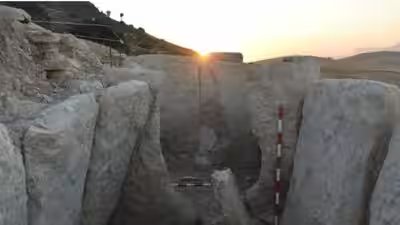
A sealed vial of sediment pulled from Yukon permafrost does not look like a breakthrough. It looks like dirt until the sequencing results arrive. Inside it, scientists from institutions including McMaster University and the University of Alberta found genetic traces of mammoths, horses, and predators that have not roamed the Arctic for tens of thousands…

Read More

Billions under the Pacific Ocean: Apple-sized metal-rich rocks that could power the future of electric cars |

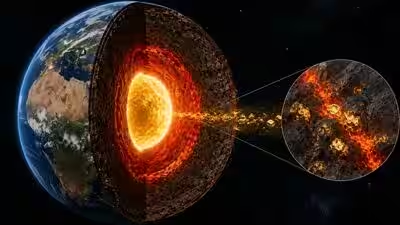
Roughly four kilometres below the surface of the central Pacific Ocean, scattered across a stretch of seafloor the size of the continental United States, lie hundreds of billions of apple-sized rocks. They are dark, lumpy, and almost impossibly slow-growing, a few millimetres every million years. Some of the ones sitting on the seabed today began…

Read More

Quote of the day by Neil deGrasse Tyson: “Curious that we spend more time congratulating people who have succeeded than encouraging people who…” |

Success has a way of attracting attention. A student tops an examination, and messages pour in. An entrepreneur builds a thriving company, and suddenly everyone wants to hear their story. An athlete wins a championship, and cameras follow their every move. Society loves a winner. It always has.Yet Neil deGrasse Tyson‘s observation points towards something…

Read More

Human Brain Vs AI: Your brain runs on less power than a light bulb, outperforming supercomputers, yet AI needs entire data centres to compete |

Every thought you have, every face you recognise and every memory you recall is powered by an organ that consumes roughly the same amount of electricity as a dim light bulb. The human brain operates on about 20 watts of power, yet it performs tasks that continue to challenge some of the world’s most advanced…

Read More