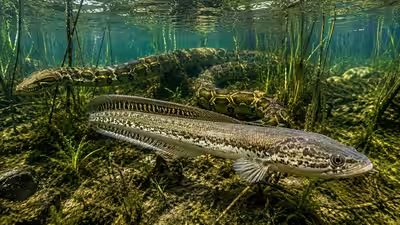
Since the 1980s, Florida’s biggest threat has been Burmese pythons; but this snake-like fish may be even worse for the Everglades ecosystem |

In Florida’s canals and wetlands, some of the most consequential changes are difficult to see. An Asian swamp eel can spend much of its time buried in mud or hidden beneath vegetation, emerging to feed when water returns. That makes it very different from the Burmese pythons that have become a familiar symbol of the…
Read More

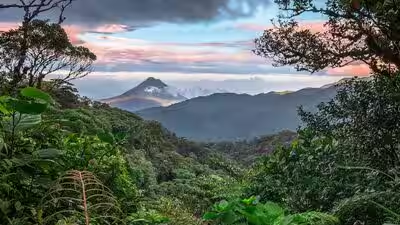
In 1972, Costa Rica began protecting a misty mountain forest: Decades later, Monteverde’s 10,500 hectares have become a remarkable conservation story |

High in Costa Rica’s Tilarán mountains, the forest often appears to be suspended between land and sky. Mist moves through the trees, settles on leaves and mosses, and becomes part of the water moving down the slopes. At Monteverde, that moisture is not simply a feature of the scenery. The forest sits along the Continental…

Read More

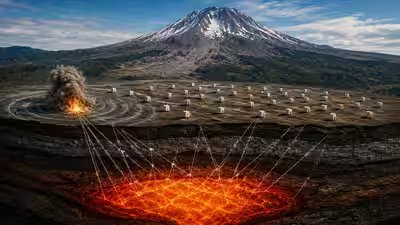
In 2014, scientists set off 23 explosions and deployed 3,500 seismographs around Mount St Helens; the experiment helped image a magma reservoir roughly 4 to 15 km beneath the volcano

Representative Image (AI-generated) Mount St. Helens is one of the most closely studied volcanoes in the United States, but scientists still cannot directly see the complex system of magma and rock hidden beneath it. In 2014, researchers launched an ambitious experiment to change that. According to the Imaging Magma Under St. Helens (iMUSH) project, a…

Read More

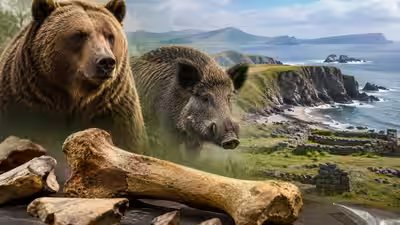
For 30 years, the “Kerry cow” bones were seen as proof of early farming in Ireland; scientists now say they belonged to a bear and wild boar

Representative Image (AI-generated) For more than three decades, a collection of animal bones from Ireland’s Ferriter’s Cove was considered some of the earliest evidence that farming had reached the island. But new research has now overturned that interpretation. According to University College Dublin (UCD), bones once identified as cattle have instead been identified as belonging…

Read More

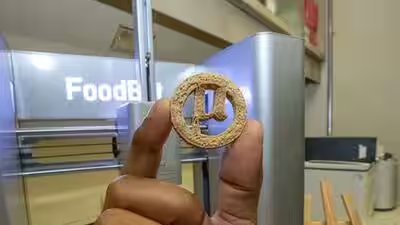
Scientists turned plastic bottles and corn waste into protein-rich cookies; the food could help tackle hunger problem and also feed space crews

The technology could also potentially be used in places such as submarines and future human settlements on the Moon or Mars (American chemical society photo) Researchers at Southern Illinois University Carbondale (SIU Carbondale) are working on a technology that turns plastic waste from a water bottle into part of a cookie. For this, they programmed…

Read More

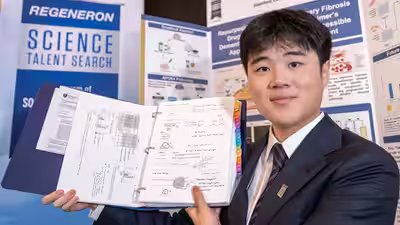
Meet Leon Wang, the 17-year-old Connecticut student who found 2 FDA-approved drugs that reduced Alzheimer’s-linked damage in lab-grown brain cells

Leon Wang, the 17-year-old Connecticut student (Image Credit: Society For Science) Alzheimer’s disease remains one of the most difficult neurological disorders to treat, partly because the processes behind it can begin damaging brain cells long before symptoms become apparent. Now, a project by 17-year-old Connecticut student Leon Wang has drawn attention for exploring whether medicines…

Read More

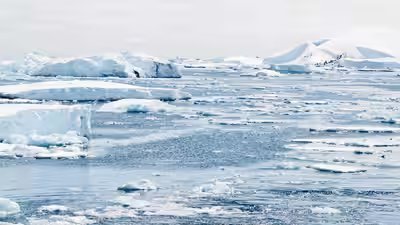
In 2007, scientists used NASA satellite measurements to reveal 14 areas of moving water beneath West Antarctica; one hidden lake had drained about 2 cubic kilometres in three years

Icebergs in Antarctica (Image Credit: Canva) Antarctica may look like a vast, frozen and unchanging landscape, but deep beneath its thick ice lies a surprisingly active world. In 2007, scientists reported findings based on measurements collected by NASA’s ICESat satellite between 2003 and 2006, revealing major changes in the surface of the West Antarctic Ice…

Read More

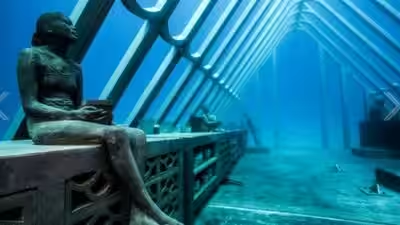
In 2019, a 165-tonne underwater art structure was submerged beneath the Great Barrier Reef; today, coral and marine creatures are slowly transforming the structure |

Beneath the surface of the Great Barrier Reef, a 165-tonne building is being slowly reshaped by the environment around it. The Coral Greenhouse, an underwater installation at John Brewer Reef, was designed to work with the sea rather than simply sit on the seabed. Coral can grow across its surfaces, fish can move through its…

Read More

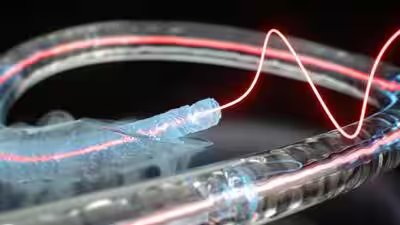
Freezing liquid inside optical fibre makes light and sound interact more than 1,000 times more strongly

Representational photo of a frozen optical fiber core in a glass capillary, which guides and couples light and sound waves efficiently. (Science Daily picture) Freezing liquid inside an optical fibre has helped scientists create an unusual environment where light and sound can interact more than 1,000 times more strongly than they do in ordinary optical…

Read More

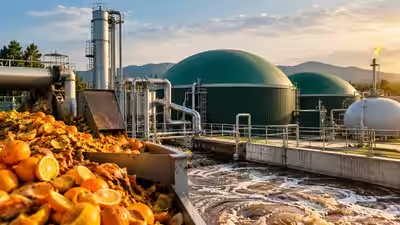
Brazil’s giant orange juice plant will turn citrus wastewater into biogas to power industrial operations |

A major orange juice processing project in Brazil is taking an unusual approach to one of the industry’s biggest waste streams: turning citrus wastewater into renewable energy. Louis Dreyfus Company (LDC) is building what it describes as the world’s largest plant dedicated to producing biogas from citrus effluent at its industrial facility in Bebedouro, São…

Read More