
Butterscotch fans should be wary of tiramisù’s treatment of trifle
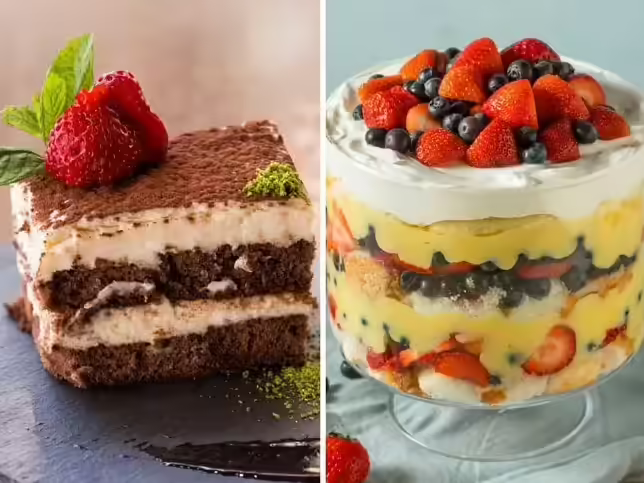
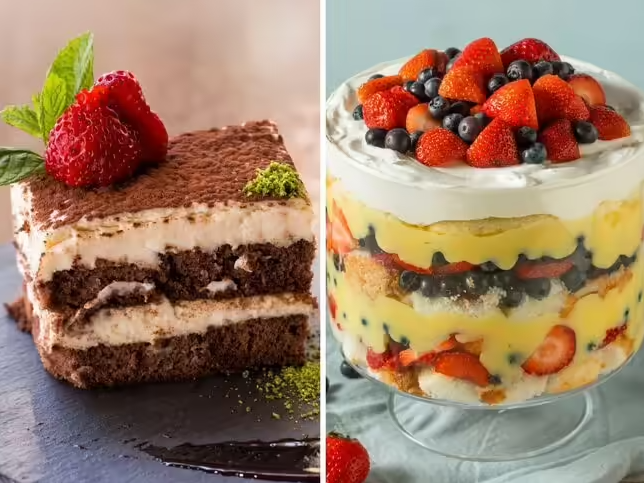

Tiramisù is Italian, soaks the sponge in coffee and layers it with a mixture of sugar, eggs and mascarpone, a rich Italian cream cheese, and bitter cocoa powder.
There are even recipes for tiramisù trifle that combine the two. I think this is like marrying a vampire and a lady with a lovely long neck. Tiramisù is everywhere. On restaurant and café menus, in supermarkets, at parties and as a flavouring in itself. You can get tiramisù syrup, tiramisù chocolates, tiramisù cupcakes and tiramisù flavoured protein powder. There are even recipes for tiramisù gulab jamun! But when did you last taste a good trifle? It might sound paranoid to suggest tiramisù is draining the life out of trifle, but the evidence suggests so.
Trifle was once common in India. It was a British introduction that persisted because it was rich yet refreshing thanks to all that fruit and cold custard. The alcohol made it sophisticated, yet the jelly was happily reminiscent of childhood.
A trifle also offers plenty of scope for intriguing variation. My mother stewed dried apricots for the fruit layer, adding a suave, yet tangy taste. In My Bombay Kitchen, Niloufer Ichaporia King writes of how, when her mother found alcohol hard to obtain during Bombay’s Prohibition years, she used drakshasava, the Ayurvedic herbal tonic made with a fermented grape juice base. Her friends liked it so much that she continued using drakshasava even when alcohol was available again.
But variability might be one reason why trifle has lost out. Tiramisù stands for one thing: that potent hit of coffee, chocolate and cream, which is why it’s easy to isolate it as flavouring. Its brown and cream colours are also distinctive. When American naturalists discovered that, due to global warming, grizzly and polar bears were encountering each other and producing brown and cream coloured cubs, they were called tiramisù bears.
Tiramisù is often made in single portions, unlike trifle, which is made and spooned from a large bowl. It is ideal for today’s market, where a distinctive image and flavour, and personalised portions, score over the calmer, communal offerings of trifle. My friend Vatsala tells me that trifle remains popular in Coonoor, where she lives. This is possibly due to an army connection. In A Memsahib’s Cookbook, Kikky Sahota’s memoir of an army wife’s cooking, she has a recipe for ‘boozy trifle’, where rum and jam are heated together and used to soak the base. But she also has a recipe for tiramisù where the coffee is spiked with brandy. Instead of hard-to-get mascarpone, a mixture of drained yoghurt and cream is used, an easy hack that has probably helped spread tiramisù’s popularity.
It also explains why Indian tiramisù often has a faint, sickening, sour undertaste, but strong coffee covers this up.
Sadly, it may be too late for trifle. The sort of society in which it thrived has probably passed, except for in pockets like Coonoor. But it isn’t too late to avert a similar threat to another much-loved flavour. Butterscotch was also brought by the British and its buttery-caramel flavour has remained popular, most notably in yellow coloured icecream with crunchy pieces of toffee. In a New York Times article on India’s love for butterscotch, food scholar Pushpesh Pant links it to the deep Indian love of ghee and jaggery, which combine for a similar taste.
Yet, I’m finding that classic butterscotch flavour is increasingly rare. In its place there’s now salted caramel, where the same butter and burned sugar taste is highlighted by a sprinkle of salt. I like salted caramel, but it would be a pity if its rise were to displace butterscotch, the way tiramisù has done with trifle.
Disclaimer
Views expressed above are the author’s own.