
Blood test can predict lung cancer 5 years before diagnosis | India News
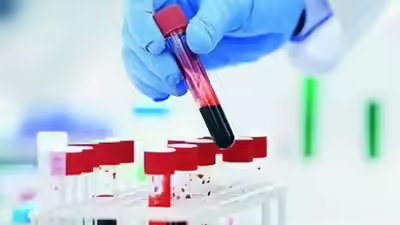
NEW DELHI: Scientists have identified warning signals in the blood that can predict lung cancer more than five years before the disease is diagnosed, a breakthrough that could help tackle one of India’s deadliest cancers, where most patients are detected only at an advanced stage.The findings are particularly relevant for India, where lung cancer cases are projected to rise from about 63,700 in 2015 to more than 81,000 by 2025 and nearly 80-85% of patients are diagnosed at an advanced stage. Published in ‘Cell’, the study identified a 14-protein blood signature that predicted lung cancer risk a median of 5.6 years before diagnosis, potentially enabling earlier monitoring, screening and preventive interventions.Dr Abhishek Shankar, radiation oncologist at AIIMS Delhi, said the test should be viewed as a risk-assessment tool rather than a screening test. “The blood-based protein signature does not detect a tumour but identifies people at higher risk of developing lung cancer in future. Such people can then undergo more definitive screening. The finding is an important scientific advance because it opens the possibility of identifying high-risk individuals years before cancer develops and may eventually help guide preventive interventions. However, these protein signatures will need validation in Indian populations before they can be widely applied here,” he said.The researchers analysed blood samples and health data from over 48,000 participants in the UK Biobank and found a combination of 14 proteins, along with factors such as age, smoking history and chronic lung disease, predicted future lung cancer risk more accurately than existing models.The findings were validated across eight international cohorts involving more than 2,000 lung cancer cases. Researchers also found the protein signature was elevated not only in smokers but also in people exposed to particulate air pollution, a finding of particular significance for India, where air pollution is an increasing public health concern.The study sheds new light on how lung cancer develops, suggesting air pollution, cancer-causing mutations and inflammation driven by the immune molecule IL-1β may converge on pathways that promote tumour formation.While further validation is needed before the test can be used routinely, researchers believe such blood-based risk assessment tools could eventually complement screening programmes and enable earlier detection.