
B-21 Raider, Sentinel and F-47: The three weapons US says its future depends on

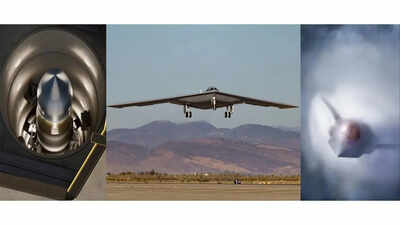
The B-21 Raider stealth bomber, Sentinel intercontinental ballistic missile and F-47 fighter aircraft will form the backbone of the United States’ future warfighting and nuclear deterrence capabilities, according to a senior US Air Force official overseeing key acquisition programmes.The three platforms are expected to redefine America’s long-range strike, air superiority and strategic deterrence architecture as the Pentagon seeks to counter emerging threats while replacing ageing Cold War-era systems.“There are three programs the future of our nation depends upon: Sentinel, B-21 and F-47,” White told members of the Raider Combined Test Force during an all-call meeting at Edwards Air Force Base on June 8, according to the US Air Force.“These are the capabilities our nation will turn to in its darkest hour,” he said.White’s remarks came as the Air Force announced a new milestone in the B-21 Raider programme, with an operational test pilot flying alongside a developmental test pilot. The move is intended to accelerate the aircraft’s path to operational service by integrating operational testing earlier in the development process.“Integrating operational and developmental test in the B-21 program exemplifies the acquisition culture we’re instilling throughout the force,” White said.He added, “It’s a smarter and faster mindset that leverages modern production and test tools with the proper sense of urgency, urgency that challenges old processes and moves us to a more agile acquisition system.”Referring to the B-21 Raider, White said the new approach would help bring the aircraft into service more quickly.“In the case of the Raider, it means we’re now that much closer to placing asymmetric lethality into the hands of the warfighter.”
B-21 Raider
Developed by Northrop Grumman, the B-21 Raider is the US Air Force’s next-generation stealth bomber designed for both conventional and nuclear strike missions. The aircraft is expected to gradually replace the B-1 Lancer and B-2 Spirit while strengthening the air-based leg of the US nuclear triad.In February 2026, the Department of the Air Force and Northrop Grumman announced a $4.5 billion agreement to expand B-21 production capacity by 25 per cent, accelerating delivery timelines. The Air Force plans to acquire at least 100 B-21 bombers, which will serve alongside the B-52 Stratofortress as the core of America’s future bomber fleet.
Sentinel ICBM (LGM-35A)
The LGM-35A Sentinel is the US Air Force’s next-generation intercontinental ballistic missile designed to replace the ageing Minuteman III system, which has remained in service for more than 50 years.The programme forms the land-based leg of the US nuclear triad and is expected to remain operational until at least 2075, ensuring the long-term viability of America’s strategic nuclear deterrent.
F-47 fighter jet
Built by Boeing under the Next Generation Air Dominance (NGAD) programme, the F-47 is the US Air Force’s sixth-generation fighter aircraft.The jet is expected to replace the F-22 Raptor and operate alongside autonomous Collaborative Combat Aircraft drones in highly contested environments. According to the Air Force, the F-47 will feature a combat radius exceeding 1,000 nautical miles, speeds above Mach 2 and advanced stealth capabilities.The service plans to procure more than 185 aircraft as part of its effort to maintain air superiority against future threats.White also stressed the need to accelerate critical defence programmes and reduce bureaucratic obstacles.“I’m not going to be reckless and say go faster,” he said before asking the test team: “How can I clear the way?”“I worry that we don’t embrace urgency. I worry that talk is cheap. I worry about the courage to challenge leaders,” White said.Praising personnel involved in the programme, he added, “You’re the very best this nation has to offer, and when we unleash you with urgency, founded upon meaning and purpose, then no adversary stands a chance.”