An invasive beetle wiped out black ash trees across parts of North America; scientists germinated 22,000 seeds, including genetic material from tree populations that no longer survive in the wild
Researchers have created a living seed bank to protect North America’s endangered black ash trees from extinction after decades of damage from an invasive insect. Led by scientists at Pennsylvania State University, the conservation project has successfully germinated 22,000 black ash seeds collected from across the tree’s natural range. The effort preserves important genetic material from populations that have already disappeared from the wild because of the emerald ash borer, an invasive wood-boring beetle from North-East Asia. The findings, published in the scientific journal Annals of Botany, explain how researchers used artificial intelligence and large-scale plant experiments to protect the genetic diversity needed for future forest restoration.Senior author Jill Hamilton, an associate professor in the Department of Ecosystem Science and Management at Penn State, described the importance of the collection. “From a conservation perspective, many of the populations represented in these collections are trees that don’t exist on the landscape anymore, so we like to consider this a little bit like Noah’s Ark for black ash,” Hamilton said in an official research summary published by Phys.org. “We need the collected and preserved germplasm for emerald ash borer-resistance breeding and future restoration.”
Damage caused by an invasive beetle
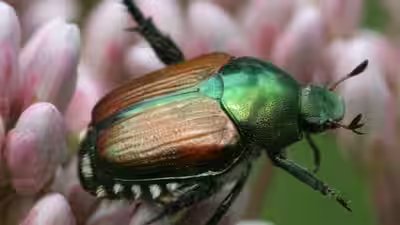
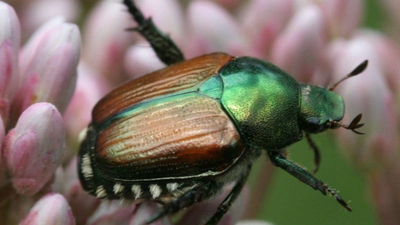
The emerald ash borer (Agrilus planipennis) was first found in North America near Detroit, Michigan, in 2002. Since then, the beetle has spread across 38 US states and several Canadian provinces, killing tens of millions of native ash trees. Black ash (Fraxinus nigra) is especially vulnerable to the pest. The tree grows mainly in wetland areas, where it helps control water movement through forests, supports wildlife and provides important material for traditional basket making among Indigenous nations, including Wabanaki, Iroquois and Great Lakes tribes. Adult beetles feed on the leaves, while their larvae burrow beneath the bark and damage the pathways that carry nutrients through the tree. As infestations spread, entire groups of mature black ash trees can disappear from northern forests within just a few years.
Using AI to study thousands of seeds
To preserve as much genetic diversity as possible before more wild trees disappeared, researchers collected more than 700 seed lots from across North America. First author Kyra LoPiccolo, a doctoral candidate in plant biology at Penn State, led the multi-stage testing process. The team used X-ray imaging to look inside the seeds without damaging them and examine their internal structure and condition. Because the researchers had to process a huge amount of information, they trained a machine learning system using the first set of X-ray images. The AI model automatically measured physical features in about 35,000 individual seeds. It also identified small differences in seed shape and structure linked to different geographic regions and climates. The research showed that black ash populations in different regions had developed specific seed traits over many generations to survive local weather conditions and growing seasons. Understanding these differences is important for future restoration. Seeds adapted to one climate may not grow well if they are planted in a different climate when black ash forests are restored.
Building future forests
After the initial testing, 22,000 seeds were germinated at Penn State’s Mendel’s Way Farm and Greenhouses. The young trees were then moved to three large common garden experiments. The gardens were established at the Ag Progress Days site near Penn State’s University Park campus and in Syracuse, New York. Researchers carried out the work with the State University of New York College of Environmental Science and Forestry and the Canadian Forest Service. In the common gardens, seedlings from different regions are grown under the same conditions. This allows researchers to determine whether differences in growth are caused by genetics or by the environment. The living collections are intended to become long-term seed orchards. They could provide strong genetic material for future restoration of black ash in wetlands across the US and Canada once effective pest controls or breeding methods are available. The project gives conservation scientists a way to protect genetic diversity that may otherwise have disappeared forever, while creating a potential source of trees for rebuilding black ash forests in the future.