
A garland of 100 insect heads earns villagers ₹200: How Madhya Pradesh’s unusual ‘Mundmala’ technique is being used to protect Sal forests
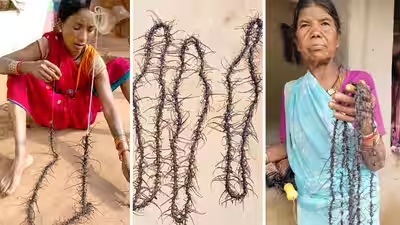
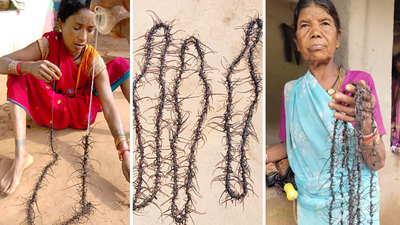
In the forests of Madhya Pradesh, a rather unusual “mala” is being used in the fight to save thousands of Sal trees. But this is no ordinary garland. Made from the severed heads of a destructive insect, the so-called ‘Keeda Mala’ or Mundmala technique has become part of a forest department campaign to control the spread of the Sal Borer, a pest that can damage and eventually kill Sal trees.The initiative is being carried out in forest areas including Dindori and Mandla, where Sal, locally known as Sarai, is an important part of the landscape. The idea: get local villagers involved in catching the insects, pay them for every pest they collect, and at the same time create an additional layer of protection for the forest.
Why are Sal Borer insects a threat to trees?
Sal Borer is a wood-boring insect that attacks Sal trees. The insect damages the tree by boring into its trunk and feeding inside the wood. Once the infestation spreads, the affected tree can weaken, dry out and eventually die.The scale of the problem in Dindori has raised concern among forest officials. According to a July 2026 report by Aaj Tak, the pest had affected around 30,000 hectares across several forest ranges in the district. The forest department had identified 1,46,784 trees that needed to be marked for cutting to prevent the infestation from spreading to healthier trees.The situation has also brought back memories of a major Sal Borer outbreak in the region in the late 1990s.
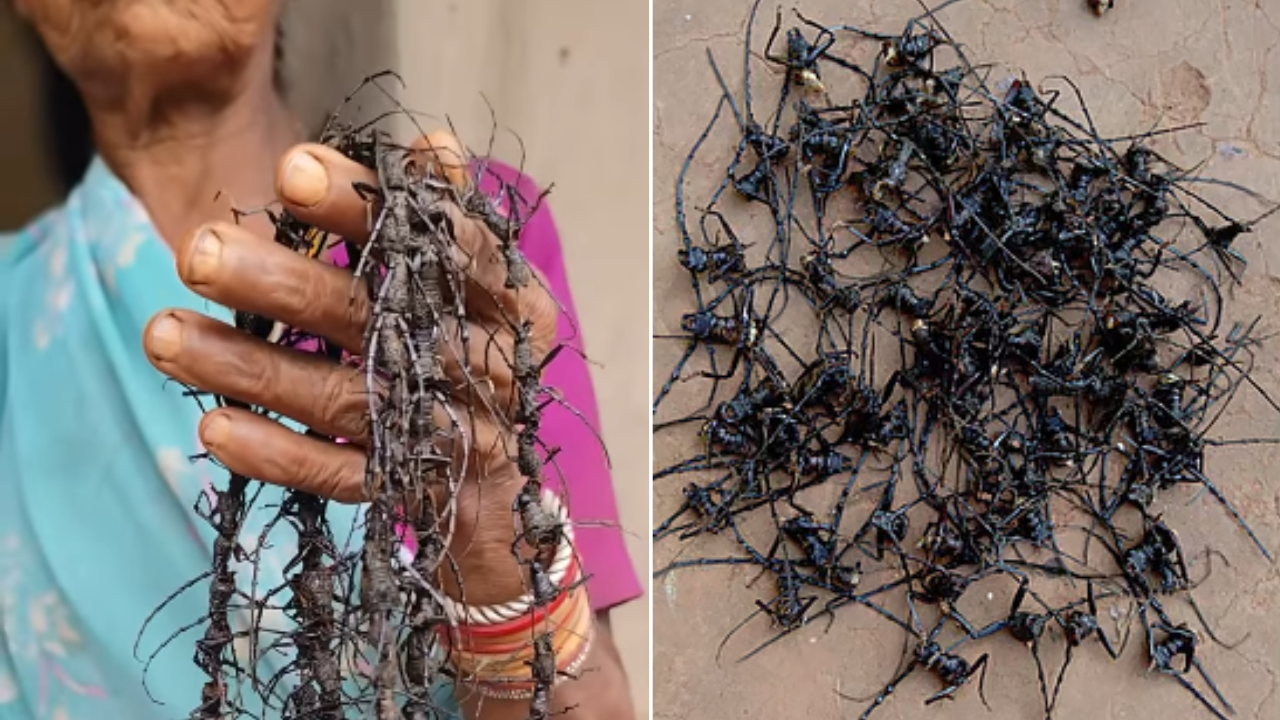
Villagers reach the forest before sunrise to collect Sal Borer insects when they are relatively inactive.
How does the ‘Keeda Mala’ technique work?
The forest department has involved villagers in what has been described as a ‘Keet Pakdo Abhiyan’ or insect-catching campaign. Villagers are trained to identify and collect the pests and are then paid according to the number of insects they catch.The process is particularly unusual because the insects are collected in large numbers and their heads are separated and counted. A garland containing 100 insect heads is referred to as a Mundmala, or ‘Keeda Mala’.The department pays ₹2 for every insect head, which works out to ₹200 for a garland of 100 heads.The incentive gives villagers a direct reason to participate in the forest protection effort while helping the department remove large numbers of pests from affected areas.
How are the insects caught?
In Dindori, forest officials have been using an unusual method to attract the Sal Borer. According to Ground Report, the bark of a Sal tree is beaten after the tree is cut, releasing a strong natural scent. The smell reportedly attracts the insects from an area of around three kilometres. The insects are then found in a sluggish state around the source and can be collected by villagers.Timing is crucial. Villagers reach the collection points before sunrise, when the insects are relatively inactive. Once daylight and sunlight arrive, the insects become active and can fly away.The collected insects are then handed over to forest workers after their heads are separated for counting.
Villagers have already caught lakhs of insects
The incentive-based system has resulted in a surprisingly large collection. Aaj Tak reported that villagers in Dindori had caught around 10 lakh Sal Borer insects, earning a combined ₹20 lakh from the exercise.At ₹2 per insect, the calculation is straightforward: every 100 insects brings ₹200, while 1,000 insects bring ₹2,000. For villagers who depend on forest-linked livelihoods, the campaign therefore serves a dual purpose- helping protect the forest while providing a source of income.
Why is the forest department involving villagers?
For a pest outbreak spread across thousands of hectares, simply relying on forest staff to locate and remove every insect would be difficult. Bringing local communities into the process allows the department to have more people monitoring affected areas and collecting the insects.The approach also gives villagers a financial incentive to participate in protecting a forest that is closely linked to their lives and livelihoods.However, catching the insects is only one part of the larger response. In Dindori, the forest department has also been marking heavily affected trees for removal to stop the infestation from spreading further. Around 15,000 trees were being cut as part of the ongoing process, while approval was awaited for larger-scale removal of infected trees.The unusual sight of villagers making garlands out of insect heads may seem startling at first. But behind the practice is a straightforward conservation strategy: turn the fight against a forest pest into a community effort by giving local people both a role and a financial incentive.For the Sal forests of Madhya Pradesh, the tiny insect has become a serious threat. And for now, one of the state’s most unusual responses is a garland made not of flowers, but of the heads of the pests threatening its trees.