A gallery in Chennai at 60 Years
At Artworld Sarala’s in March, this year , they were getting ready to celebrate 60 years at the Lalit Kala Akademi in Chennai, and Sarala Daruwala Banerjee invited me to her gallery to gaze at her litany of Indian contemporary art delights from all over India.From the masters like Ram Kumar to Arpana Caur to sculptors Nandgopal, Anila Jacob and a host of artists belonging to the Madras Art Movement each room in this maze was steeped in history.Sarala a collector and gallery persona is known for her gentility and gracious ways.Her most historic retrospectives last year were Amitabh Sengupta and Akkitham Narayanan.
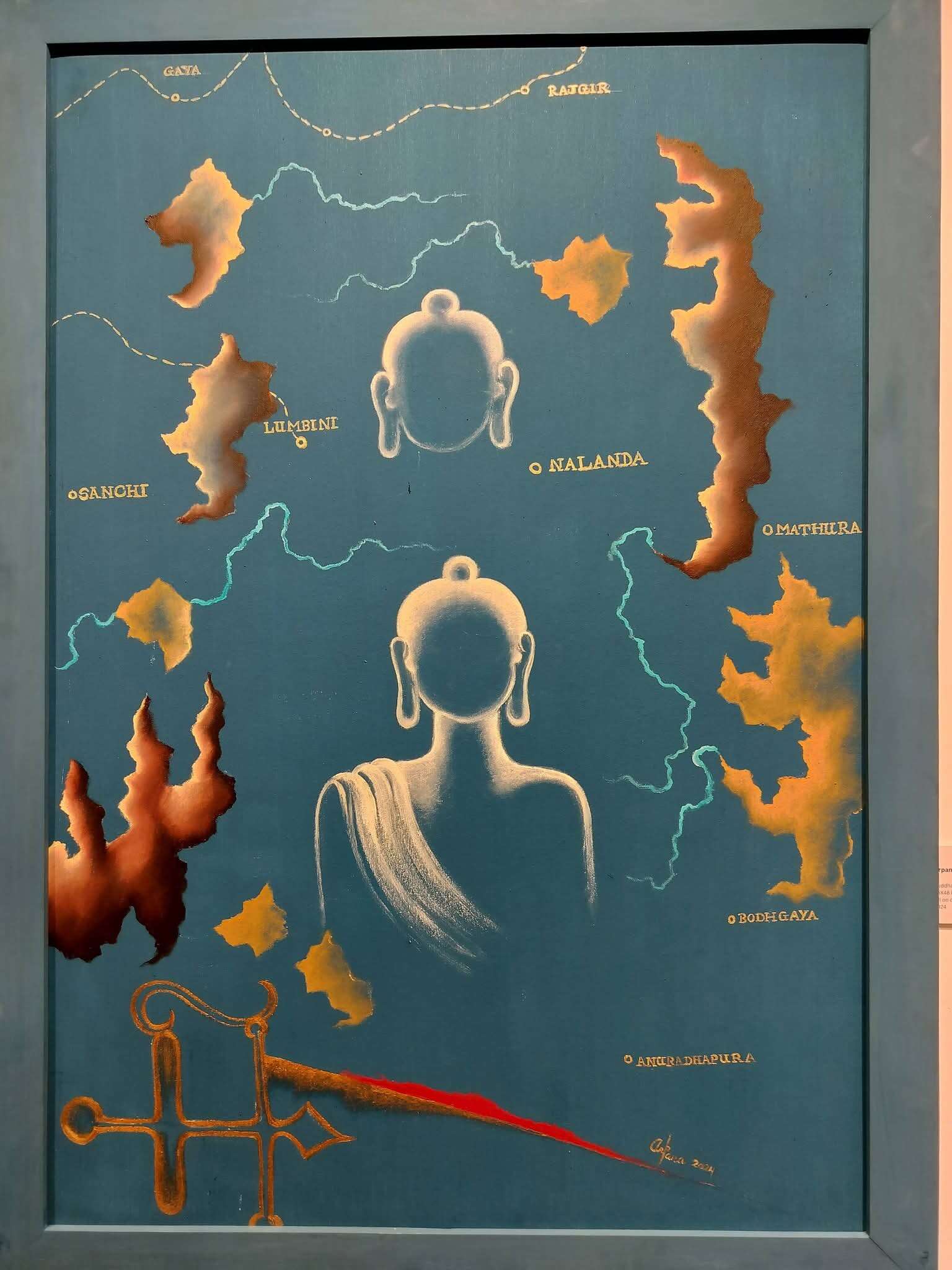

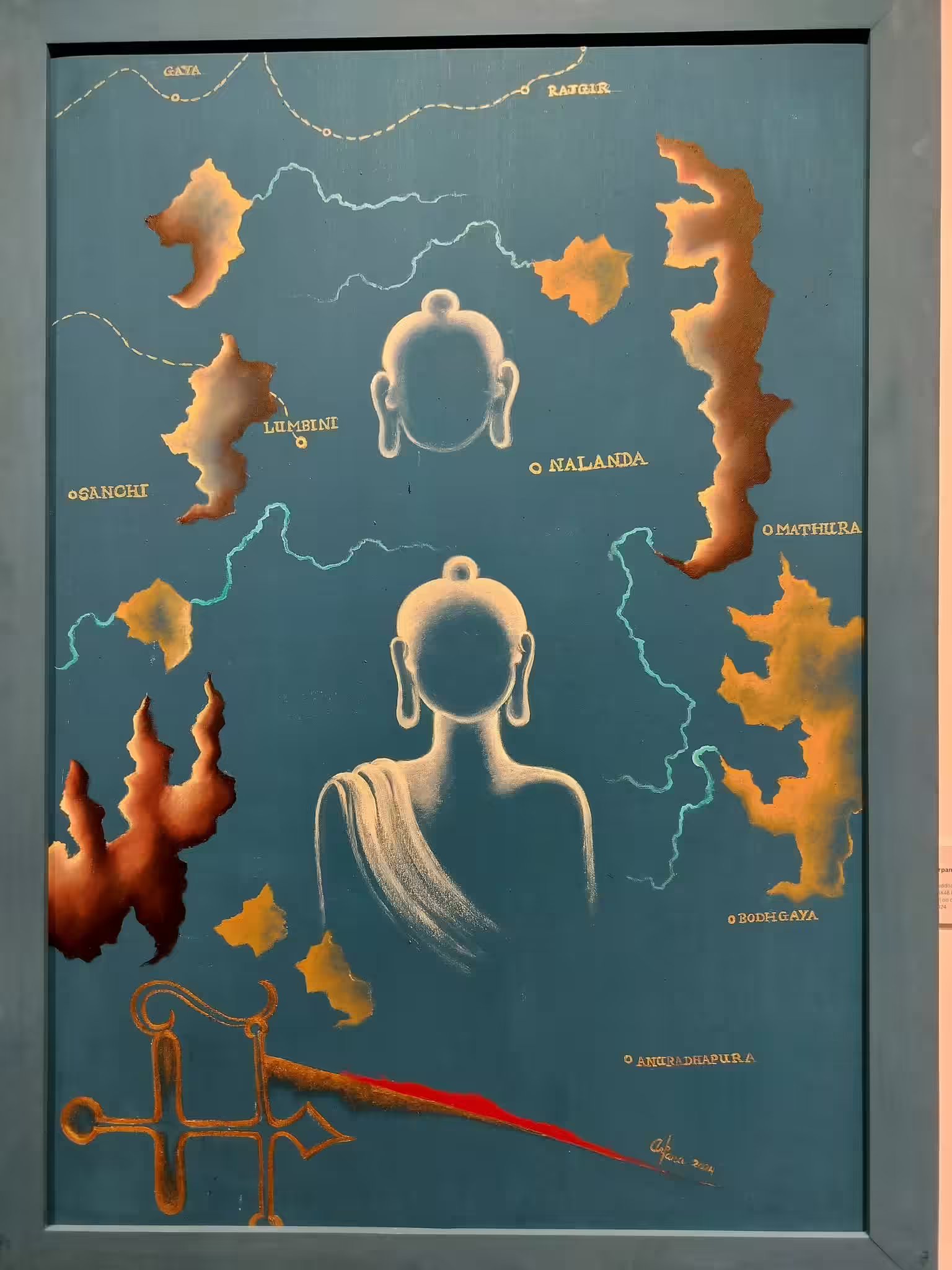
Arpana Caur’s Buddhas
The high priestess of contours in India, the artist who marries miniature traditions into contemporary format Arpana Caur’s pair of Buddha’s is one of works that instantly draws you into meditative mould.The handling of colour and contour in precision and perfect harmony is something she has perfected over 50 years.Her manner of balance and harmony in intonation and intensity both combine with a minimalist mooring of grace and depth of understanding spirituality.Her supple hand with the brush is able to bring in brisk as well as fluid long strokes that give us her commitment to a narrative that stands strong and in a class of its own.
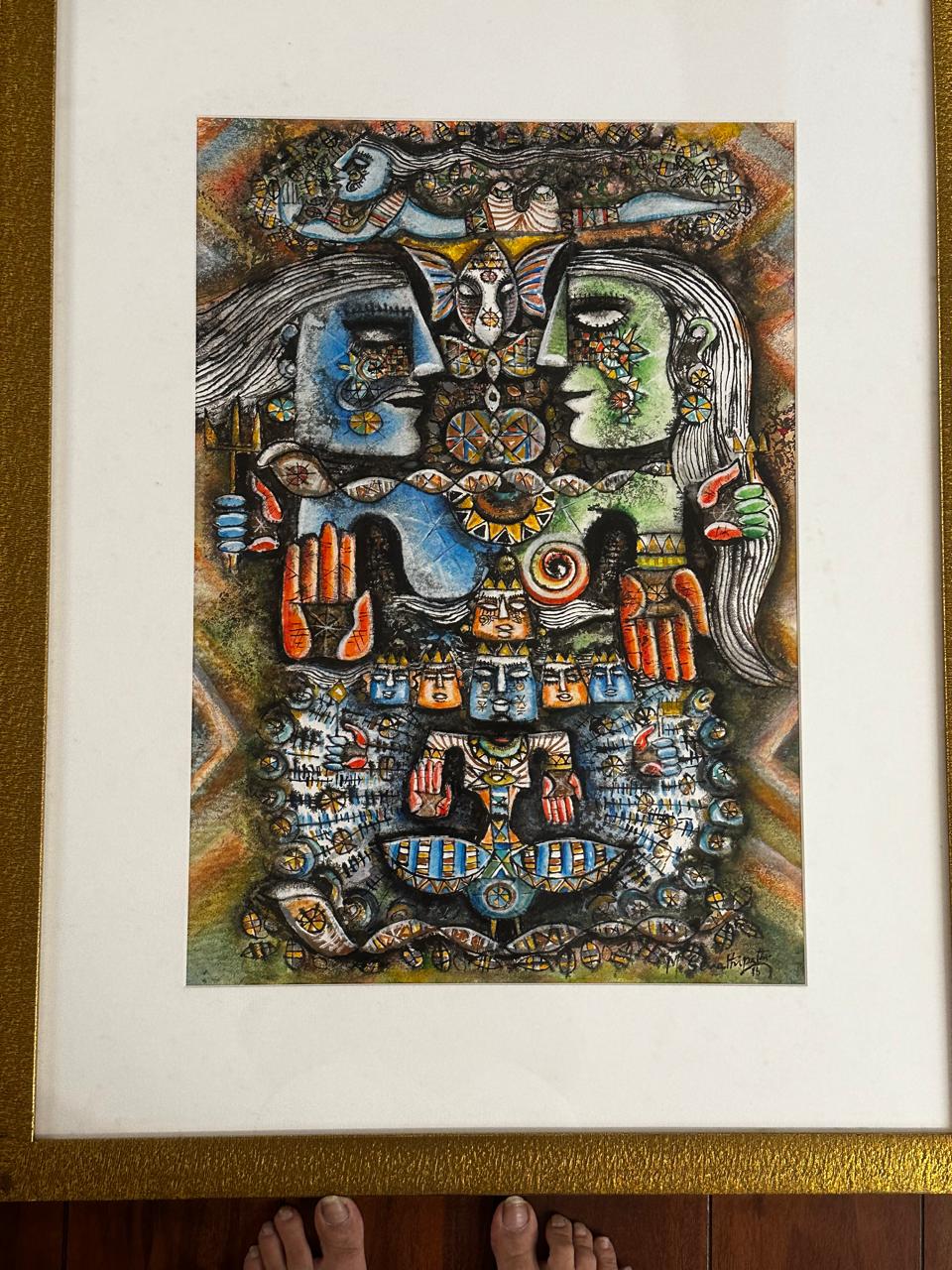

M Senathipathi’s figurative fervour
My favourite Madras artist M Senathipathi’s figurative resilience was seen in his works that at once celebrate the human form with multiple textural terrain and colours that remind us of murals of a millennium. In his embodiment of the mythical elements as well as temple sculptural echoes each work is a compositional delight of charismatic elegance and a rough hewn resonance.
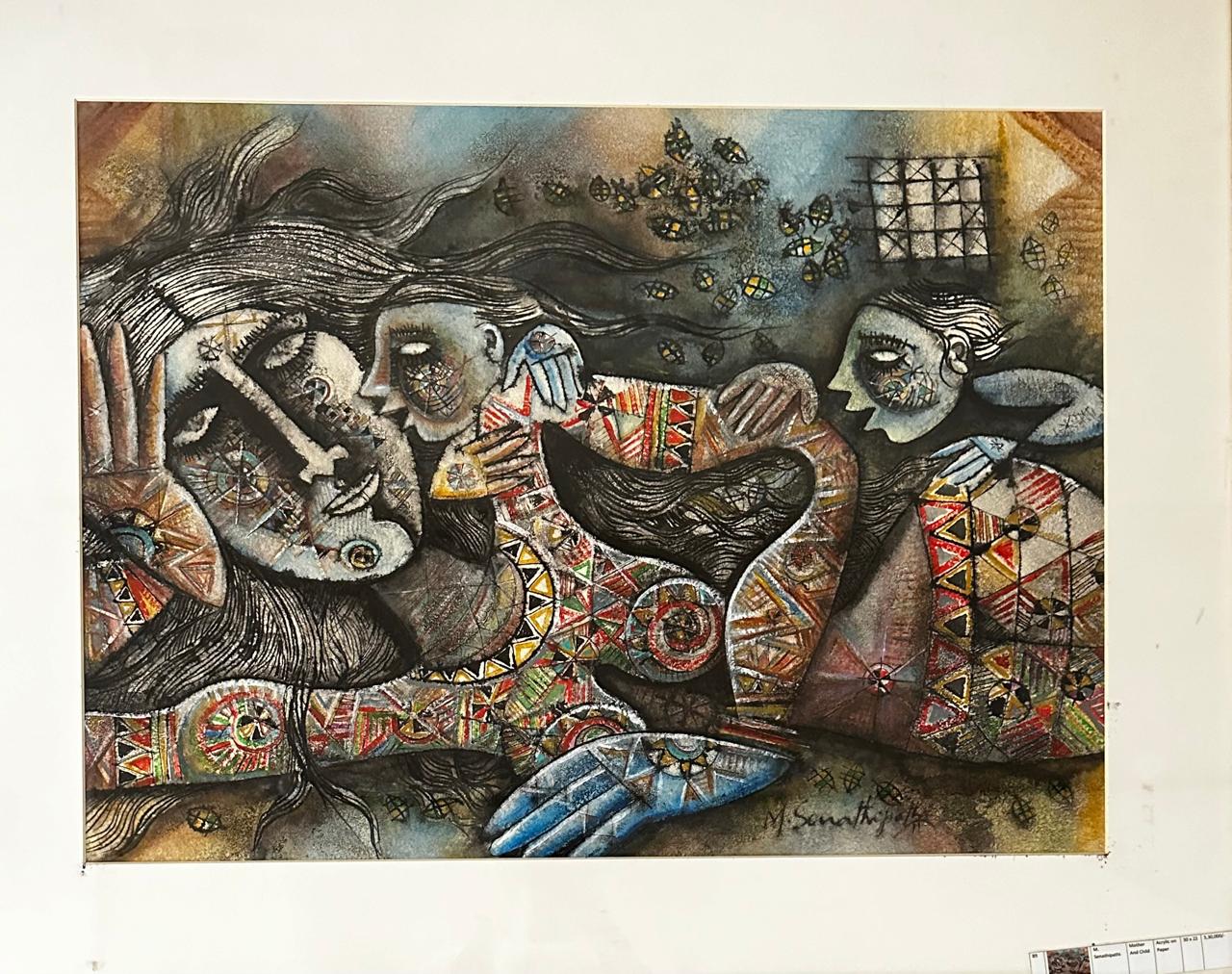

The mother and her two children catch your gaze for its vivacity and verve while the vertical image of the human face and many nuggets of nuances have their own grace. Senathipathi in many ways reflects the beauty of dark Dravidian skin and tells us we are proud of our skin colour.His handling of the compositional fragments to create a personal yet distinctive narrative is what sets him apart.One cannot forget his masterpiece at the NGMA in Delhi which was used for the south Indian artists show Dhvani se Shabd our Chin, curated by former DG,NGMA, Adwaita Gadanayak.
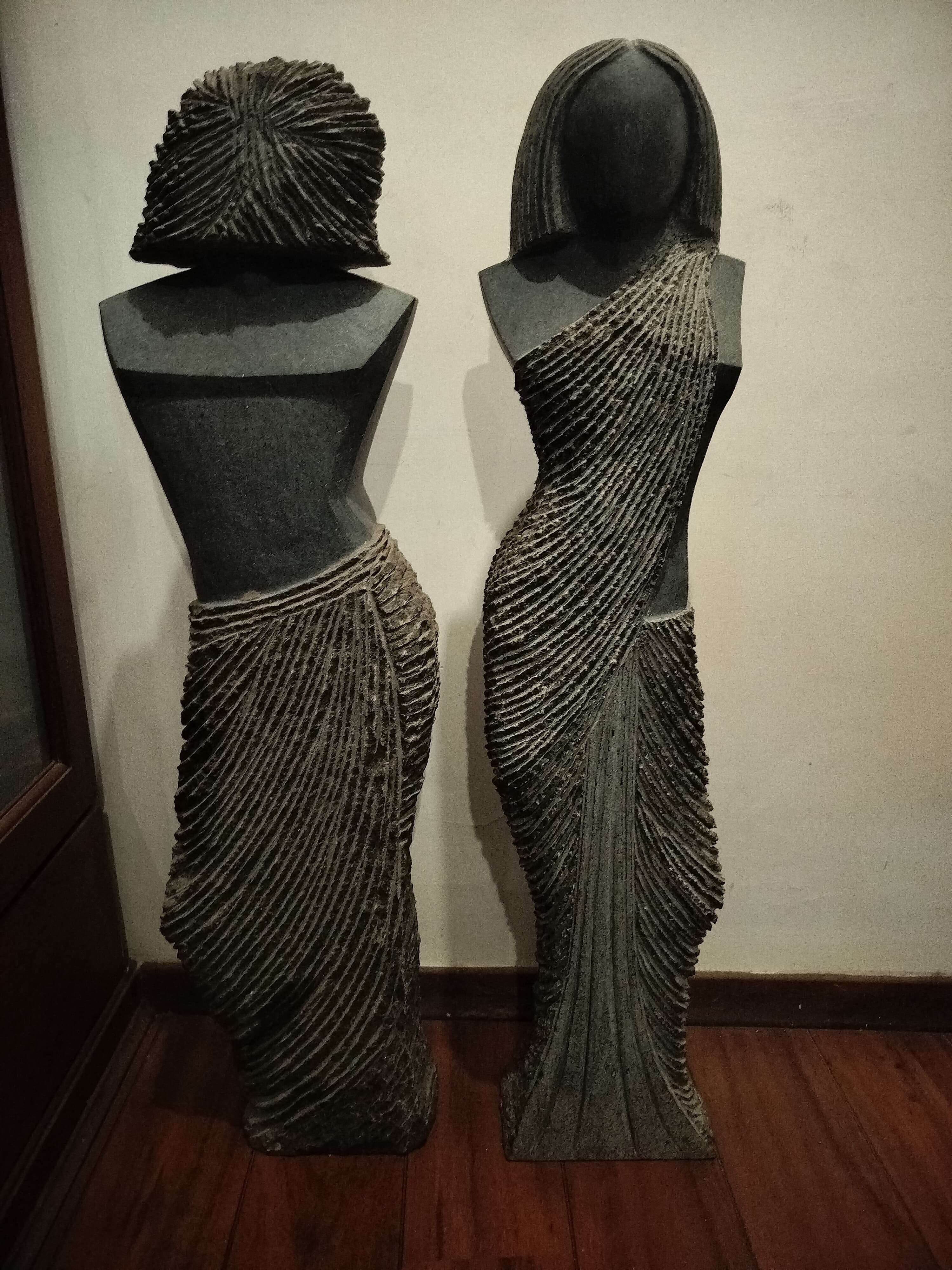

Sculptural symphony
Sarala’s years of growing with art and watching her grandfather and father deal with artists of yore is seen in the brilliance of her collection that embarks on a silent sculptural symphony that assails our senses.Amongst a host of fascinating sculptures three sculptures stood apart.
Anila Jacob’s human figures on black stone are riveting in both technique and the beauty of simplicity in tone and tenor.Powerful are this couple who are created with grace and gravitas.
Nandan’s sculpted Buddha is a masterpiece of both meditation and primitive South Asian echoes.The finesse of fluted contours and the expression of rootedness creates its own dynamics.Nandan an important artist of the Madras Metaphor was both a painter and sculptor.Sarala says : “ His studio was called ‘Thilakam’, stood for focal point or spot of energy in living things. His sculptures for him were the sustenance of his artistic core.”
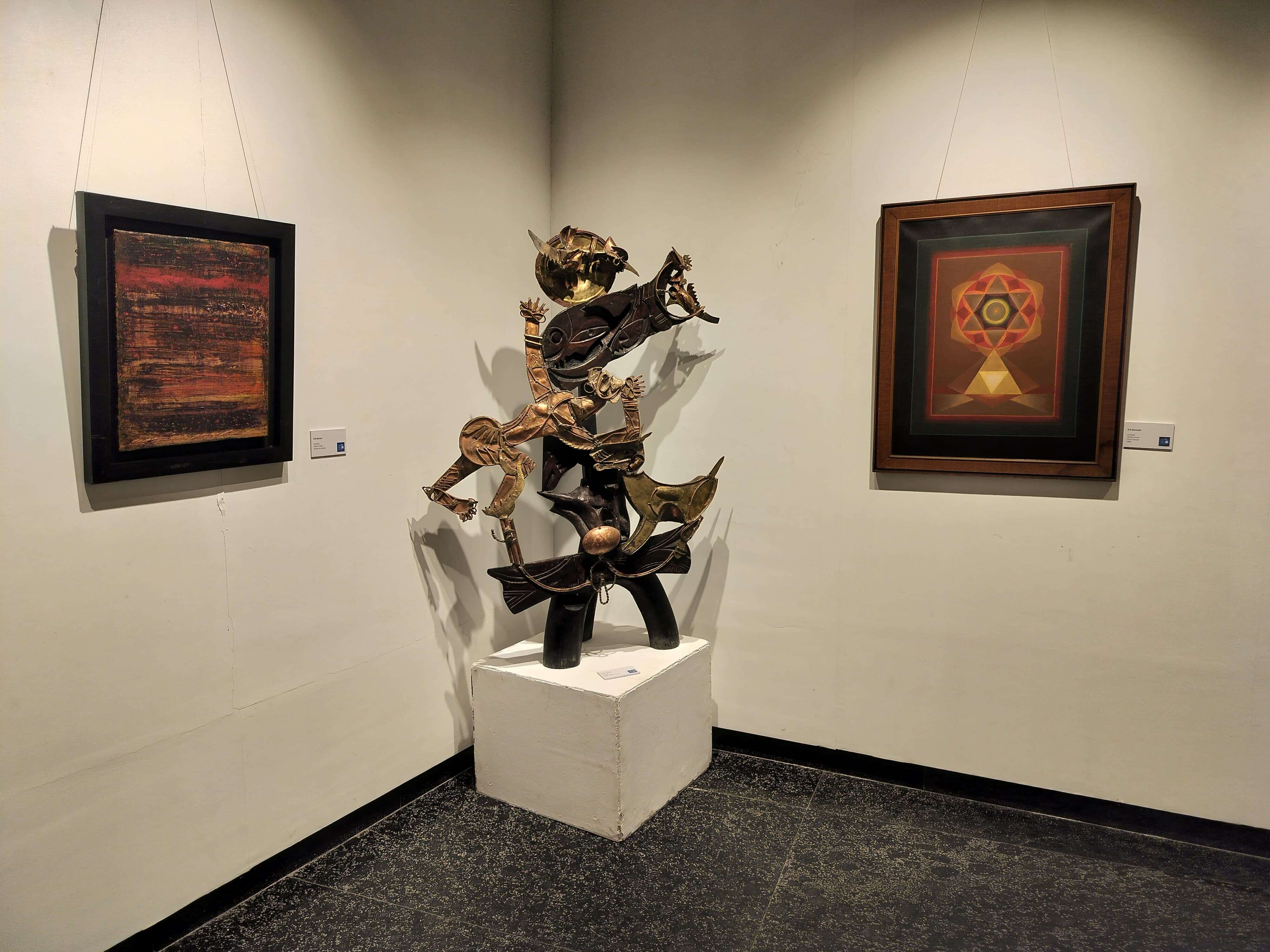

Nandgopal’s mythic form is at once a dramatic medley of polished and matte metals in small and fervent fusion.His lifelong search to introduce colour tones into his sculptures of mythic relevance is at once both poised as well as patterned into an aligned symmetry of finer elements.
Abstract wonders
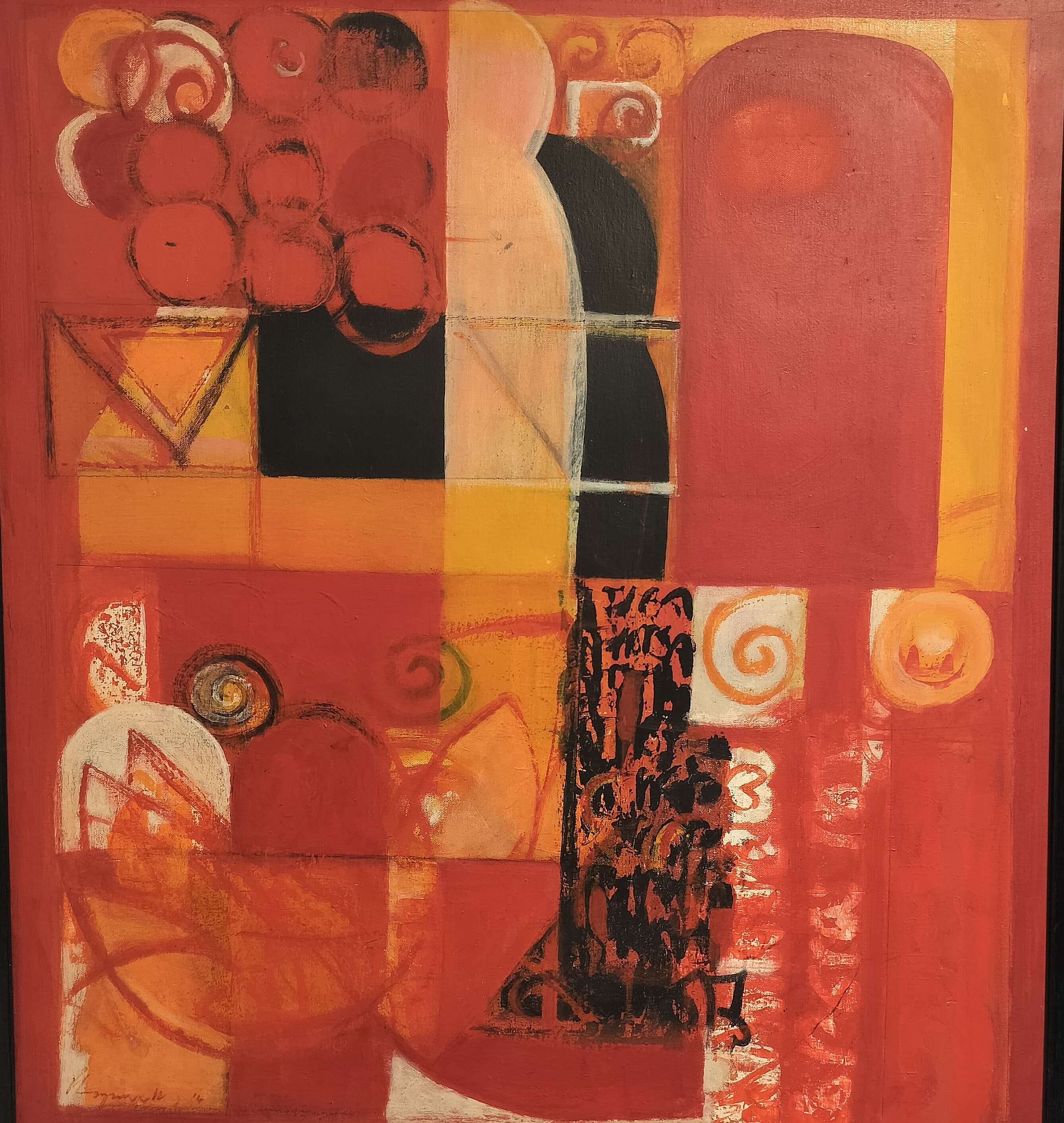

Amongst abstractionists her G.R. Santosh is a rare study but we must not miss P. Gopinath who is very much a part of the Madras Metaphor.The “Madras Metaphor” refers to a distinct regional modernism that emerged in Chennai during the 1960s-80s, characterized by a break from Western academic realism in favor of indigenous traditions, symbols, and metaphysical exploration.His colours are at once a corollary of warmth and mathematical momentousness within the geometry he creates.
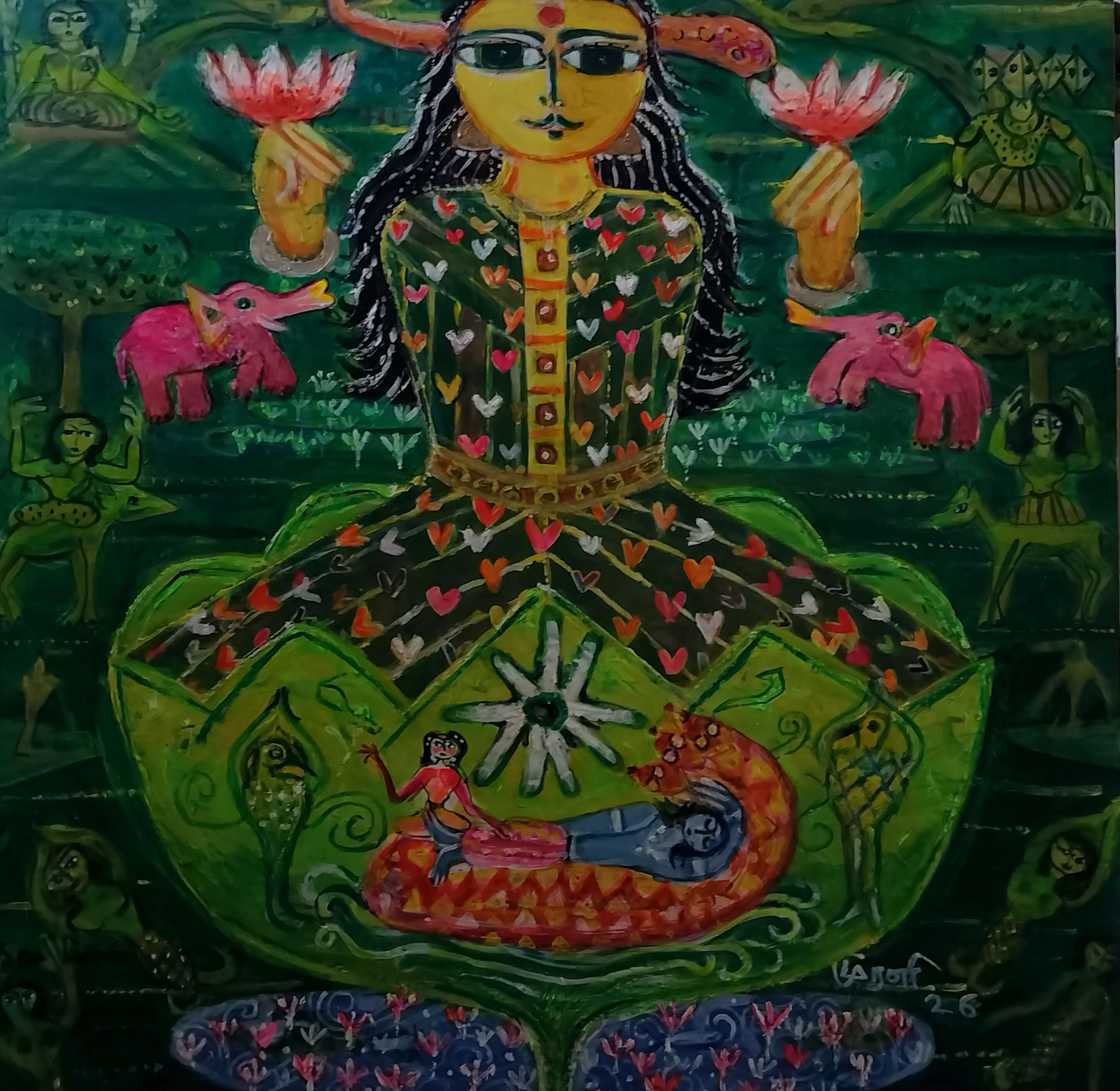

Muralidharan
Muralidharan, known for emerging in the decades following the Madras Movement, created his own narrative-driven visual language of symbols and human imagery filled with an expression that was at once warm as well as built on his love for mythology, folklore, and experience of cultural memory. “I usually begin with one large image either an animal or human and then other smaller forms start emerging out of it, naturally. I play with space, and in a way, the process becomes the work,” said he in an older interview.In the interplay of colours we recognise his love for composition and the balance of colour within the frame.
For Sarala stacked into her gallery in Chennai is perhaps over 1,400 artworks by more than 400 artists, the Collection having a searchable database of selected artworks. This selection reflects the breadth, diversity, and tenor of her family’s extensive holdings from the late 19th century through the present day. The collection is continually expanded to include a larger representation of her core holdings as well as recent acquisitions.