
Quote of the day by Stanley Baldwin: “I would rather trust a woman’s instinct than a man’s…” | World News
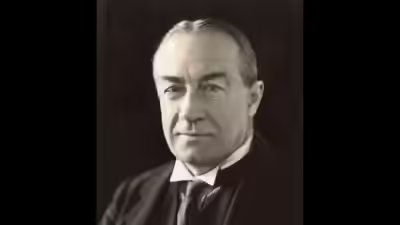
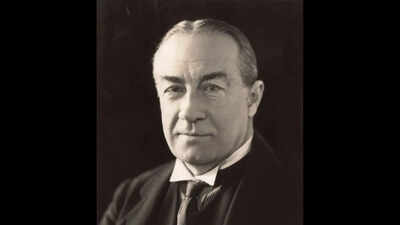
Some quotes still resonate decades after they were uttered because they deal with ideas that transcend generations. One such statement was made by the former British Prime Minister Stanley Baldwin, who once said, “I would rather trust a woman’s instinct than a man’s reason”. Although the quote is short and simple, it has remained relevant because it spurs conversations about intuition, emotional intelligence, decision-making and the historical treatment of women’s views in society.The quote may surprise you at first glance, especially considering the era in which Baldwin lived and reigned. Politics in the early twentieth century was a male-dominated enterprise, and public leadership was associated with logic, authority and rational decision-making. Yet Baldwin’s statement seems to recognise something else, the value of instinct, perception and emotional understanding.The quote has been interpreted in various ways over the years. For some readers, it is a praise of women’s intuition and emotional insight. Others see it more as a general meditation on how instinct can sometimes prevail where cold reasoning cannot. But whether or not this is a correct interpretation, the statement is still true today, as current discussions on leadership, emotional intelligence, and decision-making are starting to consider the importance of empathy and intuition, in addition to logic.
Quote of the day by Stanley Baldwin
“I would rather trust a woman’s instinct than a man’s reason”
What is the meaning of the quote by Stanley Baldwin
The quote contrasts two concepts that are often considered to be opposed: instinct and reason. Reason is generally equated with logic, calculation, analysis and rational thought. Instinct, on the other hand, is intuition, emotional awareness, gut feeling and immediate understanding.When Stanley Baldwin said he would trust a woman’s instinct over a man’s reason, he might not have been entirely dismissing logic. Instead, the statement appears to suggest that sometimes pure reasoning can never give us the insight that instinct and emotional perception can.Human decisions are rarely just logical. In personal and professional situations, people often work on emotional judgment, life experience, observation and intuition. Today, many psychologists argue that intuition is not irrational at all. Instead, it can be said to reflect the brain’s capacity to rapidly process patterns and experiences without conscious analysis.That’s one reason the quote still resonates today. It challenges the idea that logical thinking is always the best way to be.
Who was Stanley Baldwin
Stanley Baldwin was one of Britain’s most important political figures during the early twentieth century. Born in 1867, he served as the Prime Minister of the United Kingdom three times in the 1920s and 1930s.Baldwin’s time in office was one of political uncertainty, economic difficulties, labour unrest and increasing international tension before the Second World War. He was known for his quiet way of speaking, measured political method and his ability to reach ordinary people.Unlike many of his contemporaries in politics, Baldwin often pushed for moderation and public understanding rather than dramatic rhetoric. His speeches were often more about social concerns and human behaviour than mere political strategy.The quote about trusting a woman’s instinct reflects his broader interest in human judgment and character. Although society during his time remained deeply shaped by traditional gender roles, Baldwin’s statement appears to recognise qualities often overlooked in public leadership discussions of that era.
Why intuition has become an important topic in modern psychology
Modern psychology has greatly changed the way in which people understand intuition. “Previous generations often considered instinct to be emotional or unreliable. Today, many researchers believe that intuition plays an important part in human decision-making.Psychologists say that intuition is the result of a great many experiences and observations, and of subconscious pattern-recognition. So, a lot of times, people make quick decisions based on information that their brain has already processed without them even knowing it.This is especially common in fast-paced fields such as medicine, emergency response, sports, business and leadership. Experienced professionals often rely on “gut feelings” which are actually correct because their brains can identify patterns developed over the years.Stanley Baldwin’s quote is startling in its modernity in that it reflects an increasing awareness that emotional insight and intuition should not be automatically overlooked in preference to cold logic alone.
The historical view of women’s intuition
For centuries, in many societies, there has been the idea of “women’s intuition.” Women have traditionally been described as being more perceptive of emotions, more empathetic and socially aware than men. Some of these assumptions were based on stereotypes, but current research suggests that emotional intelligence and social sensitivity are indeed human strengths.Those who study emotional intelligence often find that empathy, active listening, and emotional awareness are major contributors to successful relationships and leadership. These qualities are now well respected in the workplace, education, healthcare and management.Baldwin’s quote seems to recognise these strengths. It emphasises the importance of intuition and emotional perception, as opposed to just analytical reasoning.Nevertheless, the quote is still being debated, as the attitude of gender roles among modern readers is different from that of previous generations. Some consider the statement a respectful appreciation of emotional intelligence. Others believe intuition and reason should not be divided by gender at all.
Why emotional intelligence matters in leadership today
There is no place where emotional intelligence is discussed more as a quality of leadership than in the modern workplace and in politics. People don’t just judge leaders on their technical skills or strategic thinking. Today, good leadership is largely a matter of communication, empathy, adaptability, and emotional awareness.Organisational psychology research has shown that emotionally intelligent leaders are more likely to develop better teams, to resolve conflict better, and to create healthier workplace cultures.This is the same balance suggested by the quote from Baldwin. Logic is important. But understanding people emotionally is just as important. Human emotions, social dynamics, trust and communication all influence decision-making, and instinct and empathy are useful.Today, many companies are actively training managers in emotional intelligence, as workplaces are increasingly recognising that technical ability alone isn’t enough for successful leadership.
Why people continue to share quotes about instinct and intuition
Intuition quotes are still in fashion, as there are times when human beings feel that instinct is very strong. Many people can remember situations where a feeling, an impression, or an emotional perception later proved to be true.Science continues to study intuition because it occupies a fascinating space between emotion and cognition. Pure logic is not always correct, nor is intuition. Both are usually involved in human decision-making.That’s one reason Baldwin’s quote is memorable. It resonates with a universal human experience: the tension between rational analysis and instinctive understanding.The quote also lives on because it is brief and emotionally charged. Assumptions in statements that challenge often go on for generations because they are subject to interpretation and debate.
How society’s view of intelligence has evolved
Traditionally, intelligence was measured by academic ability, logic and analytic reason. Emotional understanding was paid much less attention to.But in the last few decades, psychologists and educators have broadened the very definition of intelligence. Now, emotional intelligence, social intelligence, adaptability, empathy and communication are considered critical dimensions of human capability.This broader notion of intelligence offers some explanation as to why the quote by Baldwin remains so relevant today. It recognises that wisdom may not be logical, but emotional perception and instinctual understanding.Modern leadership gurus often say that the best decision makers are analytical thinkers, but also empathetic and intuitive. Pure reasoning without emotional awareness sometimes can miss important human realities.
Intuition in everyday life
In ordinary life, instinct plays a far greater part than many people realise. People often use intuition to judge trust, relationships, opportunities or risks. Often, parents, teachers, doctors, and leaders make decisions based on emotional understanding and their own judgment.Emotional perception is especially important in relationships. People are constantly reading tone, body language, expressions and social signals, often without consciously analysing them. This is a very handy skill to have in a complex social world.Baldwin’s quote expresses this truth we all know, and readers can relate to it. Many decisions are not purely calculative, but a mixture of experience, empathy and instinct.
The quote’s relevance in modern conversations about gender
Today’s conversations about gender are more complex and nuanced. Baldwin’s words can be interpreted in different ways depending on the cultural outlook and personal convictions of contemporary readers.Others see the quote as recognising women’s emotional intelligence at a time when women’s contribution to public life was often underestimated. Intuition and reason are human qualities, not gender specific, some people say.The quote continues to be controversial, no matter how you interpret it, because it touches on age-old questions about how people make decisions and how societies value different kinds of intelligence.It also shows how public conversations around gender have changed over time. Comments that once seemed out of place now spark wider conversations about equality, leadership styles and emotional intelligence.
Why the quote still resonates generations later
What gives Baldwin’s statement its timelessness is the emotional and philosophical profundity. It doesn’t just compare men and women. It is a reflection of a larger truth about human judgment itself.Throughout history, civilisations have tended to overvalue logic and undervalue emotional insight. However, people seldom work on reason alone. Emotional understanding is the basis for relationships, for leadership, for morality, for creativity, for communication.The quote is relevant to the present day because modern society is finding out that empathy and emotional intelligence are becoming important in personal and professional life.In a world of data, analytics, competition and technology, people are still searching for a balance of rational thought and human instinct. In a single, remarkably simple sentence, Baldwin captures that balance.
A reminder that wisdom is not built on logic alone
Finally, the quote of Stanley Baldwin encapsulates an essential idea: human understanding is more complex than pure reasoning. Logic may account for facts and systems but intuition often helps people understand emotions, relationships and human behaviour.The quote does not exclude reason. But it suggests that emotional awareness and instinct can sometimes sense truths that analysis cannot fully understand.That’s why, decades later, the statement still comes up in conversations about leadership, psychology, relationships and human behaviour. It reminds us that wisdom usually comes from a balance of head and heart.Finally, the quote of Stanley Baldwin captures an essential idea: human understanding is more complex than pure reasoning. Logic can explain facts and systems, but intuition often helps people to understand emotions, relationships and human behaviour.The quote doesn’t exclude reason. But it does suggest that instinct and emotional awareness can sometimes sense truths that analysis can’t quite grasp.That is why the statement still finds its way into conversations about leadership, psychology, relationships and human behaviour, decades later. It serves as a reminder that wisdom often comes from balancing intellect and emotional understanding.In a world where decisions impact systems and people, perhaps that balance is more important than ever today. In today’s world, where decisions increasingly affect both systems and people, that balance may matter more than ever.