All’s unfair in war?
At one level, one can think of the Iran war in familiar terms. The parallels with the WMD-driven Iraq wars are many. The same device of a prefigured justification, the gradual escalation of involvement, the same dubious claims amplified by media, and so on. And yet there is something very different at work. For the world that existed in 2003 has changed beyond recognition.
This is not a column about the Iran war per se. It is about what it says about where we are in terms of the civilisational bargain we have lived by. Over the last few centuries we have developed a protocol of managing differences, one that rested on a balance between the raw impulses of power and self-interest and the gloved fictions of diplomacy, international law, norms of engagement. They acted as a layer of protective padding that converted confrontation into conversation, or at least the possibility of one. They were not always successful, but they established a sense of order, of laying down a way in which we could disagree and still carry on.
That seems to have collapsed today. The engineered pretense that we could negotiate our way out of conflict, that treaties meant something, that strength was not a device to dissolve the possibility of dialogue. Even when their actions spoke otherwise, the appearance of a rules-based order was maintained. Some things were simply not said, some lines not crossed.
These have been tossed aside like a costume that has outlived its purpose, without being replaced by a rival set of order-making mechanisms.
The new order, or more correctly, disorder, finds its most visceral expression in Iran. The attack was launched not because diplomacy failed but because the strong grew impatient with the enactment of diplomacy. It was a charade they had little belief in, for the action was predetermined. A breakthrough seemed imminent when the next move was announced by a missile.
This was not about one side breaking the rules but about the very idea that there should be rules being dismissed outright. What has replaced the old grammar is something more elemental, more primal. The strong have the right to dominate, the weak must acknowledge their subordinate position and pay tribute to the strong. Power is self-justifying and truth is what follows suit, tail between its legs. This is a world where action has meaning, not consequences. The primal sees consequences as an inevitable outcome of decisive action; in that sense the desired consequence is embedded in the action, as per this view of the world.
These are not new impulses, but they were never presented as nakedly. As a civilisation we strove to transcend these, in words and through fictions of protocol. The intention was always to find higher ground. That is no longer the case.
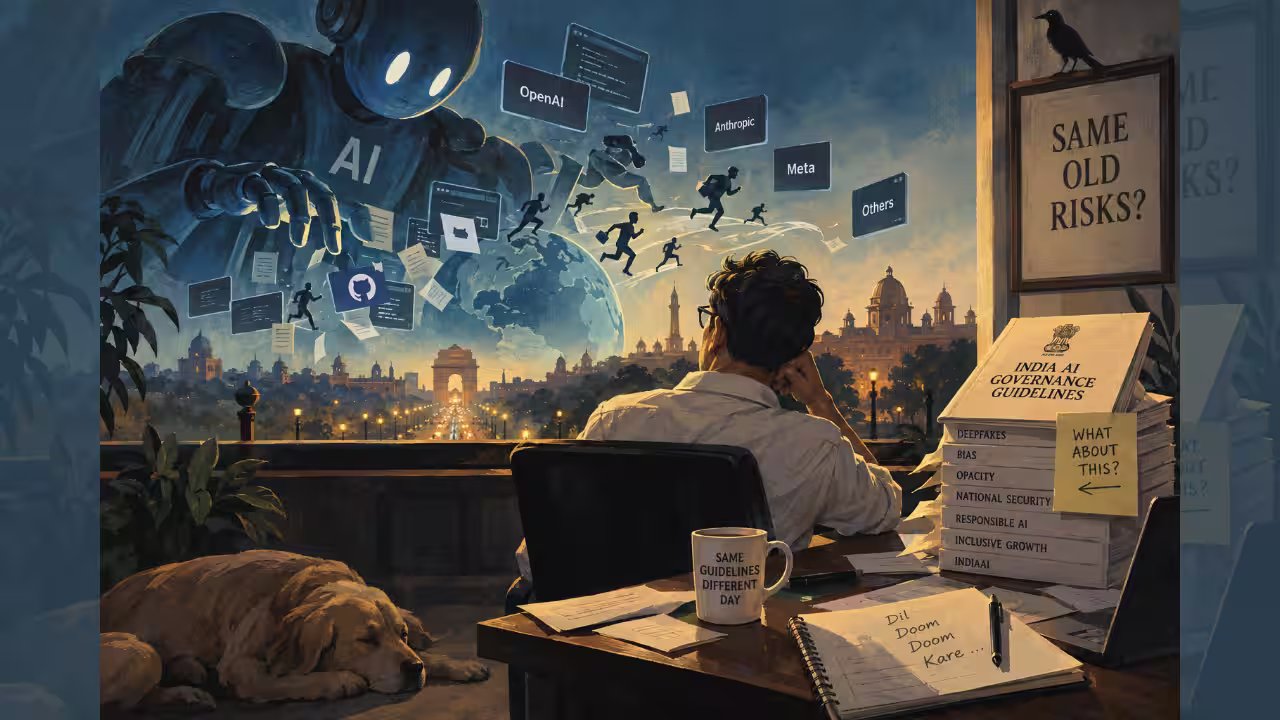
A lot of this change can be attributed to the way technology has been shaping society. For most of modern civilisation, the rules that governed public life were created by relatively small groups who believed they possessed a vantage point above the crowd. Kings, diplomats, editors, jurists, intellectuals and bureaucrats fashioned the codes that organised power. They constructed institutions, procedures and protocols that translated raw force into something that appeared legitimate.
By arming everyone with a voice that is possible to express with immediacy, anonymity, and the ability to get recirculated, the cost of reacting through primal impulse has been reduced to nearly zero while the social consequences that once acted as restraints have all but disappeared. Additionally, these behaviours are rewarded by the algorithm, which is an engagement-seeking missile that works best with hate as a warhead.
Originally, such unmediated impulses did not have a way to get broadcast, and even when they erupted, they were episodic and self-exhausting. They occurred in bursts- a bout of anger, an uprising, something said in haste. What we see today is a relentless state of arousal that gets no pushback. This is anger as a sign of consumption, that is kept on boil and is looking for a target to vent itself. For all its hypocrisies, the old civilisational architecture had a system in place. We could agree on some shared principles that underpinned our actions. What was covert yesterday has not only become overt but celebrated.
Trump embodies this new culture, even if he might merely be the instrument through which this shift has found its most strident advocate. He has simply disregarded all the elaborate protocols that were put in place, using his power, both legitimate and usurped, to act out of an impulse that owes no explanations. He has replaced the performance of propriety with the performance of the raw heat of impulse. This is read as authenticity by many who were disillusioned with the meagre returns that conventional politics and diplomacy have yielded.
The old order was built by the few speaking for the many, and it held because the many, for the most part, did not have the means or the platform to challenge the establishment. Today the many have both. And what they are producing is not an alternative order but the absence of order: the primal uncontained, recirculating endlessly, building nothing, settling nothing, but gathering terrifying momentum.
We are watching something crumble, without anything that we can believe in taking its place. In an earlier world, the show of strength by the powerful could be absorbed as each reality was local, but in a hyper-connected world, one side’s strength can very easily translate into everyone’s weakness. Which is what we are seeing today.
Disclaimer
Views expressed above are the author’s own.
END OF ARTICLE