Tell them your dream, then hold them to it
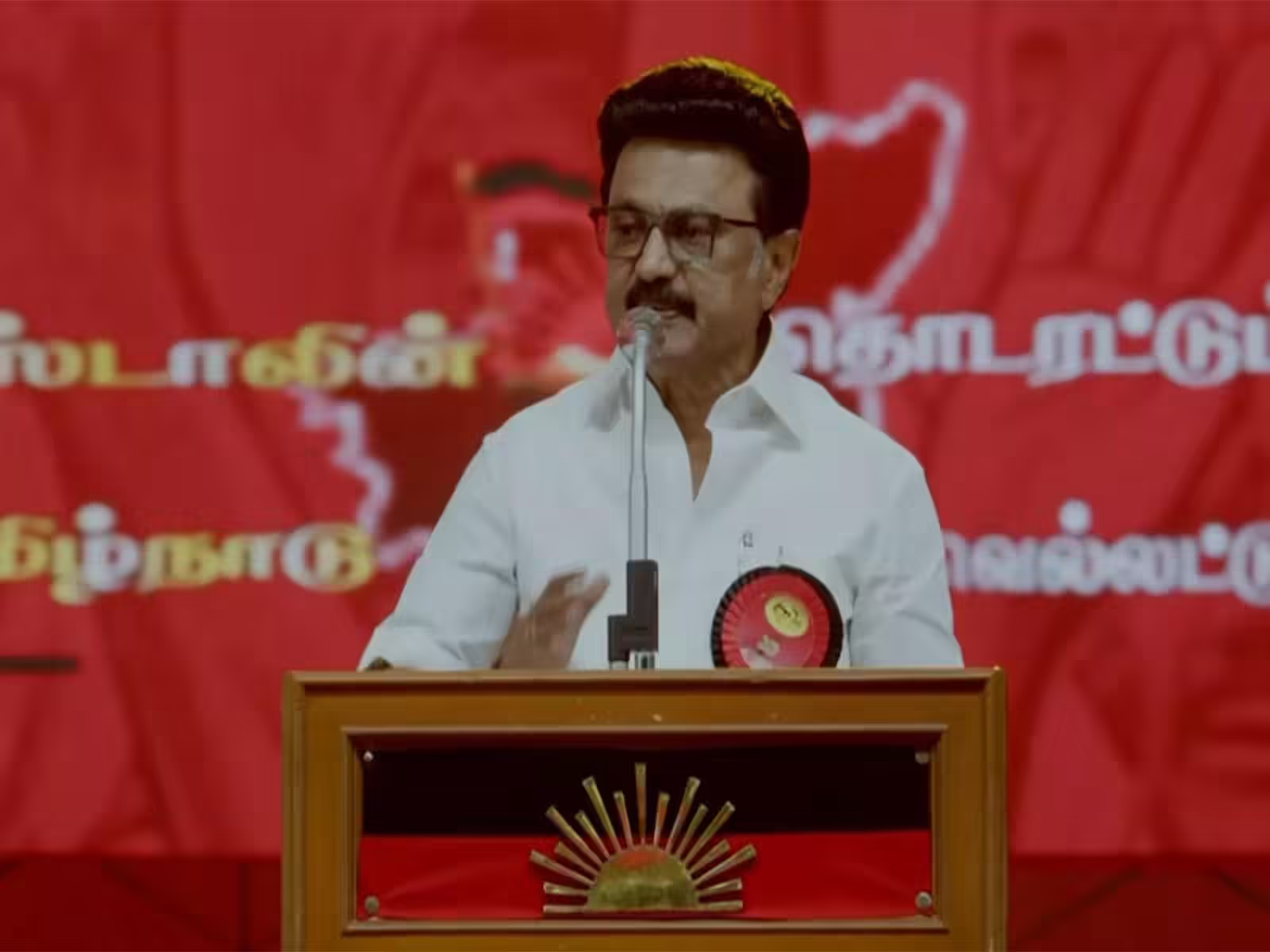
“I have a dream,” said Martin Luther King. “Tell me your dream,” says M K Stalin. The Tamil Nadu govt’s ‘Ungal kanavai sollungal’ (Tell us your dream) outreach claims to have got response from 1.9 crore households to shape the ‘Tamil Nadu Vision 2030’ roadmap. Based on summaries presented by the govt, the top ten suggestions from people were on better job opportunities, education, healthcare, infrastructure and rural development.


TN CM MK Stalin’s ‘Ungal kanavai sollungal’ promises to fulfil people’s dreams of a better state
I am surprised that clean governance doesn’t figure here. And that is bad news for two reasons: One, none of the dreams can be fulfilled if corruption is not contained, if not quelled. Two – and this is worse – it means we the people have consciously or subconsciously accepted graft in governance as a way of life. This normalization shows how pervasive corruption has become; from a basic certificate to a mega infra contract, nothing comes without greasing palms.
Disclaimer: I am not a fan of pedantry. I’ve tipped a dog catcher who gets a pittance from the corporation; I’ve given a gift to a nurse who went beyond his call of duty to take care of my family and friends in a govt Covid hospital. We all do that. Tipping, done as a gesture of appreciation and gratitude, and not out of expectation of something undeserved, is goodwill, generosity; someone taking money for a service he is paid by the govt is corruption. Corruption exists in all govts across the world to varying degrees, but when it becomes the norm, it gnaws at the innards of the system and stunts growth.
A dream is also a means of momentarily escaping such realities. On the political front, ‘Ungal kanavai sollungal’ is a perfect election campaign vehicle. It not only takes the ruling party’s messages of achievements to the people ahead of the assembly election, but also engages the public through institutionalized feedback which, if taken earnestly, helps the party strategize its campaign. And this outreach sells aspirations as much as it asks for dreams.
It’s not a DMK invention. Politicians across the world have mobilized masses and ridden to power less because of policies and more because of their ability to instill hope. From Franklin D Roosevelt, US presidents have sold ‘The American Dream’ of prosperity through hard work. Donald Trump rode a polarising nationalist dream to a second presidential term.
Xi Jinping introduced ‘The Chinese Dream’ to trigger economic growth and military might. After World War II, leaders such as Jean Monnet and Robert Schuman propounded the dream of a peaceful and integrated Europe, a vision that led to the founding of the European Union. After apartheid, Nelson Mandela promoted the dream of a ‘Rainbow Nation’, which was more of a moral vision of reconciliation between races than a political settlement.
Back home, after the ‘Achche Din’ dream, Prime Minister Narendra Modi’s ‘The New India’ narrative promises a developed nation by the centenary of freedom. Dreams help create a group identity; they legitimize sacrifice. The more persuasive the spiel, the better the political yield. And what happens when dreams remain unfulfilled? Ideally, leaders and govts should face disillusionment and public anger. But then, our politicians have mastered the art of selling a new dream to forget the old ones. Democracies work better when citizens remember the promises long enough to demand delivery.
What’s your one dream that you would hold them accountable for? Talk back.
Disclaimer
Views expressed above are the author’s own.
END OF ARTICLE