Greg Carr helped rebuild Mozambique’s Gorongosa after civil war destroyed 90% of its large mammals; 110,513 animals were counted in 2024 | World News
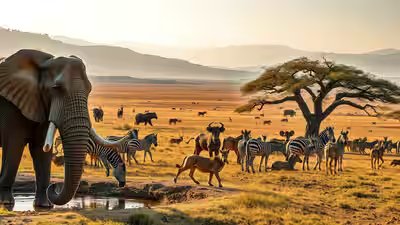
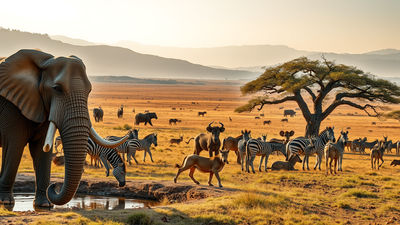
Gorongosa National Park in Mozambique was once one of Africa’s most wildlife-rich protected areas, but the country’s civil war from 1977 to 1992 pushed its animal populations to the brink. A 2019 peer-reviewed study, War-induced collapse and asymmetric recovery of large-mammal populations in Gorongosa National Park, Mozambique, documented the scale of that collapse using 15 aerial wildlife counts conducted before and after the war. The study found that large-mammal populations declined by more than 90% during the conflict. It also showed that recovery after the war was uneven, with some species increasing far faster than others. Recovery accelerated from 2004, when the US-based Carr Foundation began the Gorongosa Restoration Project with the Mozambican government. More than two decades later, an official 2024 aerial count recorded 110,513 large animals, the highest number recorded in the park.
How Greg Carr and Mozambique began rebuilding Gorongosa after the war
Greg Carr was a technology entrepreneur who made his fortune in voicemail before leaving business and turning towards philanthropy. In 2004, he met then-Mozambican President Joaquim Chissano, who asked him to help restore Gorongosa National Park. Carr subsequently became involved in the park’s restoration through his foundation. In 2008, the Government of Mozambique and the Carr Foundation formally established the Gorongosa Project through a 20-year public-private partnership for the joint management of the park and human development in surrounding communities. The agreement was extended in 2018 for another 25 years. The first priority was protecting the wildlife that had survived. Illegal hunting had devastated populations during the war, when animals were hunted for food and wildlife products, including ivory that was used to finance the conflict. The restoration strategy therefore focused heavily on law enforcement, reducing illegal hunting and allowing surviving animal populations to recover naturally.
What happened to Gorongosa’s wildlife during the war
The scale of the collapse became clear in the first post-war aerial survey in 1994. The 2019 study found that the estimated biomass of nine monitored large-herbivore species between 1994 and 1997 was 96% below the pre-war average. Elephant, zebra and hippo populations had fallen by between 93% and 97%, while buffalo and wildebeest had declined by more than 99%. The park’s wildlife did not simply return to its former composition once hunting pressure eased. By 2018, the total biomass of the nine focal species had recovered to about 95% of its pre-war level, but the balance between species had changed dramatically. Waterbuck became the dominant large herbivore, with more than 55,000 individuals recorded in 2018. The study found that elephants, hippos and buffalo, which together accounted for 89% of pre-war biomass in the study’s abstract, made up only 23% by 2018. Waterbuck alone accounted for more than 74% of large-herbivore biomass.
Why Gorongosa’s recovery has not simply been about bringing animals back
Carr’s role is often described through the animals that were reintroduced, but the scientific record shows that most of the numerical recovery came from surviving populations reproducing after protection was restored. The 2019 study recorded 465 reintroduced animals belonging to seven species and found that they represented only a comparatively small fraction of the overall increase. Some reintroductions were nevertheless important. In 2007, for example, 180 blue wildebeest were introduced after the species had been reduced to only about a dozen animals in the park. By 2022, an aerial count recorded 1,525 wildebeest. Other species also began returning as conditions improved. The restoration effort included removing hunting traps and snares, strengthening ranger operations and rebuilding populations of predators and prey. Carr has said that around 20,000 traps and wire snares had to be removed during the early restoration effort. The result has been a recovery, but not a return to the exact ecosystem that existed before the war. The researchers noted that restoring the original community structure could take considerably longer and may require further intervention.
How Gorongosa’s recovery continued beyond the original 20-year deal
The wildlife recovery has continued beyond the period covered by the 2019 study. In 2022, Gorongosa’s science team counted more than 102,000 animals during an aerial survey of a core 60% of the park. The official report also recorded more than 63,000 waterbuck, showing how strongly that species had come to dominate the recovering wildlife community. The most recent official aerial count, conducted in 2024, recorded 110,513 individuals from 20 species of large animals, including 107,765 herbivores and 2,748 crocodiles. Gorongosa says these were actual counts rather than estimates, although animals outside the surveyed areas were not included. The restoration programme has also expanded beyond wildlife protection into community development, education, agriculture and scientific research. The original partnership was extended by another 25 years in 2018, giving the project a much longer period to continue managing the park and supporting communities around it.