
The Weekly Vine, Edition 105: The Apologetic Indian
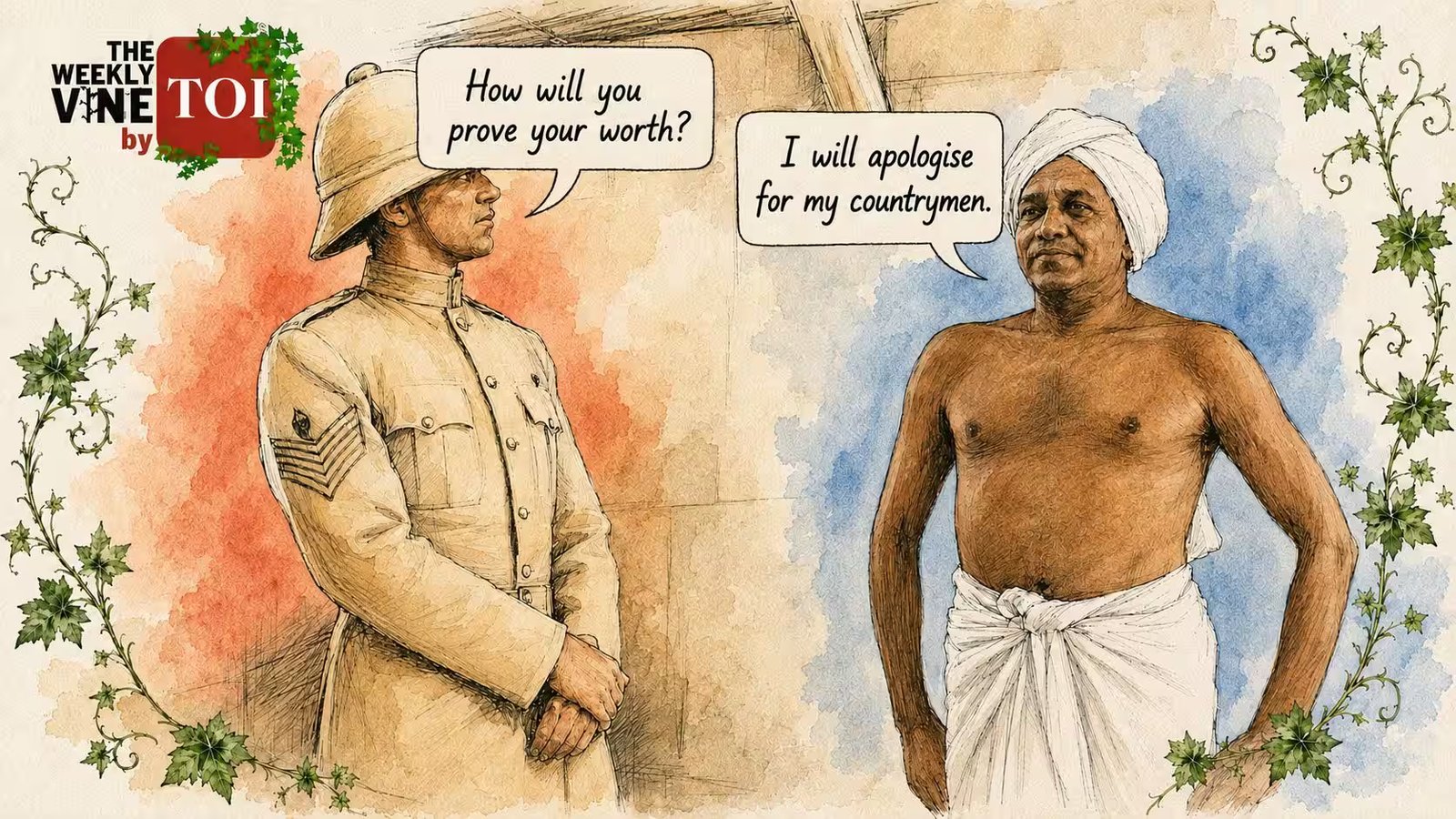

Hello and welcome to another edition of The Weekly Vine. If you asked my mother to write the Vine, she could write every edition about my departures from normative behaviour during my childhood and adolescence. From my follicular adventures — which included a mohawk and the Salman Khan Tere Naam haircut — to not taking exams seriously, she has a laundry list. One incident that ranks near the top of my alleged misdemeanours is surreptitiously reading Amartya Sen’s The Argumentative Indian instead of my biology textbook the night before an important exam.
Now, one might not agree with Sen’s politics or economics, but he’s a fine observer of the human condition, and The Argumentative Indian is a sublime collection of essays. While it’s not quite the ideological sequel to VS Naipaul’s India: A Million Mutinies, there are overlaps in the arguments both make about India’s never-ending insouciance.
We see the Argumentative Indian every day, particularly on the internet, where Indians can argue about anything and everything with the same alacrity with which Americans argue about whether pineapple belongs on top of a pizza.
Is a stoner joke offensive to a group’s exodus?
Is a reference to a disease in Africa mocking the dulcet language spoken by the denizens of a North Indian state?
Which ontological condition is better: self-combustion or being a member of a harem?
How much time should be devoted to discussing a book that no one has read while “smashing the patriarchy”?
Frankly, even Sergio Gor — Trump’s former DJ at Mar-a-Lago and current Ambassador to India — mentioned it when he waxed lyrical about prime-time television: “I love getting back home and watching Indian TV news shows. The later it gets, the crazier the shows become. At 6 pm you have 8 people arguing on the show. At 10 pm, there are 12 people who are all speaking at the same time. You can’t hear a single one of them…it’s unbelievable that no one gets interrupted.”
That a man serving a boss with perennial logorrhoea — which leads to James Joyce-esque “stream of consciousness” oratory — should find this unbelievable truly epitomises our ability to debate, discuss and argue.
Indians, of course, are always ready to take offence — often on behalf of people who never asked them to. To borrow a line from Thanos, as long as there are those who take offence, there will always be those who apologise for those taking offence.
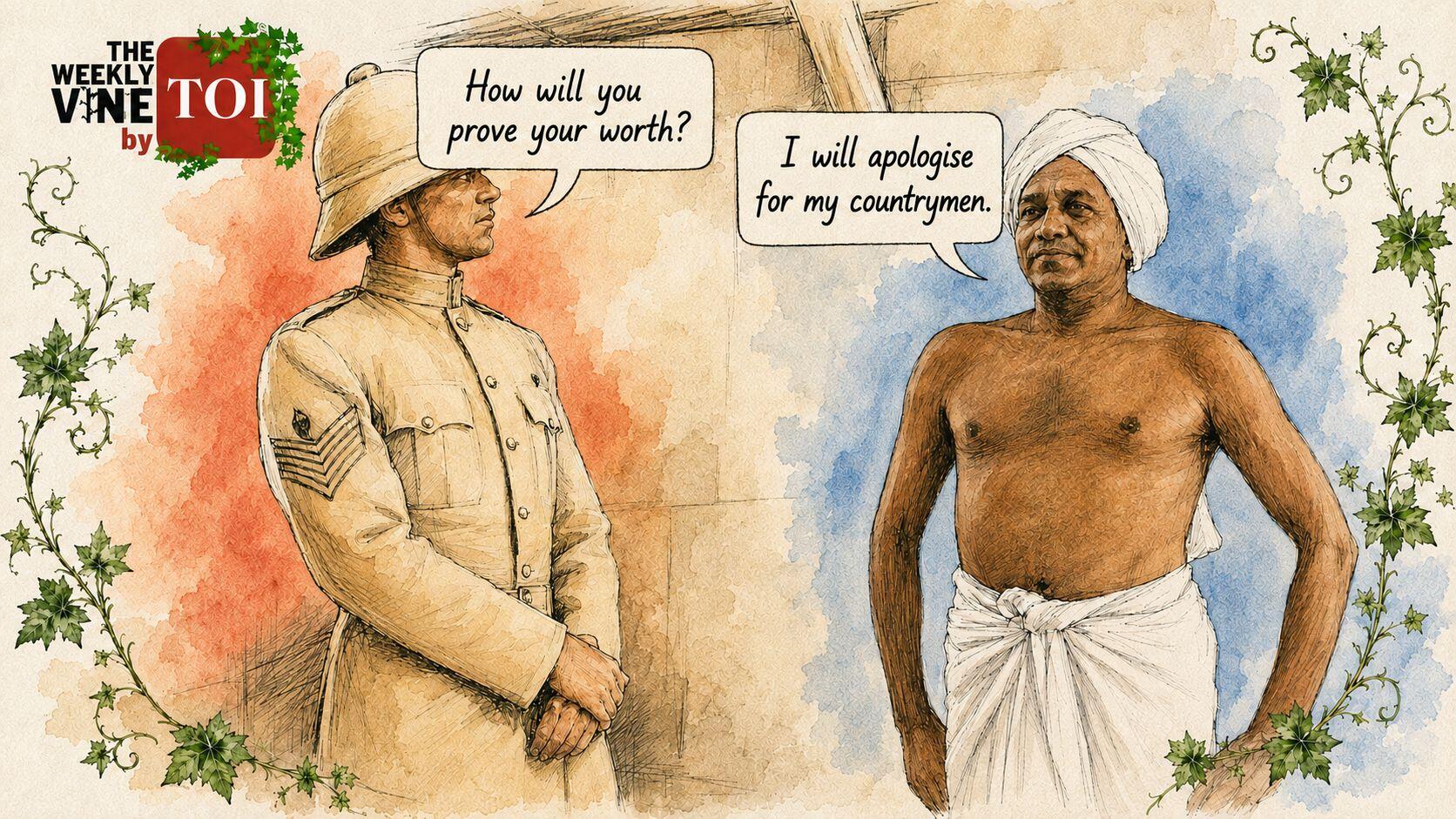
More recently, I discovered a different sort of Indian who could also elicit a collection of essays: the Apologetic Indian.
Since Elon Musk took over Twitter, there has been a steady rise in anti-India hate on the platform that has been documented by numerous studies. India — thanks to China’s Great Firewall — is the biggest marketplace for many multinational companies, and it pays everyone — from imperialist mainstream media outlets to hillbillies with blue ticks — to diss Indians. That is because the modern Indian will react with vehemence, and that means perennial engagement, which is the fastest way to make more money.
But amid this obvious instigation is the rise of a new class of Indians who are deeply apologetic about anything Indians do — whether real or fictional. They apologise for the caste system. They explain that Hindutva is not Hinduism to anyone willing to lend an ear. They apologise for Indians having fun in public in WENA nations and not behaving like European gentry. They are like their Western Karens, forever listening and learning.
They are constantly sorry about elderly Indians using wheelchairs at airports.
The comment section of any video posted without context — whether by a Bud Light-hating MAGA lover or a kombucha-drinking liberal — is the perfect opportunity to distance themselves from their compatriots.
That is not to defend “extra” behaviour in public. Indians, like most other groups, have folks whose departures from normative behaviour are an embarrassment to the senses. But one seldom sees people from other countries apologising for their compatriots’ behaviour.


Norwegians don’t apologise when their compatriots perform the Viking chant on escalators or even travelators at airports.
Britishers don’t apologise for their countrymen sailing the seven seas to sell opium.
Pakistanis don’t lose any sleep over grooming gangs.
The French don’t apologise for using every protest in the world to take off their tops.
Americans, rather than apologising, double down on guns after every school shooting.
But Indians — the moment they see any departure from normative behaviour — are likely to wring their hands and clutch their proverbial pearls.
When one pointed this out on social media recently, one received the usual amount of brickbats and abuse, but a couple of comments that stood out asked whether this storied publication was now hiring “unlettered” dehatis.
Now, one has been called a lot of things over the years — including Rand-Marxist, Anglicised Sanghi and, my personal favourite, deracinated Macaulayputra — but never has one been referred to as either “unlettered” or “dehati”. In fact, most of my editors often complain that I use way too many letters instead of getting right to the point.
As for dehati, there’s an interesting etymology to that word.
The term is often used to refer to a person who lives in a village or the countryside — someone who doesn’t have urban polish or the wherewithal to behave in public. The term appears to be the modern-day internet version of “mofussil”, a word used by our former colonial overlords to refer to those living outside the presidencies of Calcutta, Madras and Bombay. Even today, members of the Bengal Club — housed in Lord Macaulay’s former dwelling — who stay outside Kolkata are referred to as “Mofussil” members.
Dehati, like “pajeet” on the internet, is generally used as a slur. It is rather hilarious that even derogatory slang for Indians contains the word “jeet”, which translates to victory. Perhaps a decade or two earlier, such a sobriquet would have hurt.
But with age comes self-actualisation and the belief that one should be proud of where one is from, and being from Chapra — of Aara Heele Chapra Heele fame, part of a music genre that keeps paying obeisance to Galileo (“but it moves”) — is nothing to be ashamed of.
Dehati and proud, to borrow a line from brethren who attend Pride marches.
So why are some Indians so apologetic?
Some of it is down to our colonial past, which has left us constantly seeking a white person’s validation for our actions. That is reflected even in our treatment of national heroes — from Satyajit Ray to S. S. Rajamouli — whom we started worshipping the moment white folks praised them. So, it’s natural that many of our slightly anglicised countrymen are quick to apologise for the behaviour of their “unlettered” dehati compatriots.
The other reason is even more obvious: India is changing in remarkable ways, and that is not just headlined by the once-elite. The modern-day Indian no longer constantly seeks Western approval.
Many members of the diaspora are even reshaping Western societies.
They are entering positions of power on all sides of the aisle in Anglosphere societies — whether in business, tech or politics. And so, the disdain from those who don’t look like us, and the apologies from those who sought the approval of the people who controlled the gates of power, are quite explicable.
As Indians — whether homebound or part of the diaspora — become more powerful, the disdain will grow louder and the apologies quieter.
There’s an old African proverb: “Until the lion learns how to write, every story will glorify the hunter.”
The lion has now learned to write, acquired cheap data, opened a social media account and discovered that the hunter’s approval was never a prerequisite for dignity. Inevitably, that confidence will sometimes manifest itself as noise, vanity or atrocious public behaviour, because civilisational self-assurance does not come with an etiquette manual. None of that requires every other Indian to stand in the global comment section — head bowed — begging strangers to believe that we are “not all like this”.
The Apologetic Indian will not disappear overnight. Centuries of being told who is civilised and who is dehati cannot be undone by a cheap net connection. But as India’s power grows, Indians will become less willing to treat every compatriot’s misdemeanour as a referendum on 1.4 billion people. My mother can continue maintaining a laundry list of my departures from normative behaviour; that is her constitutional right. The Argumentative Indian has always known how to answer back. Perhaps the Apologetic Indian, too, will learn that apologising isn’t always necessary.
Postscript by Prasad Sanyal: The dog was Dharma. The gods were not sure


There is a particular sound a brand makes when it folds. It is not a scream. It is the soft, laminated hum of a legal-and-comms note being read aloud by someone who has never in their life used the word “sentiments” in a sentence they meant.
GIVA made that sound earlier this month. Its thirty-five-second Raksha Bandhan film, live since July 20, featured Kriti Sanon in an ivory blouse and draped skirt, tying a rakhi first to her brother and then to the family dog. The proposition was not exactly a challenge to the Upanishadic corpus: love is love, protection is protection, the dog counts. For a month nothing happened, because for a month nobody had decided to be angry yet.
Then somebody did, and the machine started, and by the end of it the brand had announced that it had the highest regard and deep respect for Indian culture, that hurting sentiments was never the intent, and that the advertisement had been withdrawn from all media ‘out of respect’. Two words doing the work of a full apology while carefully admitting nothing, which is the house style of Indian corporate surrender and has been since Tanishq’s Ekatvam went down in 2020.
Disclaimer
Views expressed above are the author’s own.