Pranic healing, its spiritual lineage and legacy– Part 1
Throughout history, great spiritual traditions have emerged from ancient wisdom and the guidance of enlightened masters. Some trace their lineage back thousands of years, while others were established in modern times by spiritually evolved teachers and their disciples.
The Yogoda Satsanga Society of India, founded by Paramahansa Yogananda in 1917, carries a spiritual lineage associated with Mahavatar Babaji, Lahiri Mahasaya, Swami Sri Yukteswar and Paramahansa Yogananda. Today, thousands of practitioners around the world follow the Kriya Yoga tradition.
Similarly, the Swami Dayananda tradition, also known as Arsha Vidya Pitham, draws upon an ancient lineage associated with Bhagavan Vyasa and the ancient Rishis, Adi Shankaracharya, the Dashanami Sampradaya and the Saraswati order, followed through successive teachers including Swami Chinmayananda, Swami Pranavananda, Swami Tarananda Giri and Pujya Swami Dayananda Saraswati.
Other important spiritual institutions were established in more recent times. Ramanashram emerged from the teachings of Maharshi Ramana. Sri Aurobindo Ashram was founded by Sri Aurobindo and his spiritual companion, Mirra Alfassa, known as The Mother. Ramakrishna Mission was established by Swami Vivekananda, the great disciple of Paramahansa Ramakrishna.
The World Pranic Healing School and School of Inner Studies also presents itself within a spiritual lineage and legacy, although its modern institutional foundation dates to 1987 under Grand Master Choa Kok Sui. Its teachings draw upon an integration of global esoteric traditions rather than belonging exclusively to one religion. Its body of teachings incorporates influences from Theosophy, including the works of Madame Blavatsky, Annie Besant and C.W. Leadbeater; Eastern Yogic traditions including Raja Yoga, Bhakti Yoga, Karma Yoga, Jnana Yoga and Kundalini Yoga; Kabbalah and Hermeticism, with their emphasis on universal laws, symbols and the Tree of Life; as well as elements associated with Buddhism and Christianity.
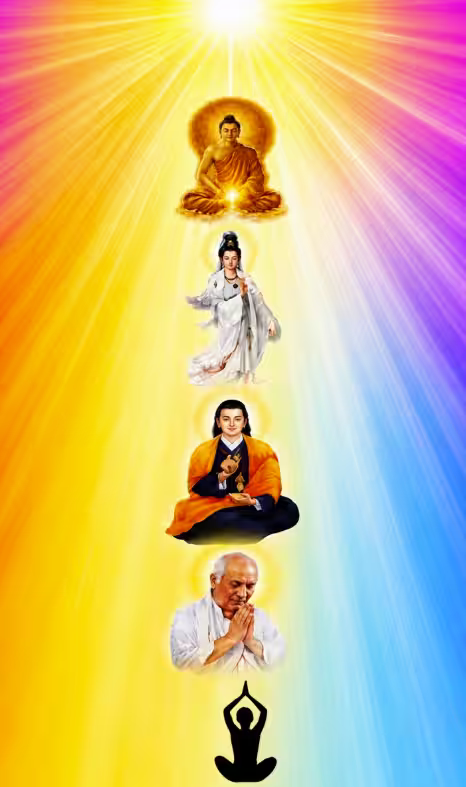
Within the tradition’s understanding of its deeper spiritual lineage, the chain reaches back to Supreme God, Parabrahman, and a divine plan associated with 24 Spiritual Elders. Among them is Buddha Amitabha, regarded as the Buddha of Infinite Light and associated with longevity. Buddha Amitabha is regarded within this lineage as the spiritual teacher of Buddha Kwan Yin, the Buddha of Compassion and Mercy, known in Sanskrit as Avalokiteshvara and associated in Tibetan Buddhism with Chenrezig and Tara. The lineage then connects with Lord Padmasambhava, known in Tibet as Guru Rinpoche, and with Maha Guruji Mei Ling, regarded within Pranic Healing as a spiritual guide and teacher of Grand Master Choa Kok Sui.
According to this tradition, Padmasambhava was a great master of the eighth century who taught and healed in the Himalayas and is associated with Odisha and Nalanda. His extraordinary synthesis of spiritual wisdom, healing and disciplined practice forms an important part of the tradition’s understanding of its spiritual heritage. He gave the concept and seed idea of Pranic Healing, which was researched and developed by his disciple Grand Master Choa Kok Sui, who is the heart of modern Pranic Healing.
Academically trained with a bachelor’s degree in Chemical Engineering, Grand Master Choa developed an unusual approach to spirituality. He was a spiritual scientist, seeking to research and develop spiritual principles systematically rather than asking people to accept them through blind faith.
For nearly three decades, he experimented with the human energy field, or aura, exploring the relationship between energy and physical, psychological and emotional well-being. Working alongside spiritual guides and advanced clairvoyants, including Ji Mei Ling, he spent years synthesising ancient esoteric knowledge into a structured and reproducible system. Between 1983 and 1987, this extensive research culminated in the development of the Pranic Healing system. In late 1987, he published his spiritual thesis, The Ancient Science and Art of Pranic Healing, later retitled Miracles Through Pranic Healing. The book introduced a systematic, non-touch approach to healing based on the manipulation and harmonisation of prana, or life energy.
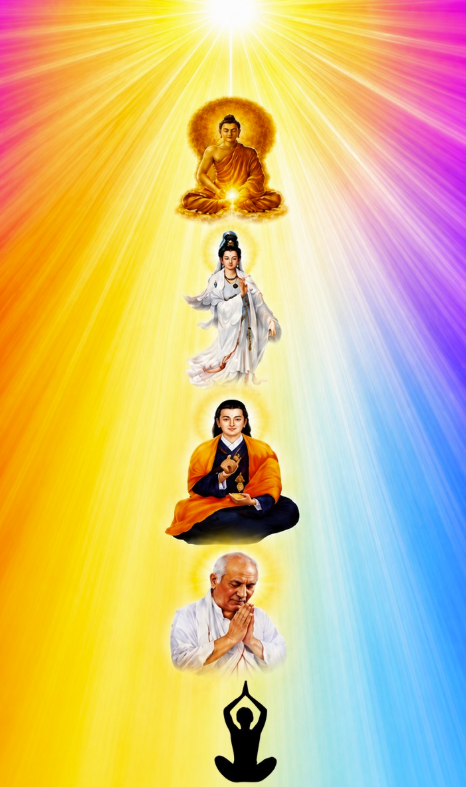

Grand Master Choa also demonstrated that spiritual development need not require withdrawal from ordinary life. He was a successful businessman, a family man and a spiritual teacher, presenting a model in which professional responsibilities, family relationships and spiritual evolution could coexist. He subsequently developed Arhatic Yoga, which he described as the Yoga of Synthesis. It was designed as a systematic path for spiritual development and soul realisation while allowing practitioners to maintain family life, careers and social responsibilities.
The Pranic Healing curriculum was structured progressively. Level One, Basic Pranic Healing, introduces fundamental techniques for cleansing and energising the body’s energy field. Level Two, Advanced Pranic Healing, introduces advanced techniques and the use of the seven colours of prana. Level Three, Pranic Psychotherapy, addresses psychological, emotional and mental conditions, including addictions. The fourth level focuses on the Self, the relationship between Atman and Jeeva Atman, and healing relationships between souls. The fifth level, Arhatic Yoga, takes the practitioner into a more advanced spiritual discipline based on the Eastern Philosophy of Yoga.
Arhatic Yoga integrates seven major yogic approaches: Raja Yoga for meditation and concentration, Karma Yoga for selfless service, Kundalini or Laya Yoga for inner energy, Jnana Yoga for knowledge and wisdom, Bhakti Yoga for devotion and surrender, Mantra Yoga for sacred sound and vibration, and simplified Hatha Yoga for physical discipline and breathing. A distinctive feature of Arhatic Yoga is its emphasis on the Five Pillars: purification, character refinement, meditation, universal service and tithing, and spiritual study. These pillars create a framework for integrating spiritual practice with everyday life. It is designed for Modern Life.
Equally important are the Five Virtues, because Grand Master Choa repeatedly emphasised that character development must accompany spiritual development. Spiritual powers without character, according to this philosophy, can lead to spiritual imbalance and even spiritual fall.
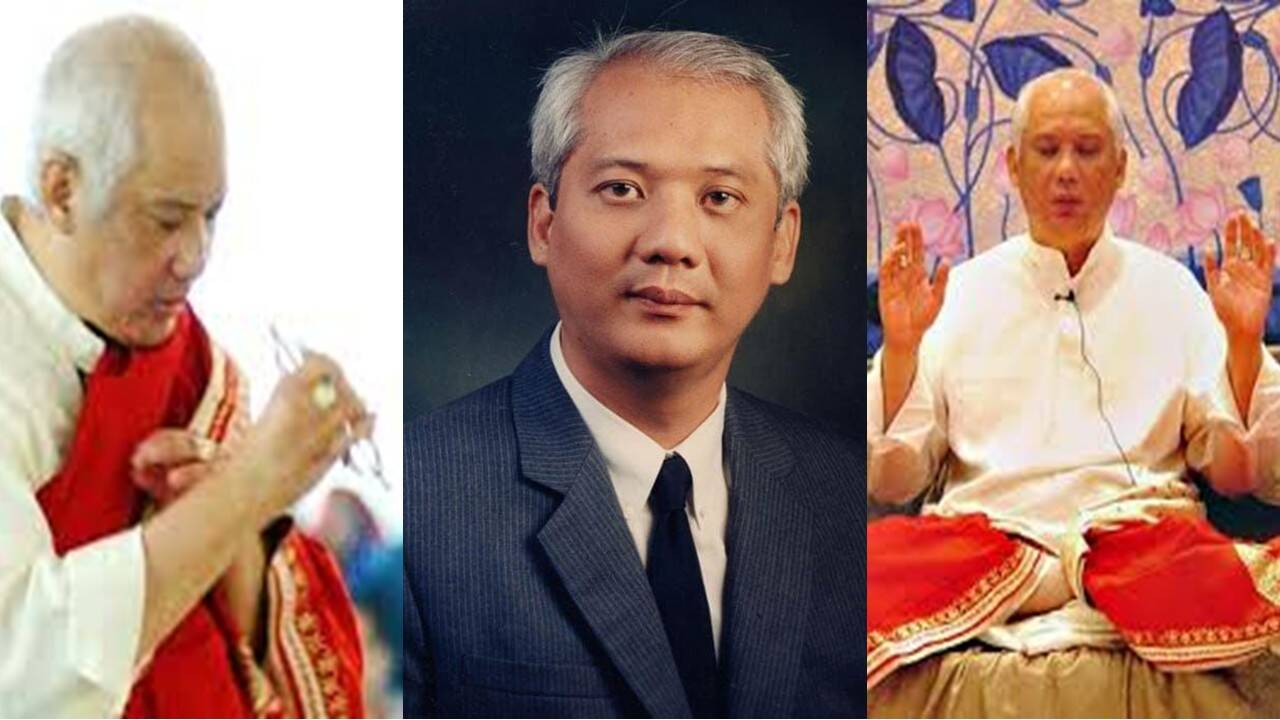

The Five Virtues are Loving Kindness and Non-Injury, Generosity and Non-Stealing, Accurate Perception and Correct Expression, Constancy of Aim and Effort with Non-Laziness, and Moderation and Non-Excessiveness. Together, they encourage compassion, integrity, perseverance, clarity, discipline and balance.
This emphasis makes Arhatic Yoga particularly relevant to modern life. Practitioners are not required to abandon careers, families or society. Instead, everyday responsibilities and relationship challenges become opportunities for character building and accelerated spiritual growth.
Before attaining Mahasamadhi on March 19, 2007, Grand Master Choa Kok Sui authored more than 25 books, translated into over 30 languages, and taught across six continents. Through his charitable foundation, he also supported feeding programmes, medical assistance for the underprivileged and disaster relief.
Today, Pranic Healing and Arhatic Yoga practitioners across the world continue to apply these teachings in their daily lives. Within the tradition, the practice is associated not only with individual healing and transformation, but also with healing for communities, Mother Nature and Mother Earth, including collective healing during calamities and catastrophes. For many practitioners, it is also a pathway towards discovering their inner potential, manifesting their highest aspirations and recognising the greatness that already exists within the human soul.
Disclaimer
Views expressed above are the author’s own.