Mexican man arrested with 200 lizards hidden in socks at Tokyo airport; bought for $3.50, some worth $630 | World News
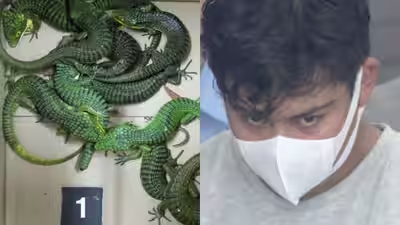
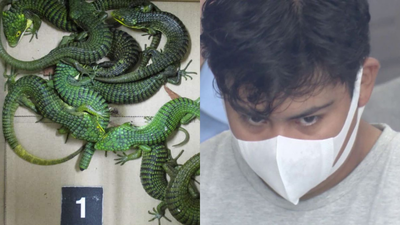
A 23-year-old Mexican man has been arrested at Tokyo’s Haneda Airport after customs officers reportedly found about 200 lizards hidden inside 22 pairs of socks in his suitcase. Daniel Isaac Velasco Baltazar had arrived in Japan from South Korea on August 8 when authorities searched his luggage and discovered the reptiles, with one lizard already dead. Nine of the animals were identified as Mexican alligator lizards, also known as arboreal alligator lizards, a species native to Mexico that is classified as Endangered and listed under CITES Appendix II. Police reportedly said the suspect bought the lizards in Mexico for about 560 to 750 yen each, roughly $3.50 to $4.70, while some could reportedly fetch around 100,000 yen, or about $630, in Japan. Authorities are still identifying the remaining reptiles.
Tokyo airport officers find 200 lizards hidden in socks
Customs officers at Haneda Airport searched the man’s suitcase after authorities had reportedly been alerted to a possible attempt to smuggle reptiles into Japan. Inside, they found about 200 lizards concealed in 22 pairs of socks, with some of the animals also rolled in T-shirts. One lizard was dead when the suitcase was opened. The suspect had reportedly arrived from South Korea on August 8 and was accused of bringing the reptiles into Japan without declaring them or obtaining the required permission. Tokyo’s Metropolitan Police Department reportedly said he admitted importing the animals without permission. Police had allegedly received an anonymous tip in late July that a Mexican national was planning to bring lizards into Japan ahead of a reptile exhibition and sale, prompting authorities to place customs officers on alert.
Nine lizards were identified as an endangered Mexican species
Nine of the seized reptiles were identified as Mexican alligator lizards, or arboreal alligator lizards, scientifically known as Abronia graminea. The species is endemic to Mexico and occurs in mountainous forest habitats, including pine-oak and cloud forests. The IUCN classifies Abronia graminea as Endangered, while the CITES checklist places the Abronia genus under Appendix II, meaning international trade is subject to CITES controls and documentation requirements. However, the other lizards had not all been identified when the report was published. Authorities were still determining their species, so it would be inaccurate to describe all 200 reptiles as endangered or to assume they were all subject to the same conservation regulations. CITES documents also identify habitat loss and collection for the pet trade as threats affecting arboreal alligator lizards.
The lizards reportedly had a huge price difference
The reported financial incentive behind the shipment was the large difference between the purchase price in Mexico and the potential value of some of the reptiles in Japan. According to the report, the suspect told investigators that he bought the lizards in Mexico for between about 560 and 750 yen each, roughly $3.50 to $4.70. Some species were reportedly capable of changing hands in Japan for around 100,000 yen, or about $630. Police reportedly suspected that the reptiles were being brought to Japan in connection with an exhibition and sale. However, the $630 figure should be presented as a reported resale value rather than a confirmed standard market price for every lizard, while the intended sale should be described as the suspected purpose of the shipment rather than an established fact.
The smuggling attempt raises wildlife-trade concerns
The case highlights the risks associated with the international trade in exotic reptiles, particularly when animals are transported without the required permissions or documentation. At least nine of the seized reptiles belonged to an Endangered species regulated under CITES, while one lizard was reportedly found dead after the journey. The animals had been packed into socks and clothing inside a suitcase rather than being transported openly in appropriate containers. Such concealment can make it difficult for authorities to identify species and determine which wildlife-trade rules apply. For Abronia graminea, habitat loss and collection for the pet trade are already recognised conservation concerns, making the alleged unauthorised movement of the species particularly significant.