
Maha raids not so much a tale of morality as mortality

The most consequential public health figure in India this year is not a doctor, an epidemiologist, or a minister. He is a civil servant running a food and drug regulator. What Tukaram Mundhe has forced into national view is not a licensing failure but a mortality one.
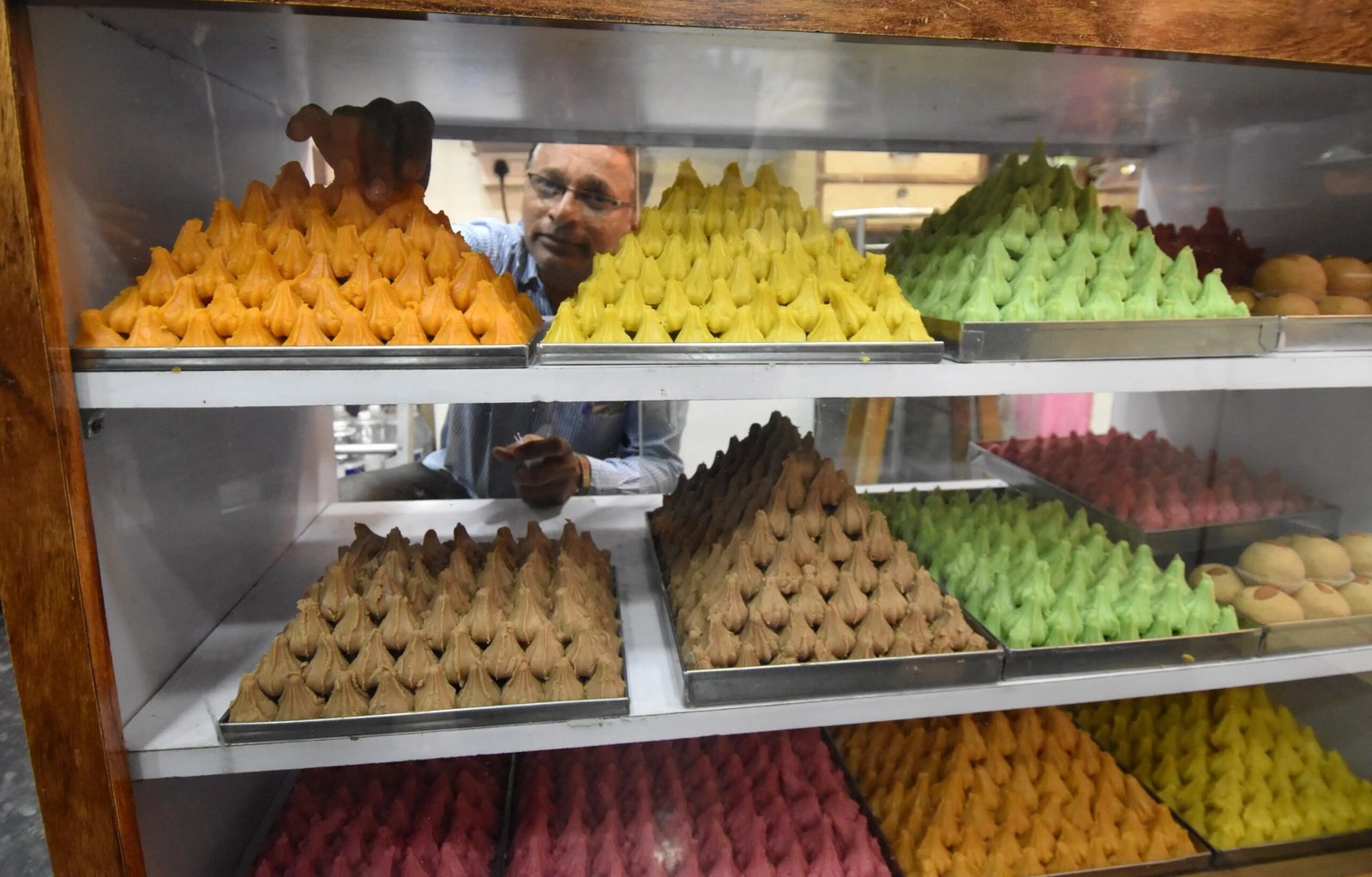
Since taking charge of Maharashtra’s Food and Drug Administration in late May, Mundhe — a 2005-batch IAS officer transferred some 25 times in 21 years — has run one of the country’s most aggressive food-safety drives. Over a thousand inspections. Synthetic-milk units and adulterated-paneer rackets exposed; the FDA says nearly two in five paneer samples it tested failed. Elite clubs and institutions nearly a century old found with insect infestation and expired stock. Licences suspended with no deference to who owned the kitchen — private banquet hall or high court canteen.
The problem goes beyond Maharashtra. In 2025-26, health ministry data in Parliament showed nearly one in five food samples (40,023 of roughly 2.24 lakh) nationwide failing safety standards. The category is deliberately broad: ‘non-conforming’ bundles the adulterated, the substandard, the contaminated and the merely mislabelled, with no breakup offered. But even in its vagueness, the figure indicts us. We have normalised the idea that the milk, the paneer, the food plate we hand a child is a gamble.
Most of the coverage has cast this as a morality tale with an officer, the ‘Singham’, taking on a rotten system. True, but what Mundhe has actually done is what India’s health establishment has failed to do for decades: spotlight food safety as a health emergency.
Adulteration and contamination are not just about immediate illness; they also feed the epidemic of non-communicable diseases such as heart disease, stroke, cancer, diabetes, and chronic respiratory illness. Among the most common violations were non-permitted food colours and reused cooking oil, both linked to NCDs, which account for close to two-thirds of all deaths in India, by WHO estimates, much of it before the age of 70. This is a story of what we eat, drink, and breathe. A 2020 study in Lancet Planetary Health, led by the India State-Level Disease Burden Initiative, attributed 1.67 million deaths to air pollution, nearly 18% of all deaths. Only about 40% of that burden is respiratory; the rest is ischemic heart disease, stroke, and diabetes. Toxic air, like unhealthy food, kills mostly by driving the same chronic diseases.
This is not an argument made from clinical distance. I have lung cancer, though I have never smoked. The disease now strikes many people who never touched tobacco, roughly a decade younger than patients in the West, and in the youngest of us, it is driven by a gene gone wrong because of an environmental trigger, rather than any lifestyle habit.
The International Agency for Research on Cancer has classified outdoor air pollution and its fine particulate matter as a Group 1 carcinogen since 2013, and the evidence that it drives lung cancer even in lifelong non-smokers keeps mounting. But no patient can prove the air wrote their diagnosis. We have built an environment carcinogenic at population scale, then asked each of us to prove her own case.
Urgency, however, is no licence for arbitrariness. Bombay high court has questioned the FDA’s instant licence suspensions and demanded uniform, rules-based enforcement. Restaurant associations argue that a business should get an improvement notice before its reputation is destroyed. Their point is valid. The choice should not be between a regulator that barely enforces the law and one that is accused of enforcing it arbitrarily.
Late last year, Parliament’s own Public Accounts Committee indicted the food regulator for a “non-serious approach”: manpower shortages, under-equipped and unevenly distributed testing laboratories, delayed samples, and low conviction rates. The statutes exist. The standards exist. What has been missing is the will to use them and the machinery to sustain that will.
But a revolution can’t rest on a single transferable officer. Mundhe’s most durable act is not any one raid — it is co-opting the public. Citizens are photographing dirty kitchens, reporting adulterators, dumping suspect milk, and arguing about food safety with an intensity rarely seen before. That is the demand-side shift that outlasts any transfer order. Just as the Swachh Bharat Mission moved sanitation behaviour, a real food-safety movement could change what India eats.
One officer has set a template that other states can follow. The next steps are clear: fix the laboratories; staff the regulator; grade every eatery; legislate the junk out of children’s food. And make enforcement so ordinary that it survives the next posting order. Now that the country cares, it would be a peculiarly Indian tragedy to squander it.
Prasad is a public health policy expert and patient advocate