
What the new poll reveals about childhood friendships

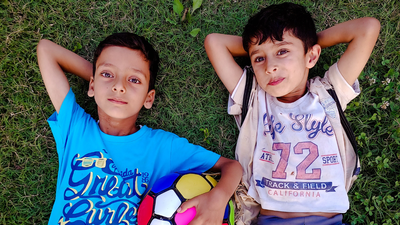
For a parent, few things are more unsettling than watching your child stand at the edge of a playground while everyone else seems to have someone to run towards. You may wonder whether your child is simply shy, whether other children are excluding them, or whether you should step in and help.But how much help is too much?
28 Jul 2026 | 16:26
Which parenting tip from elders actually worked for you?
A poll from the University of Michigan’s C.S. Mott Children’s Hospitaloffers an interesting glimpse into just how much parents worry about their children’s social lives. The poll found that nearly one in five parents of children aged 6 to 12 said their child had no friends or not enough friends. Even more strikingly, 90% of parents said their child would like to make new friends.
Photo: Canva
The findings also reveal something many parents may recognise in their own homes: when children struggle socially, parents often feel compelled to fix the problem.
The friendship worry is bigger than parents may realise
The C.S. Mott Children’s Hospital National Poll on Children’s Health surveyed 1,031 parents of children aged 6 to 12 in August 2024. The nationally representative poll explored not just whether children had friends, but what parents believed was getting in the way of those friendships.More than half of the parents identified at least one factor that made it difficult for their child to make friends.The most commonly reported obstacle was personality. About 21% of parents said their child was shy or socially awkward. Other barriers included not having enough time to play or meet other children (18%), other children already having established friendship groups (17%), and having too few places to get together or play (16%). Another 15% cited other children being mean.
Photo: Canva
For some families, the challenge was even more complicated. Seven per cent of parents pointed to a child’s disability or medical condition, while 3% mentioned appearance as a factor.These numbers are important because they challenge the idea that children simply “make friends” without any effort. For some children, friendship requires opportunities, practice and a little adult support.
Parents are stepping in
Three out of four parents surveyed said they had taken some action to help their child make new friends. Some parents were also willing to let their older children use social media to form new relationships. The figure was 10% for younger children and 23% for older children.It is easy to understand why parents do this. A lonely child can make even the most confident parent feel helpless. But there is a fine line between creating opportunities for friendship and managing the friendship itself.
What parents can do without taking over
Friendships can contribute to children’s social skills, emotional wellbeing and self-esteem, while having friends at school can make the school experience more enjoyable and has been associated with better school performance.Friendships also give children a kind of social laboratory.They learn that people can disagree and still remain friends. They discover how to apologise, compromise, take turns, include someone who feels left out and recognise when another person’s behaviour is hurtful. These are skills that cannot be taught entirely through lectures from adults.That is why a child who is struggling socially does not necessarily need a parent to find them a “best friend”. Sometimes they need repeated, low-pressure opportunities to interact with other children.

Photo: Canva
Create opportunities, not outcomesIf your child enjoys football, art, swimming, reading or building things, activities connected to those interests can naturally put them around children with something in common.Don’t label your child as “shy”Repeatedly telling a child, “He’s very shy” or “She doesn’t know how to make friends” can quietly become part of the child’s identity. Instead, describe the situation without defining the child. Try, “It sometimes takes you a little while to feel comfortable with new people.”Watch the pattern, not one bad dayFriendships naturally fluctuate. Children fall out, make up, change interests and sometimes spend a few days playing alone. The bigger concern is persistent isolation accompanied by distress.Parents cannot choose every friend their child will have. Nor should they try to engineer a perfect social circle. Their more important job may be to make sure their child knows three things: they have somewhere safe to talk, they are worthy of friendship, and they do not have to earn their parents’ approval by being popular. Because childhood friendship is not a popularity contest.