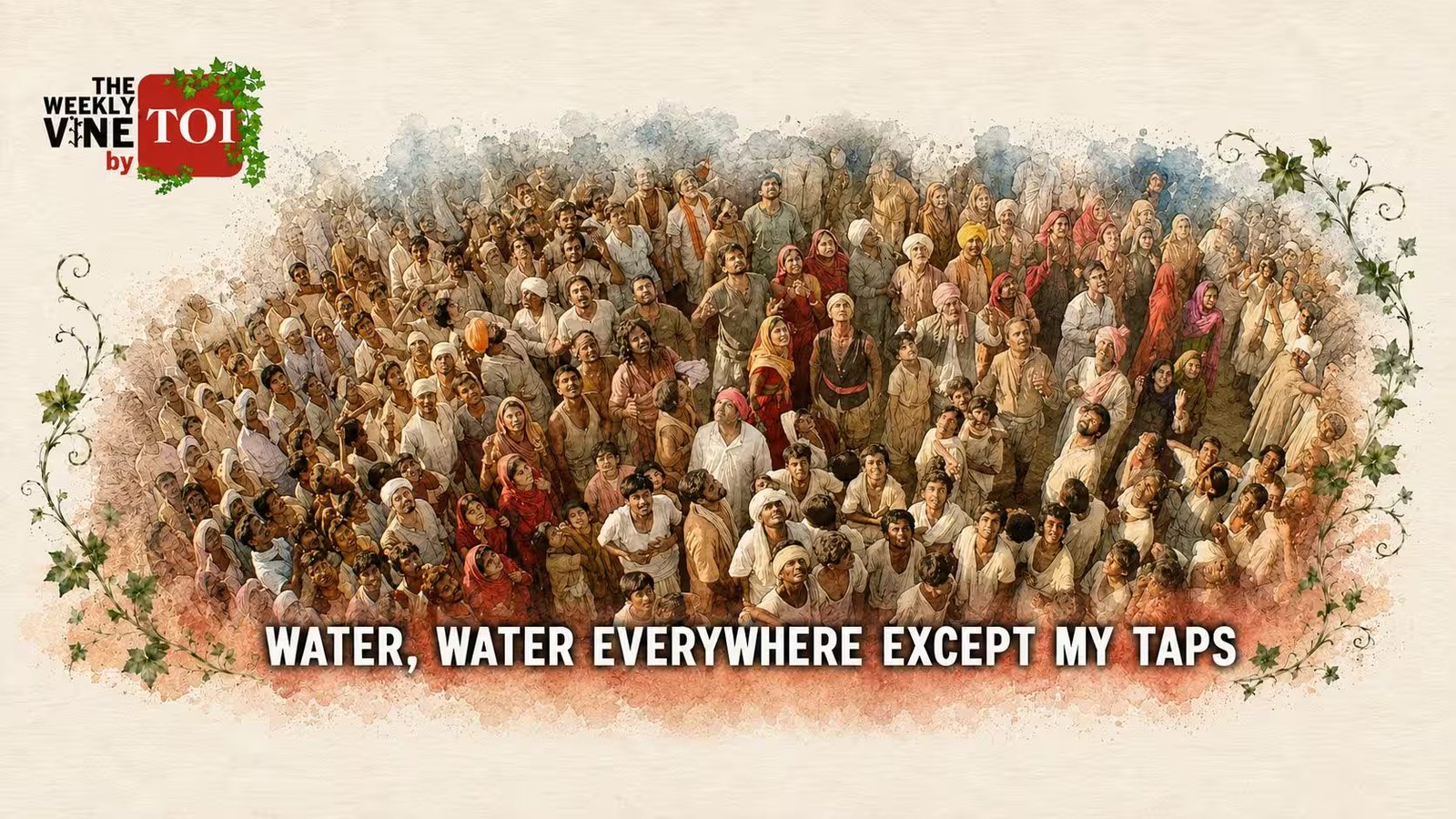
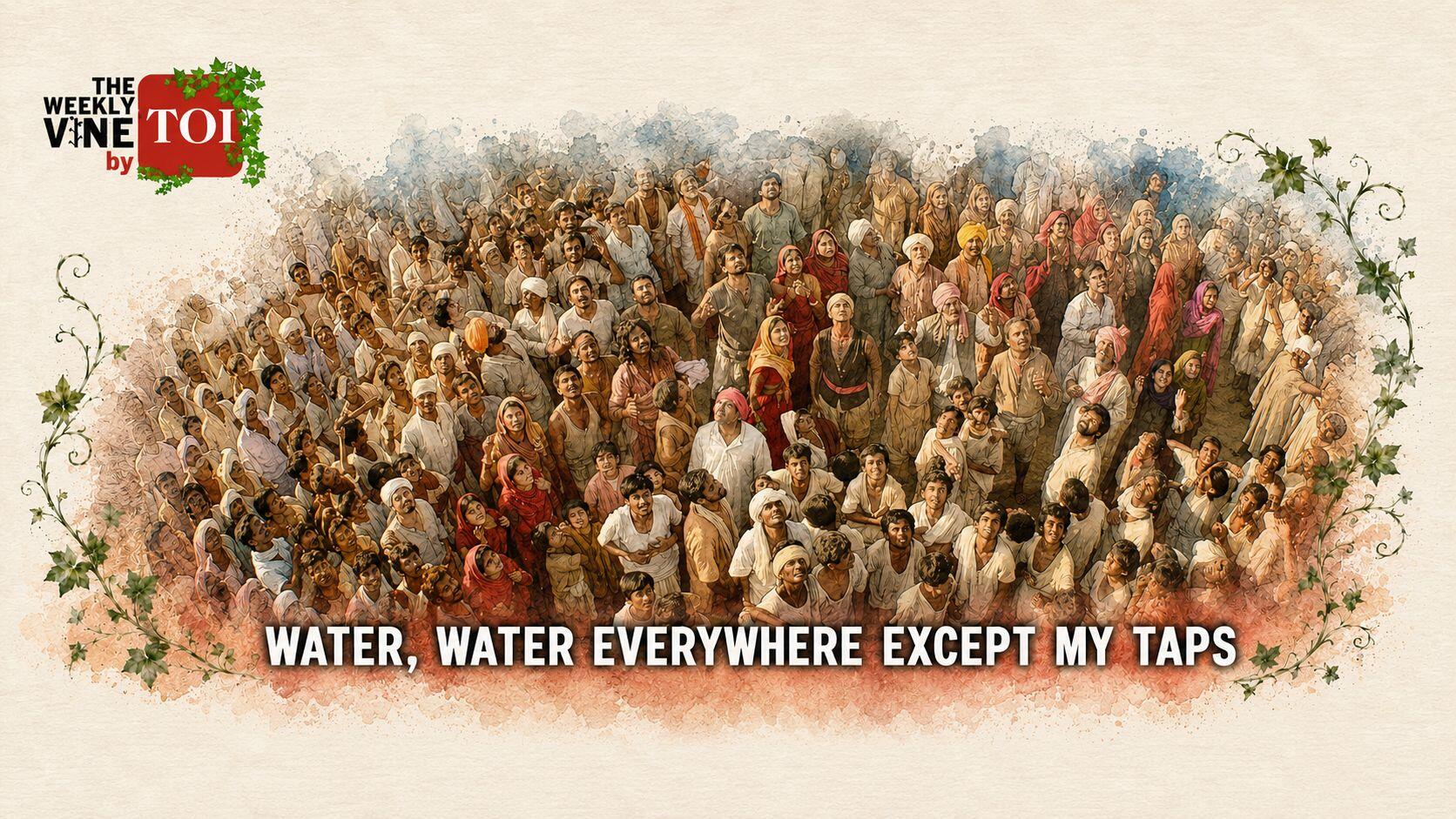
Water, water everywhere except my taps…

All writers are the sum total of the writers they read. So, when you read me, you read a little Kafka, a little Forsyth, a little Le Carré, a little Wodehouse, a little Rushdie, a little Shobhaa De and a little Jug Suraiya.
That’s not to say one can hold a candle to any of those stalwarts, but they provide the proverbial literary shoulders that prop up mere mortals. And you can understand my joy when one reader gave me the greatest compliment I could think of: “You are this generation’s Jug Suraiya.”
Firstly, that’s bogus because no one can lay a finger on Suraiya, who remains the finest Indian wielder of the language of Shakespeare. Secondly, most folks belonging to the Insta-reeling Gen Z generation have never even heard of Jug Suraiya. For those who are culturally constricted, Suraiya is perhaps the funniest columnist most folks will ever read. Take this Jugular Vein column called Kurukshetra Now, which imagines a conversation about ignorance between Arjuna, the original peacenik, and Lord Krishna and has the former saying: “Preach war? Me? Don’t those guys know that I’m a conscientious objector, the original peacenik, the ‘him’ in the middle of ahimsa? Boy, talk about ignorance. How much more ig can anyone’s norance get?”
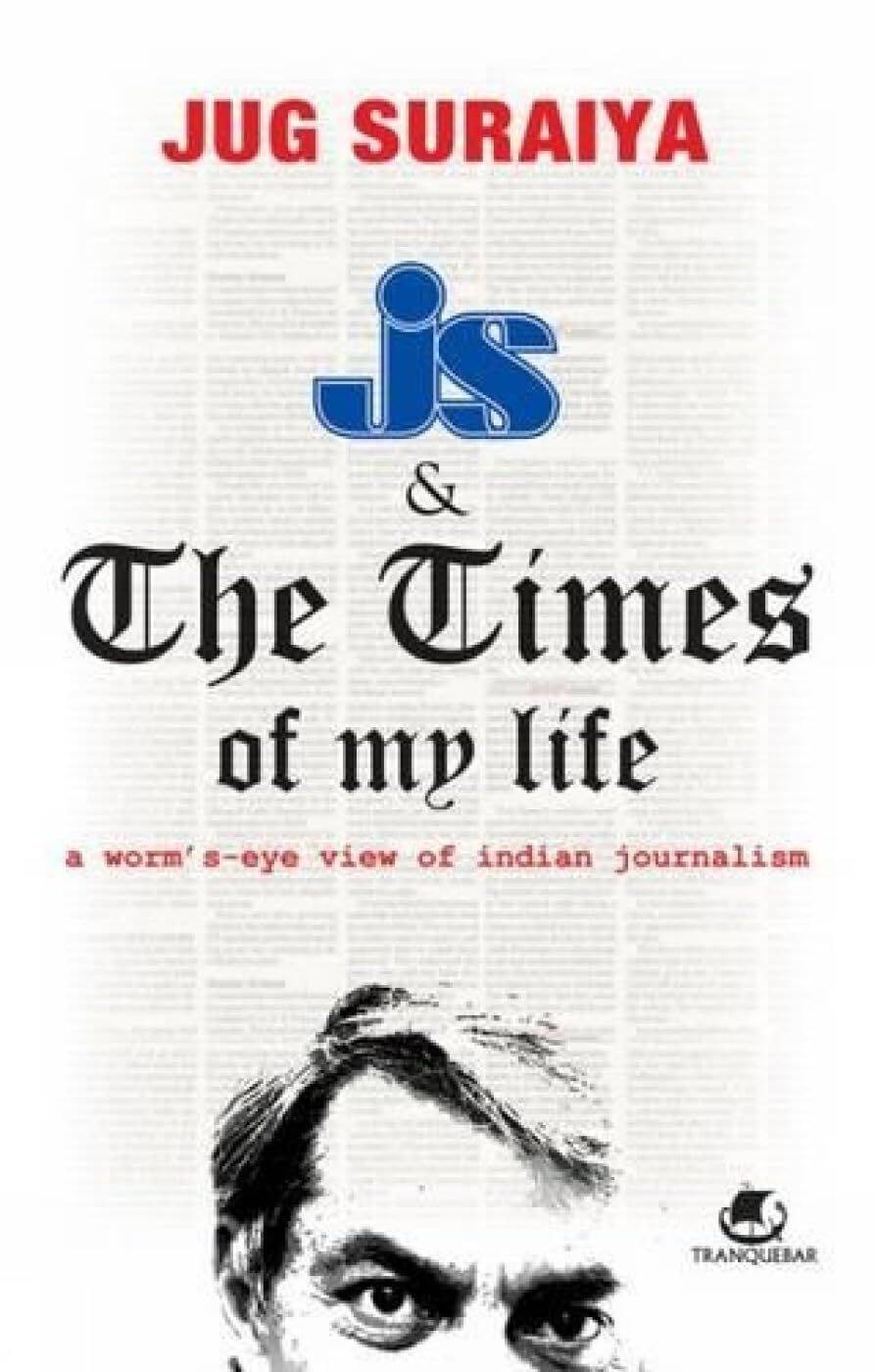

His book JS and The Times of My Life is a delectable read in which he describes coming to Delhi from Calcutta and discovering the water woes that plague the national capital, a scarcity made him morally flexible and a “water thief”.
A few decades later, yours truly moved to Delhi from Mumbai, a city suffering from post-traumatic Schezwan disorder (PTSD), cheek-by-jowl living and questionable street food, and discovered that water remains an untenable and unpredictable resource even in this day and age.
In parts of NCR, such as Gurugram – the perfect parable of Plato’s Atlantis, which sank under the metaphorical weight of human hubris and societal decay – every spell of rain makes the city resemble the kind of mega-flood that, in both Abrahamic and pagan traditions, represents divine anger.
And in parts of Delhi, water remains such a scarce resource that it feels as though we are living in a Mad Max sequel. In pin codes that boast some of the country’s most expensive real estate, water shies away like Karna’s archery skills the moment he needs it. Around 71% of the Earth’s surface is covered by water and roughly 60% of the human body is water, but it is never in the place where it needs to be.
I have had a personal tryst with water scarcity over the last few years, something I never experienced in any neighbourhood of Mumbai.
The first thing I do when I get up is check the indicator that tells me the water level in the tanks and decide on the course of water-based activities for the day. Depending on the water level, one schizophrenically checks the various taps, flushes and water outlets to see if they are accidentally leaking. Sometimes, depending on the amount of water in the tank, one has to choose between washing clothes, doing the dishes or showering at the gym. At times, the anger trickles down – unlike the water – and one harangues the maid for being too liberal while mopping the floor.
Once or twice, one has even had to check into a hotel to ensure that one’s marital life doesn’t turn martial over the lack of “aqua cola”.
At times, the water is so brown that MAGA has already started protesting against it getting an H-1B and stealing their jobs.
Perhaps one should consider oneself lucky because the horror tales from others are even worse, a reminder that in Delhi it’s not about keeping up with the Joneses, but just ensuring one has more water than the Joneses.
TOI’s reporting shows that different neighbourhoods of Delhi come with area-specific water woes.
In Hauz Khas, residents reported black – sorry, African-American – particles floating about.
In Kirti Nagar, families add disinfectant before using it.
In Gulmohar Park, the water arrives in different DEI-approved shades, ranging from dusky yellow to black.
In Janakpuri, the water even manages to defeat reverse-osmosis machines.
At times, it arrives at ungodly hours, with RWA WhatsApp groups dedicated to tracking it the way Twitter’s OSINT experts track unknown flying objects. Each night, one denizen is assigned the Night Watch. People are embarrassed to invite guests over and, when they do, the guests are given detailed dos and don’ts for preserving water and avoiding skin infections.
Sometimes, it even contains an additional source of protein in the form of live bugs, though proteinjeevi gym bros don’t appear too thrilled about it.
And then, after all this, the Delhi Jal Board has the temerity to send a notice saying that it will cut the water supply if you don’t pay your bill on time. Except, most of the time, none of the options for paying the bill appear to work.


Franz Kafka’s final novel, The Castle, revolves around a land surveyor called K who has been summoned by bureaucrats who live inside a castle. The castle is visible, but the surveyor spends the entire book trying to get inside and never manages it. It’s a process so tedious that Kafka shuffled off his mortal coil before he could finish it.
But he ostensibly told his friend Max Brod – whom we should perhaps call an ex-friend since he didn’t respect Kafka’s final wish that his manuscripts be burnt – that his intended ending would have had K receive a note on his deathbed from the Castle. It would inform him that he had no legal right to live or work in the village adjoining the Castle, but that an exception would be made for him.
The same goes for the Delhi Jal Board website, app and numerous payment options, all of which seem to malfunction the moment you try to view or pay your bill. But unlike K, I managed to bypass the bureaucratic firewall on the fifth day of trying and finally pay the bill before ending up on my deathbed.
Perhaps that is progress.
K had to wait until the man with the scimitar came looking for him to get a note from the Castle; the DJB sends its notices well in advance, even if the water and the means of paying for it remain trapped inside.
Water, water everywhere except my taps.
Postscript by Prasad Sanyal: Why technology is autocracy’s perfect accomplice
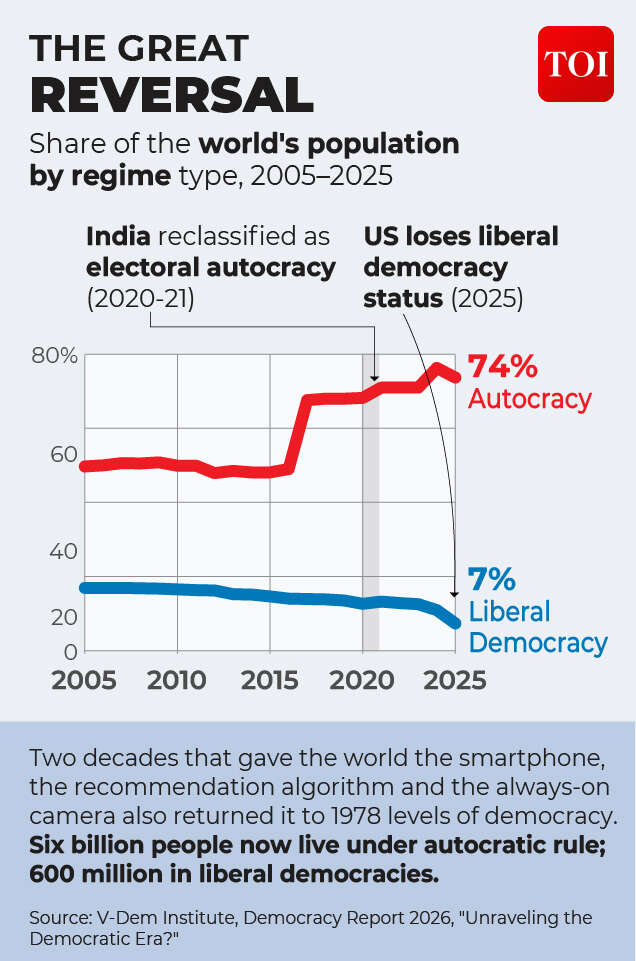

There is a road near my house where the speed limit changes three times in two or three kilometres, for reasons known only to the municipal engineer who approved it, possibly in a previous birth. Every driver treats the signage the way we treat most Indian law: as a suggestion, an opening bid in a negotiation the state has neither the manpower nor the appetite to conduct. This is not lawlessness, irrespective of what the traffic police say on Twitter. It is the oldest democratic arrangement there is: the law announces itself, the citizen decides how much of it to obey, and somewhere between the two, a society finds its actual speed.
Since July 2024, every new car sold in the European Union must carry Intelligent Speed Assistance, a system that reads the signage so you don’t have to, and then nags, vibrates, or gently strangles the accelerator when you exceed the limit. For now, the driver can override it by pressing harder, a concession the regulation describes in the soothing vocabulary of assistance and empowerment. But anyone who has watched software evolve knows what an override is. It is a feature awaiting deprecation. The headphone jack was also an override once.
Meow Times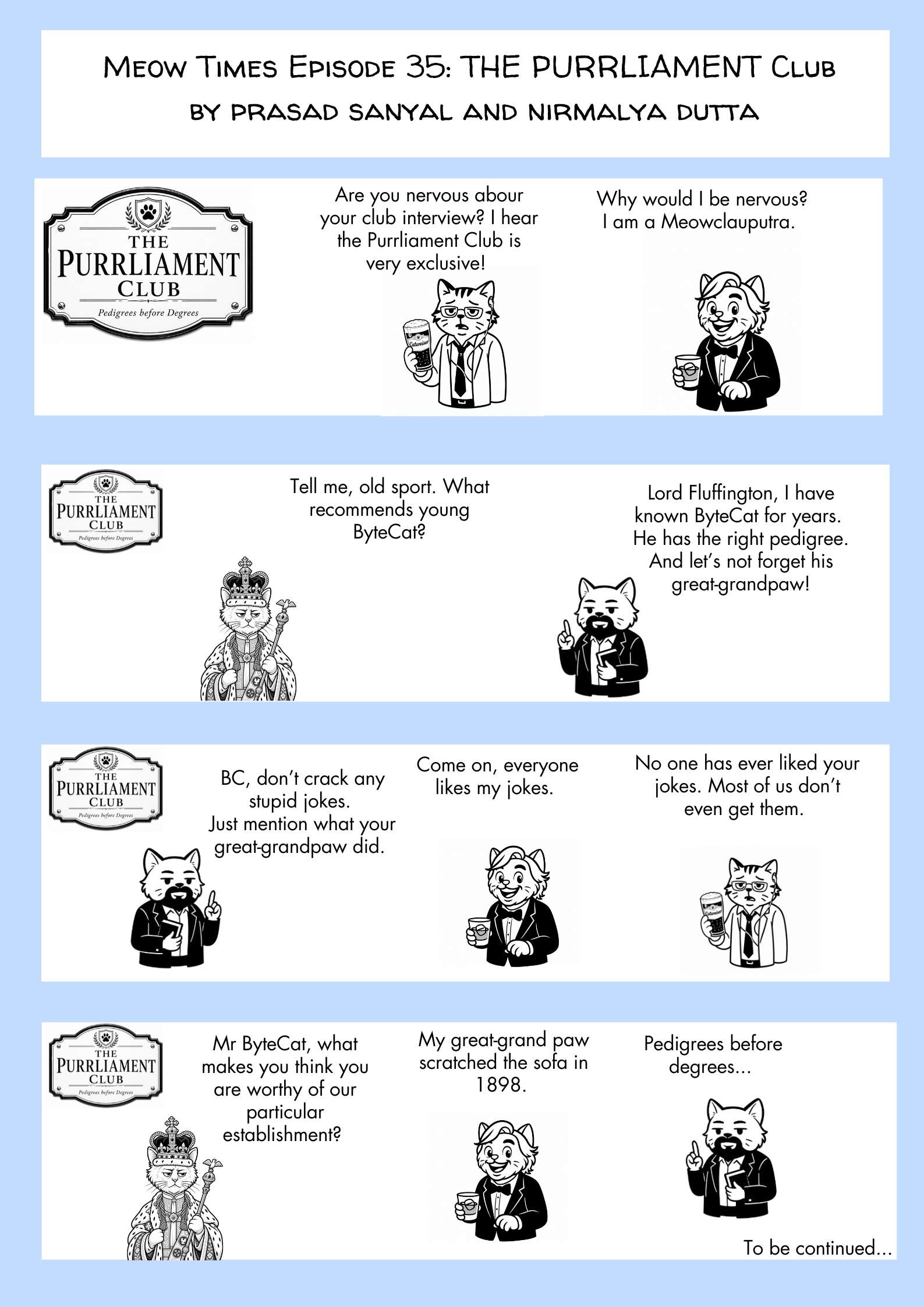

Disclaimer
Views expressed above are the author’s own.