Turbulent Times

Air turbulence incidents will only increase with climate change. Airlines and passengers should focus on safety
Commercial planes are the safest way to travel, statistically. Yet, people dread flying more than any other mode of transport. It’s easy to see why. We have evolved to walk on land and swim across water, but up in the air, we’re entirely at the mercy of elements and a machine. So, when a plane runs into rough weather, as an Air India flight from Phuket to Delhi did last week, it can scar fliers, and scare those who’ve only been planning to make their first air trip.
Unfortunately, such incidents are happening more frequently now, and global warming is the chief culprit. A 2024 study found that planes encounter moderate to severe-or-greater turbulence 68,000 times a year. While that’s not even 2 in every 1,000 flights annually, it is a huge number. And the really bad news is that such incidents are bound to increase as climate change quickens. UK researchers found a sharp increase in conditions likely to cause severe turbulence over the North Atlantic since the 1970s.
Shall we give up flying then? No. The problem is not that existing planes can’t handle turbulence. In fact, they are over-engineered to survive whatever nature throws at them. But flyer behaviour is half of the actual problem. Injuries during air turbulence would reduce sharply if people heeded seat belt warnings. Because keeping your seat belt on is the best way to stay safe on a flight. Technological limitations are the other half. While 75% of turbulence can be predicted up to 18 hours in advance, and often avoided, “clear-air turbulence”, which hit the AI flight last week, can’t be detected. Studies are on to use birds as an advance warning system, but practical applications of such ideas are still some time away.
That turns the focus on pilot training, expertise, and work conditions. If pilots fly under challenging environmental conditions, without adequate rest, the risk to everyone is greater. Unlike climate change and turbulence, this is something airlines have control over. They should promote a culture of safety, which includes convincing passengers to keep their seat belts on.
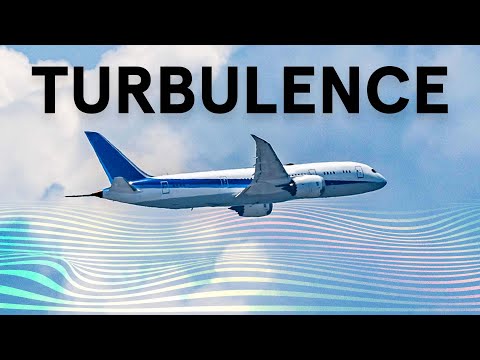
https://www.bbc.com/news/articles/c9wy4k1zyqvo
https://www.bbc.com/future/article/20240524-severe-turbulence-climate-change-singapore-airlines
Disclaimer
Views expressed above are the author’s own.