
Incels ko gussa kyon aata hai?
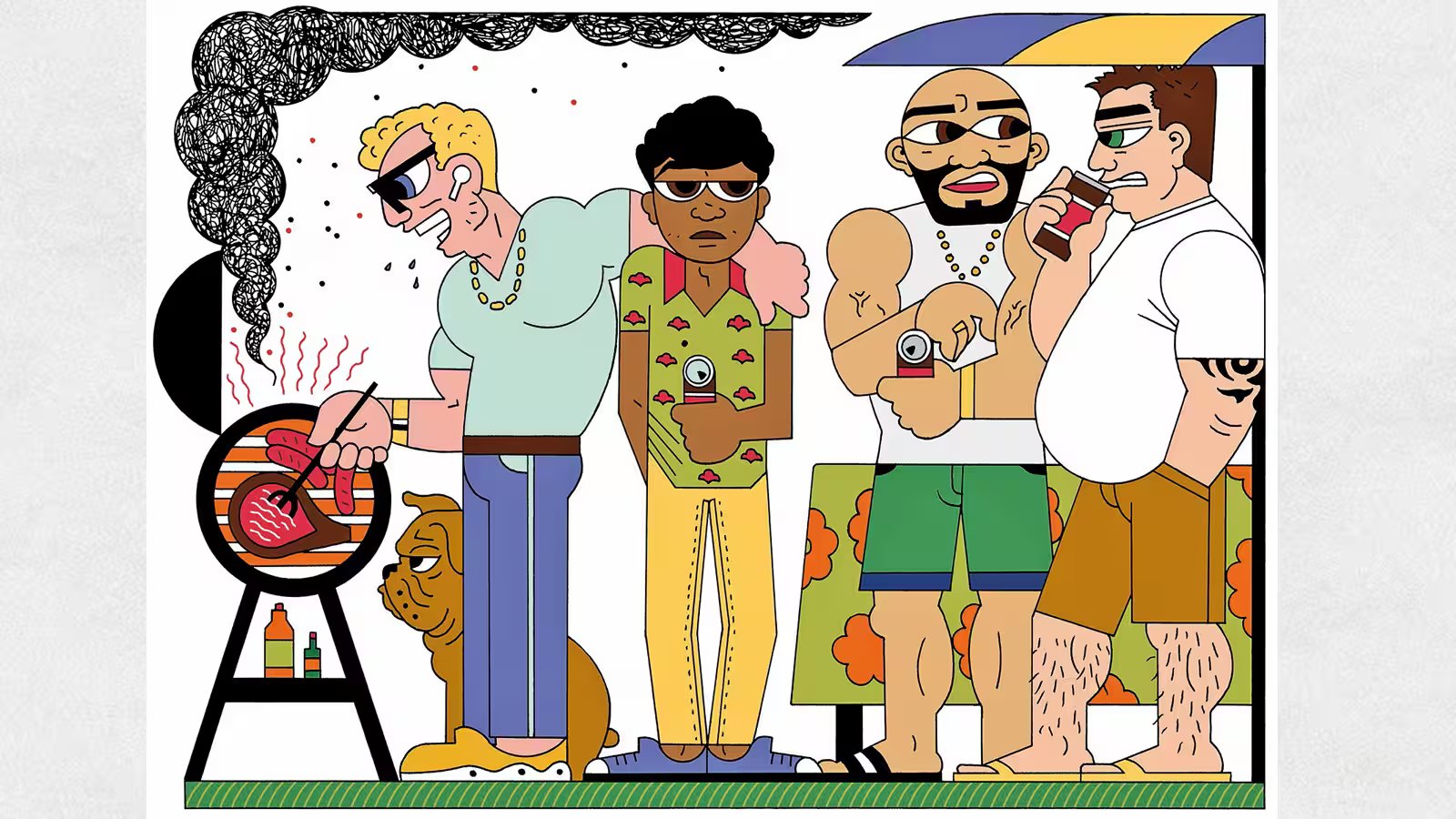
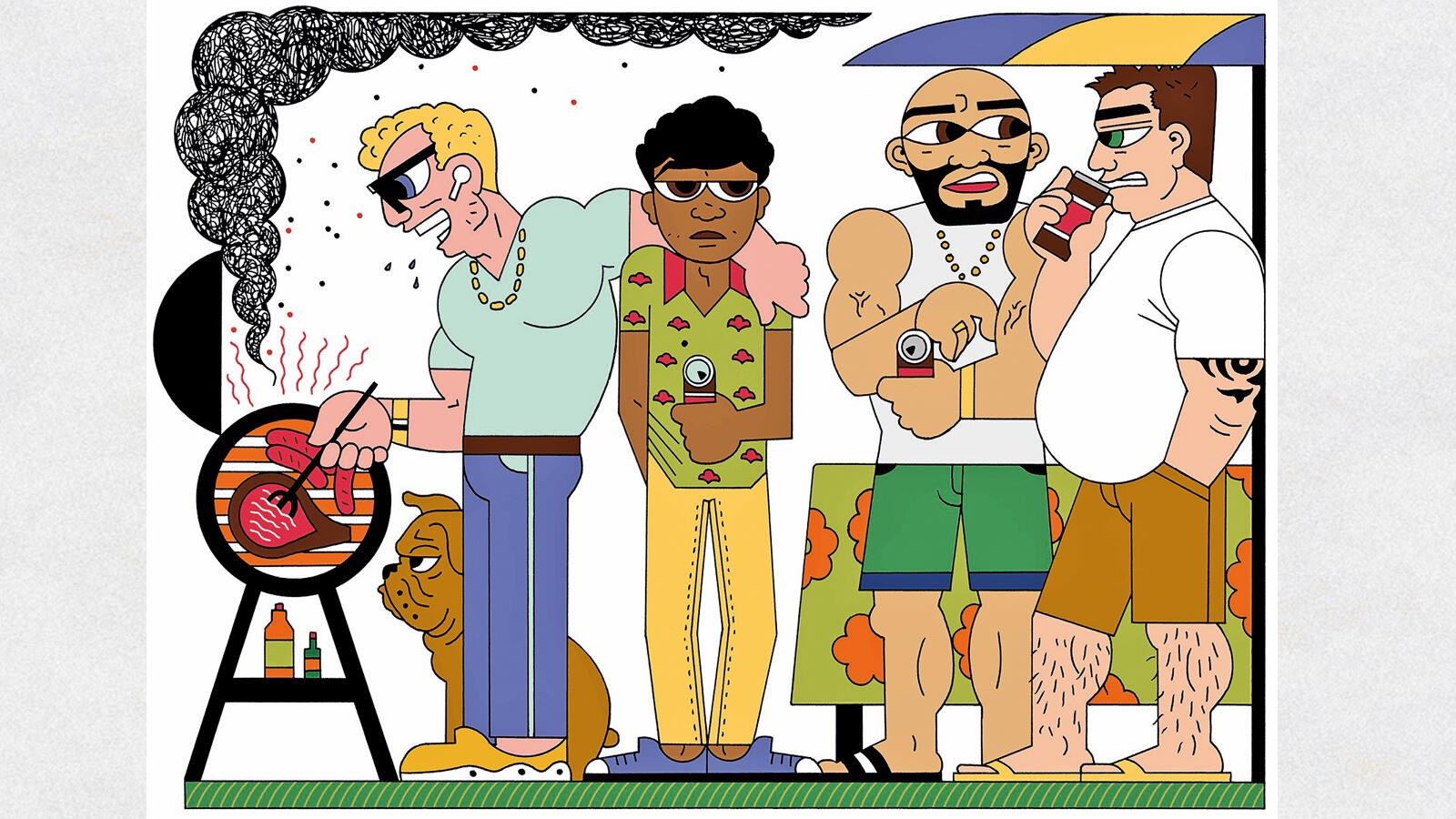
It took me a while after I got to the US to realise that I dressed weird. It was less the colours than the specific shades. Pink, yellow, and green were all men’s colours, but my shirts were in hot pink and turmeric yellow, the green of a banana leaf that just unfurled, sharp checks and block prints, instead of a pale pastel layer between their skin and their suit jacket. If anyone wondered if this was some Indian variant on camp, they were too polite to ask.
Many non-Indians, when first in the country, are struck by the way men dress and the casual arms that they throw across each other’s shoulders, and wonder if there is a lot of easy and open homosexuality. The truth is quite the reverse. Homosexuality is no longer a crime, but gay marriage is still illegal, and most gay couples, outside certain elite circles, still keep themselves outside the public eye. The men holding hands in the streets and the hairy-chested machos in their raspberry-pink paisley shirts don’t need to think about what it signals, precisely because almost no one dares to be openly gay.

There were, I have to admit, advantages of growing up with such (false) clarity. When classes were cancelled, we would sit in a group and sing. Mostly Rabindrasangeet or the beautiful SD Burman standards, full of angst and adoration. Never stopping to wonder what it could mean for a group of young men to be serenading one another. Which is precisely why it could happen.
Looking back, I see how important these moments were for young men. Then, as now, few had girlfriends, or even friends who were girls. The myth that female purity has something to do with sex created a society anxious about all forms of physical contact across genders. Yet touching and holding someone, or lovingly locking eyes, are physiological needs, especially for young people. There is, of course, a natural continuity between these and sex, which is why lovers also hold hands, but when that is out, even committed heterosexuals can get comfort from same-gender friends.
But it was still a very peculiar arrangement. We were twenty then. For most middle-class men of my generation, the age at marriage, the one socially sanctioned sexual relationship, was over 30. To get there, one had to jump through many hoops — competitive exams and/or advanced degrees, interviews, and internships. Then, a job secured, an appropriate bride had to be found, and terms negotiated, before that much-anticipated suhaag raat.
All this often took ten years or more, precisely at an age when the desires are the strongest. And even then there was no guarantee, since exams often go wrong, including, as we just saw, when someone powerful decides to profit from them. Sadly, but perhaps predictably, the subject of women would push many of my otherwise sweet and generous companions (always happy to share their mutton roll) into a sullen meanness. X is a bitch, she never returns my smiles; Y is too busy eating; she is going to lose her figure; and Z, she likes them rich, she is always at the back of somebody’s motorbike. And worse. Much worse. Especially when an attractive woman happened to pass.
And I fear that these years warped their entire lives; after spending 15-20 years post-puberty being uncomfortable around women, how do you get to an easy intimacy with a woman who happens to be dropped into your life? Even as a child, I had noticed that a lot of men from my father’s generation seemed easy with their friends, warm with us children, but formal and ill at ease with their own spouse.
The world has changed in many ways, but I doubt that Indian men are less misogynistic today. The age at marriage has been drifting up, and for the educated young, who advertise on the website Jeevansathi, 29 is the median age of initiating a quest for a partner, consistent with marriage in the early 30s. On the other hand, exposure to other people having sex, via phones and computers, is vastly expanded, which must add to that resentment. The political system senses that frustration and anger, and uses it cynically: when gau-rakshaks turn into rakshasas or when brothers kill sisters for straying beyond caste and creed, there is somewhere a connection to this unnatural celibacy.
Male anger, alas, is a global problem these days. In the US, they call themselves incels, short for involuntary celibates, men who want sex but can’t get it, making the source of the anger quite explicit. They blame feminism and women’s economic independence for interfering with the ‘natural’ order of things by empowering women to choose who to be with and when to walk out.
One reason this problem is getting worse is that men are economically falling behind. Men still occupy the highest echelons of the corporate sector everywhere (why this is the case will have to wait for a future column), but at less elevated levels the patterns are very clear: men used to dominate tertiary (i.e. university) education; now women in the OECD between the ages of 25 and 34 are 12 percentage points more likely than men to have some tertiary education. In the US, the fraction of women with some college education was two-thirds that of men among those born in 1930 but among those born in 1950, women were already ahead and in the 1995-born cohort, women are ahead by nearly 20%.
Lest you think that this is because men are off doing something more exciting, my MIT colleague David Autor and Melanie Wasserman, an MIT PhD who now teaches at UCLA, document that at least in the US, trends in the labour market parallel those in education. Between 1979 and 2010, women’s hourly wages grew much faster than men’s hourly wages for people at all levels of education, but the most striking difference was among those who had no college education, where men’s wages, adjusted for inflation, fell by 20-25%, while women’s earnings stayed more or less the same. Since women were also exiting the no-college education category much faster than men, this was a double whammy, and it is not doing anything to assuage male rage.
The consequence is that women who are seen as too uppity are now routinely threatened with rape and murder on social media. There have been several mass shootings (mostly of women and gays) that are directly linked to incels. One reason Trump won is his support from less educated young men, which is not unrelated to his history of abusing women, physically and otherwise. Indeed, despite his constant racist abuse of brown men, many Hispanic men (but not women) voted for Trump, underlining just how important male insecurity has become in US politics. In the UK, Andrew Tate, wanted in the UK and Romania for rape and trafficking of under-age women, is seen as a positive figure by a quarter of males between 15 and 29, and in Colombia, another country where women are way ahead of men in terms of schooling, the recent election was won by a right-wing politician whose politics features the size of his gonads and the shape of his butt.
And to be fair, one might say that Trump, in his own way, delivered to them. He upped the daily dose of insults he throws at women who dare to stand up to him, and unleashed his two macho boys, secretary of war Peter Hegseth and health secretary RFK Jr., on the country. Hegseth has been on the ‘warpath’, firing every woman in the upper echelons of the armed forces (and every black man), and his current obsession seems to be with the masculinity of men in the army — every male (and female!) in the armed forces over 30 will now be tested for testosterone! RFK is helping out there — his preoccupation is with testosterone-boosting foods — raw beef and giant steaks are big on his menu. In liberal Massachusetts, every barbecue has provisions for those who don’t eat beef, but I wonder what this means for Indian immigrants, invited to a barbecue with Republican friends, say in Texas.
None of this chest-beating helps men find jobs or lovers. Instead, it reinforces their belief that there is something intrinsically precious about their male-ness, and that women need to be made to value it more. In fact, the incel weltanschauung (worldview) is deeply pessimistic about men: they are seen as losers, unattractive, with not much to offer beyond the magic potion of their maleness. But they need sex, and the only way they think it will work is to make women economically dependent on men again, and limited to one partner for life.
In India, we have engineered this through a range of social pressures (“who will make cha-jolkhabar (late morning snack)?” my aunt was told when she was offered a job) at the cost of wasting the many talents of our women, and the happiness of those forced to play housewife to someone they may not love or feel attracted to. But even if we were totally indifferent to this suffering, there is another problem. Faced with the prospect of being permanently economically dependent on one man, women and their families want to be sure that the man can provide. Hence, love life was delayed to the edge of middle age.
It seems to me that the only way forward is for young men everywhere to recognise that most of us, male and female, will settle for someone kind and generous, funny and sweet. And this is something most of us can be — the companions of my youth were no different, as long as there were no young women around. The social structures around gender, and the resulting myth that women are somehow different and need to be won by muscle or money, is what turned them into monsters, as it still does all too often.
This is part of a monthly column by Nobel-winning economist Abhijit Banerjee illustrated by Cheyenne Olivier
=====
RECIPE FOR GRILLED VEGGIES WITH ROMESCO SAUCE
Whenever we grill, the thing I look forward to most are the grilled vegetables, sliced eggplants and zucchini, quartered onions or whole shallots, grilled till soft and then dressed with a simple emulsion of red-wine vinegar in olive oil in 1:3 proportion, with salt and dried thyme, doused in the delicious Catalan romesco sauce.
To make romesco sauce, roast 3 red bell peppers at 200 degrees centigrade till they are collapsing and then put them in a paper bag to steam and loosen their skin, and then peel them (or use store-bought roasted red peppers). Along with the peppers, but in a different pan, roast 4 tomatoes and one head of garlic till the tomato is fully wrinkled. Roast ½ cup hazelnuts or blanched almonds till fragrant, and add to your blender with 3 tbs breadcrumbs and 1tsp salt. Blend till pulverised. Add the peeled peppers, roasted tomatoes, 1 tsp smoked paprika or kashmiri mirch, enough peeled roasted garlic cloves to fill a tablespoon plus half that amount of fresh garlic cloves to the mixture, and blend while dribbling in 1/3 cup of olive oil. Lighten with 2 tbs water if the mixture seems sticky.
Disclaimer
Views expressed above are the author’s own.