Digital jalebiwallahs and their not-so-sweet traps
Trump may be 79, but the amount of bile and braggadocio he can spit out at a moment’s notice would make any 25-year-old proud. And that is a source of his power. If that is what it takes to be a success on social media, I quickly grasped that I should stay away. I have never, literally never, posted on any of the platforms, though I do occasionally lurk — I believe that is the right technical term — on Instagram, indulging my cravings for food and design.
My favourites on Instagram tend to be of a type: the woman in a housecoat and a faded bindi, laying down the law about the right way to make, say, a paturi of fish or paneer, swathed in a mustard sauce and pan-fried in a package made from arum or pumpkin leaves. And the smiling man in ill-fitting pants and a caterpillar moustache who seems intent on whacking the viewer with his collection of beautiful Uzbek carpets. Unlikely characters, bizarrely comfortable in their skin.

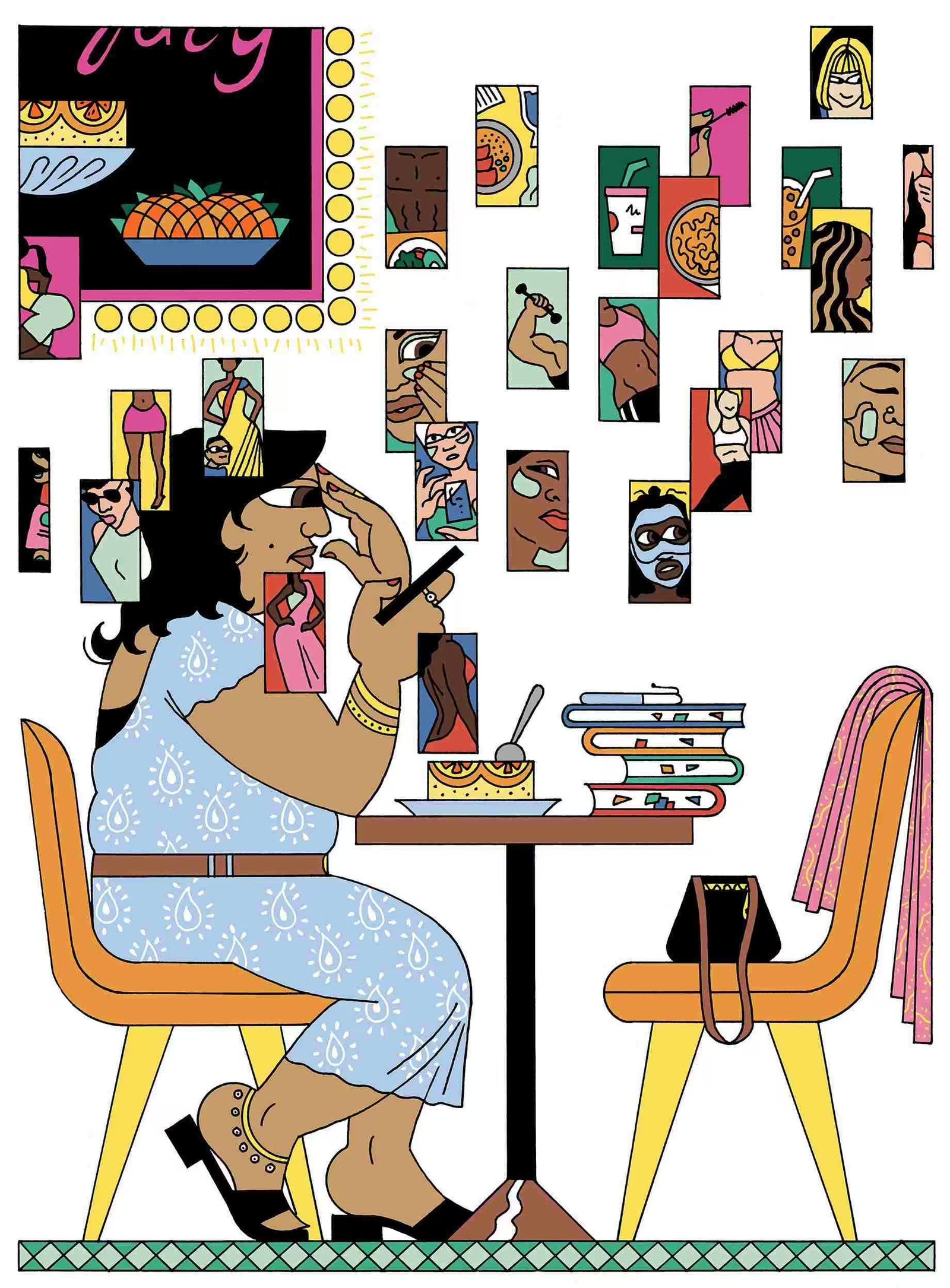
But then there are the baffling many whose studied perfection frightens me. There is the French woman who peels her aloe and mashes it to make her morning aloe vera drink, dressed in a body-hugging aloe-colored dress that remains magically unsoiled, before cooking and blending strawberries to make strawberry bubble-tea, in a hat and a dress the color of strawberry milk shake. And the good-looking young chef who prefers to cut onions with his shirt off, probably with the explicit goal of making me jealous of his pecs. And many others.
In fact, though the original discourse about social media was that of shared spaces where we can each be ourselves, I feel it’s now a very tense place, where everyone is judging and being judged. The result is that Instagram and TikTok are now home to the entirely superhuman, conjuring up marvels of cooking or couture with no apparent effort, or if there is any acknowledgement of something that stands between intention and achievement, it has a rhythm and a poetry that makes it look entirely unlike hard work. I squinted at the making of a blueberry layer cake for evidence that a few specks of powdered sugar or flour got onto her blueberry-colored frilly dress, but no.
I don’t, of course, blame her. Or any of them. She is clearly responding to the norm of whitewashed perfection that we seem to have collectively set, because she can: she has a collection of vivid dresses, a great editor, a competent cinematographer and a good camera voice.
The problem is more for the rest of us, for whom these miracles are inaccessible. I can cut onions as well as the next man, but I wouldn’t want to expose my ageing dad-body while doing so, and if I did, you would be well-advised not to watch it. Even when we know that there might be some air-brushing involved, it is hard to avoid being slightly intimidated and depressed when confronted with the flawless execution and carefully curated looks commonly on display.
Some young women in Kolkata whom we interviewed explained that to be on social media, they need to dress differently every day. Given their budgets (their word), they had no choice but to go for the cheap and shiny over the authentic and truly beautiful. They seemed troubled but didn’t see a way out.
Of course, being on social media is a choice, and those who are not having fun, or dislike these videos, can always opt out. Or at least watch what they like. Or can they? Unfortunately, sharing is the lifeblood of social media — half the fun will be lost if we can’t reach out to our friends with our latest discovery, be it creme brulee doughnuts or Noormahli qorma. Not reacting to those is to risk the friendship.
There is also a deeper and more insidious issue: the algorithms built into social media platforms can be very manipulative, as a recent, original and insightful experiment by two economics PhD students, Nancy Wang from MIT and Hannah Solheim from Columbia University, demonstrates.
Given the emphasis on social media on looking good, and the broader cultural norm, in East Asia and much of the West (and increasingly in India too), that women need to be slim (though toned), social media abounds with weight-loss content. Some of it is free, but often it involves, more or less subtly, advertising products or programs for sale. And a lot of that seems to function by making the women feel bad about the way they look and getting them to spend money to “fix” it.
The body-positivity movement pushes back against this, asserting, rightly, that beauty comes in all shapes and sizes. Like with everything else, social media accommodates every view and its opposite, and thousands of body positivity videos co-exist with weight-loss content.
Hannah and Nancy created TikTok accounts for 424 fictitious users, all 22-23-year-olds across the US. With some of these accounts, they followed and watched videos from a long list of body positivity influencers; with others they followed and watched videos from fashion
experts; and the rest were blank, with no history at all. They then invited a group of young female users to adopt the TikTok personae they had created (using them as they pleased) and paid them a small amount for agreeing to do so. The accounts were assigned at random, so there was no systematic difference between the users to start out.
However, 30 minutes after this experiment went live, some clear patterns emerged. The TikTok algorithm showed the most weight-loss material, paradoxically, to those who got the body positivity accounts. Those who got the blank accounts saw the least; and the fashion accounts were roughly in the middle. The difference was large — a factor of 5 between the body-positivity and the previously blank accounts. In other words, despite signalling that they were committed to resisting the slimness norm, the algorithm decided that they were the right targets for the weight-loss videos.
And it seems the algorithm was onto something. The participants had been asked about their interests before they were assigned to an account. Among those who said they were interested in body-positive content, only some got sent weight-loss videos by the algorithm in the initial minutes. Based on TikTok histories that Hannah and Nancy scraped, these were watched for 50% longer than the other videos. In other words, people who express an interest in body positivity actually get hooked when weight-loss gets thrown at them. TikTok knows that and targets exactly those people.
Are the women therefore better off being shown the videos that they purportedly do not want to see? Not at all. Self-reported well-being at two weeks after the women get access to the accounts is substantially lower for those who randomly got assigned to the body positivity accounts and therefore get shown more weight-loss videos, and at least part of this is accounted for by the fact that they end up more unhappy about the way they look.
In other words, weight-loss videos are like fresh-fried jalebis or a slice of a delicious orange-almond cake for a diabetic or someone trying to lose weight. Once they cross your path, it is a no-win situation – you can walk away and feel sad or give in now and end up with the weight of failure and the fear of the future. It’s best not to pass the jalebi-wallah or the patisserie, just like it is better not to be identified by TikTok as a potential target for weight-loss videos.
But to make matters worse, TikTok is like a jalebi-wallah who runs after the diabetics. Given the slant in the public discourse on body shape, a lot of those who seek to embrace body positivity, unsurprisingly, tend to be anxious about their bodies and unable to fully shut down the voice in their ears that whispers “lose weight”, even though they know that losing weight (and keeping it off) is hard (perhaps less so now thanks to GLP-1). So, when the video comes, they have a hard time looking away. In fact, the experiment finds that TikTok shows more weight-loss ads to the body-positivity group and that they are watched for longer.
To confirm that this is at least in part the right story, Nancy and Hannah carried out another experiment. They offered a group of 1,000 young women the option of paying to avoid being shown weight-loss videos, which is what someone who is aware of her own vulnerability would want. Of those who said they preferred to avoid weight-loss videos, 37% agreed to pay.
It would be better, at least for these women, and probably many others, if these options were simply not available. But this is how TikTok makes money: being able to target based on body positivity has raised its revenue, while making its clients less happy. Nancy and Hannah, quite appropriately, describe this as TikTok’s parasitic strategy.
Govts are now contemplating a more drastic step: Australia, Indonesia and the UK, among others, are implementing a social media ban for those under 16, partly to protect them from facing these painful temptations and difficult choices. India has been silent on this.
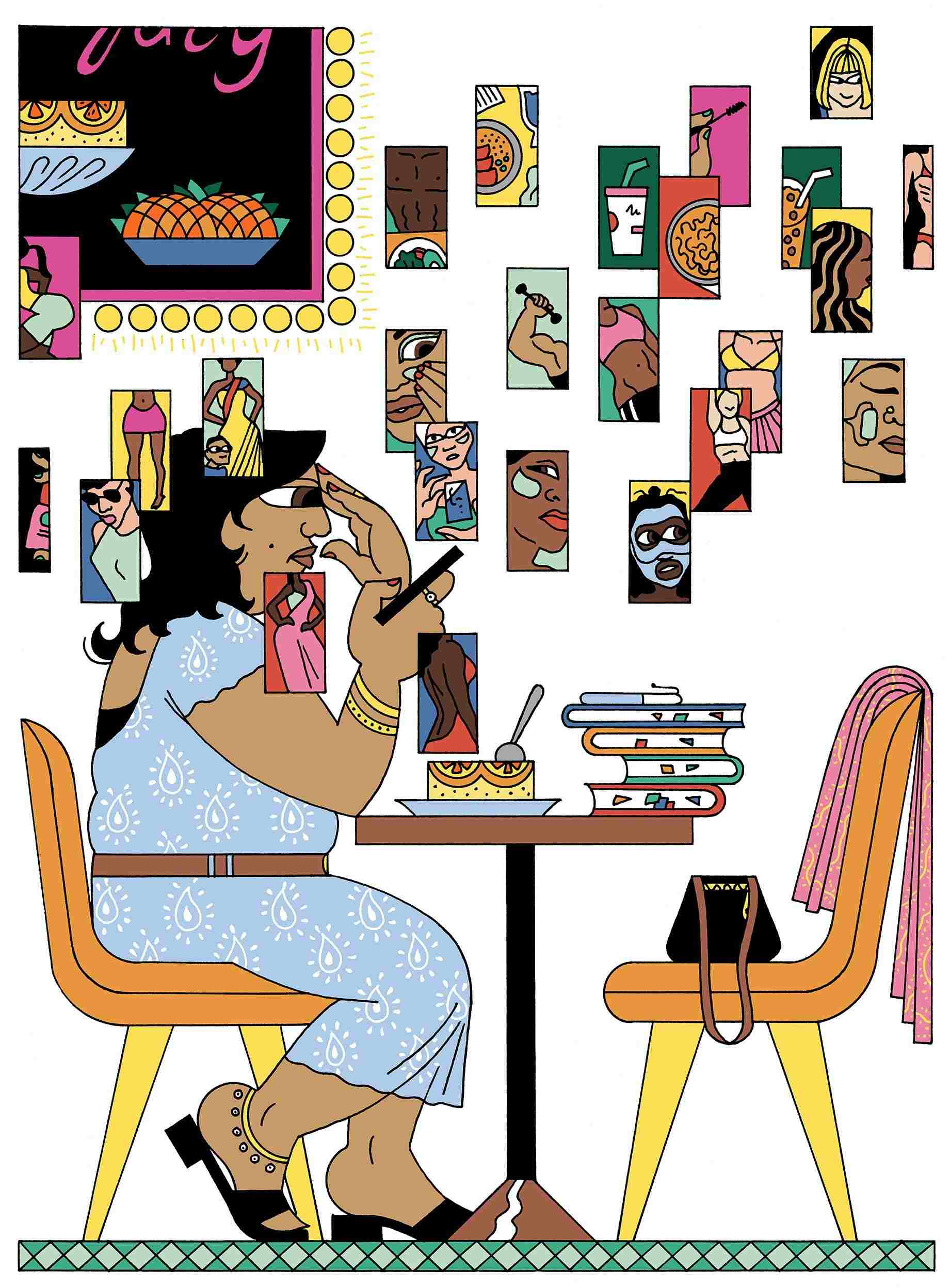
This is part of a monthly column by Nobel-winning economist Abhijit Banerjee illustrated by Cheyenne Olivier
===========================
Orange-almond-ricotta cake
I have a friend, a beautiful and confident woman, who loves her cake. She is alone for once, with no one to ‘share’ with, but she goes ahead and orders a slice. She knows this cake is mostly healthy, high on protein and low(ish) on sugar, but then she opens her TikTok feed and for a minute, feels overwhelmed.
Pre-heat oven to 150 degrees C. Zest two small or one large orange (or blood orange). Set it on its flat side and slice it horizontally into slices 2mm thick. Butter a 9” baking pan and line it carefully with a sheet of parchment paper. Heat a small frying pan and add ½ cup brown sugar and 1 tbs water and stir until the sugar dissolves. Paint the inside of the parchment paper with the resulting slurry and then tile the lined area with orange slices. Then carefully separate 3 large eggs and use an electric beater to whip the egg whites until they are medium firm. Then, using the same beater, beat the yolks with ⅔ cup ricotta, 1 cup sugar or the equivalent amount of stevia, the orange zest and ½ cup extra virgin olive oil. If you don’t have ricotta, substitute⅓ cup of the softest fresh paneer you can find, grated, and mix it with ¼ cup milk. When the mixture is light and pale yellow, add 1.5 cups of almond flour or 2 tbs less than 1.5 cups of almond flour and 2 tbs of polenta for the crunch. Plus ½ tsp salt. When the flour is fully incorporated, add in the egg whites with a light hand to lighten the batter. Pour over the orange slices and bake for 40 minutes or so. Let it cool. Use a large plate to cover the cake and flip it over, tapping at the sides of the cake pan if need be to get the cake onto the plate. Peel off the paper.
Disclaimer
Views expressed above are the author’s own.