Patriot, S-400, THAAD, Iron Dome and HQ-9: Which air defence system is the best?
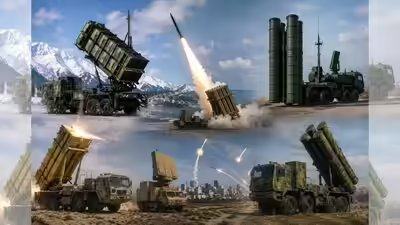
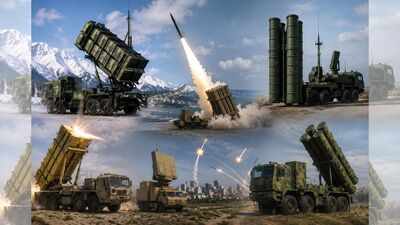
The wars in Ukraine, the Middle East and the growing use of ballistic missiles, cruise missiles and drones have transformed air defence from a niche military capability into one of the most sought-after strategic assets. Countries are investing billions of dollars to protect cities, military bases and critical infrastructure from increasingly sophisticated aerial threats.The recent Iran-Israel conflict once again highlighted the importance of layered air defence. Israel relied on Iron Dome, David’s Sling, Arrow-2 and Arrow-3, backed by US THAAD and Patriot batteries, to intercept waves of missiles and drones. Ukraine, meanwhile, has repeatedly credited the US-made Patriot system with intercepting Russian ballistic missiles, including the hypersonic Kinzhal. India has deployed the Russian S-400 Triumf, while China continues to export its HQ-9 system to friendly nations.
Each of these systems has earned a formidable reputation. However, comparing them is not straightforward because they were designed to defeat different threats at different ranges and altitudes. Rather than asking which is universally the “best”, military planners focus on which system is best suited for a specific mission.
Patriot: The combat-tested all-rounder
Developed by the United States, the Patriot remains one of the world’s most combat-tested air defence systems. First introduced in the 1980s, it has undergone multiple upgrades and today is operated by more than 20 countries.The latest Patriot PAC-3 configuration is designed to intercept aircraft, cruise missiles and tactical ballistic missiles using a hit-to-kill approach, where the interceptor destroys the incoming target through direct impact instead of relying solely on an explosive warhead.Recent conflicts in Ukraine and the Middle East have further strengthened Patriot’s reputation. The system has reportedly intercepted advanced Russian ballistic missiles and Iranian missile attacks, demonstrating its effectiveness against some of the most challenging aerial threats. It also benefits from decades of operational experience, strong interoperability with NATO forces and continuous upgrades. However, Patriot interceptors are expensive, its defended footprint is smaller than that of very long-range systems, and it can face challenges during large saturation attacks if interceptor stocks begin to run low.
S-400 Triumf: Built to defend vast areas
The Russian S-400 Triumf is among the world’s longest-range air defence systems and serves as the backbone of Russia’s integrated air defence network. It has also been exported to countries including India, China and Türkiye.One of the S-400’s biggest advantages is its ability to employ different interceptor missiles simultaneously. Depending on the missile selected, it can engage aircraft, cruise missiles and ballistic missiles at distances ranging from around 40 km to as far as 400 km. Its sophisticated radar network allows it to track hundreds of targets simultaneously while engaging dozens at the same time, making it particularly suitable for defending large geographical areas.India’s deployment of the S-400 has significantly strengthened the Indian Air Force’s long-range air defence capability. While the system is praised for its long range, multi-layered interceptor options and high target tracking capacity, questions remain about its actual performance against advanced Western stealth aircraft. Much of its claimed capability is based on manufacturer data, while its effectiveness depends heavily on radar integration and the electronic warfare environment.
THAAD: Designed for ballistic missile defence
The Terminal High Altitude Area Defense, better known as THAAD, performs a very different role from Patriot and the S-400. Rather than protecting against aircraft or cruise missiles, it is specifically designed to intercept medium-range ballistic missiles during their terminal phase, often outside Earth’s atmosphere.Like Patriot PAC-3, THAAD uses hit-to-kill technology, destroying incoming missiles through kinetic energy rather than an explosive warhead. It has demonstrated a very high success rate during testing and has been deployed in strategically important regions such as South Korea, Guam and Israel.THAAD’s greatest strength lies in its ability to intercept ballistic missiles at very high altitudes, giving it one of the largest defended areas against this class of threat. However, its specialised nature also limits its flexibility. Unlike Patriot or the S-400, it cannot engage aircraft or low-flying cruise missiles and is intended solely for ballistic missile defence.
Iron Dome: The master of short-range defence
No modern air defence system has become as widely recognised as Israel’s Iron Dome. Developed to counter years of rocket attacks, Iron Dome protects cities, military installations and civilian infrastructure from rockets, artillery shells, mortars and increasingly, drones.One of Iron Dome’s defining features is its sophisticated battle management software, which calculates whether an incoming projectile is likely to strike a populated area. If the projectile poses no threat, the system conserves its interceptor missiles instead of engaging every target. This selective interception philosophy significantly reduces operational costs during mass rocket attacks.Iron Dome has reportedly achieved interception rates exceeding 90 per cent against threatening targets during multiple conflicts, although performance naturally varies depending on the scale and complexity of attacks. While it is exceptionally effective against rockets, drones and other short-range threats, it is not designed to intercept long-range ballistic missiles. Extremely large saturation attacks can also challenge the system by overwhelming available interceptors.
HQ-9: China’s growing challenger
China’s HQ-9 is the country’s primary long-range surface-to-air missile system and is often compared with the Russian S-300 and S-400 families.Developed using indigenous technology alongside concepts derived from foreign systems, the HQ-9 can engage aircraft, cruise missiles and certain ballistic missile threats. Export variants are currently operated by countries such as Pakistan, Turkmenistan and Uzbekistan, reflecting China’s growing presence in the global defence market.The HQ-9 combines long engagement ranges with modern radar systems and multi-target engagement capability. However, unlike Patriot or Iron Dome, it has relatively limited publicly documented combat experience. Much of its claimed performance remains difficult to independently verify, leaving analysts with fewer operational examples to assess its true effectiveness.
Which system performs best?
The answer depends entirely on the mission.For ballistic missile defence, THAAD remains one of the world’s most capable systems because of its ability to intercept incoming missiles at very high altitudes, even outside the atmosphere.For overall multi-role air defence, Patriot and the S-400 remain the leading contenders. Patriot enjoys a stronger combat record against ballistic missiles and has repeatedly demonstrated its effectiveness in real conflicts. The S-400, meanwhile, offers much greater engagement range and can defend significantly larger geographical areas while simultaneously engaging multiple types of aerial targets.When the threat consists primarily of rockets, artillery shells, drones and other low-cost projectiles, Iron Dome remains unmatched because it was specifically designed for this mission and has repeatedly demonstrated its effectiveness under combat conditions.China’s HQ-9 has emerged as a capable long-range system and continues to improve, but it still lacks the extensive combat record available to systems such as Patriot and Iron Dome.
The future lies in layered defence
Perhaps the biggest lesson from Ukraine and the Middle East is that no single air defence system can protect against every type of aerial threat. Modern militaries are increasingly building layered air defence networks that combine long-range interceptors such as the S-400 or THAAD with medium-range systems like Patriot and short-range systems such as Iron Dome. These are further supported by electronic warfare systems, anti-drone guns, directed-energy weapons and laser-based interceptors.As drones become cheaper, ballistic missiles become faster and cruise missiles become more difficult to detect, the world’s most effective air defence architecture will not depend on a single shield. Instead, it will rely on multiple interconnected layers working together. In modern warfare, integration has become more important than any individual air defence system.