Uk Next Pm: What’s next after Starmer: A lowdown on the making of the UK’s next PM
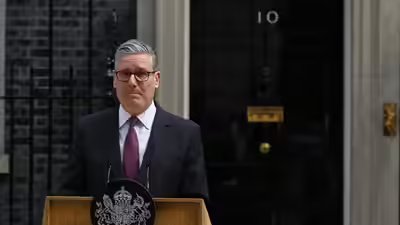
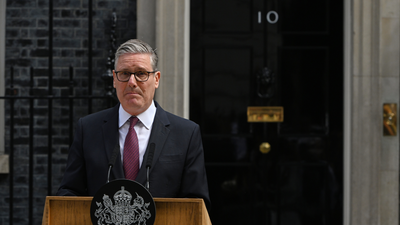
When Margaret Thatcher was deposed by rebel MPs 1990, she deemed it “treachery with a smile on its face”. Indeed, world leaders were shocked at the inexplicable machinations of the Westminster machine. Soviet leader Gorbachev, in the middle of a politburo meeting when he heard the news, sent out his foreign minister, Eduard Shevardnadze, to find out if the inconceivable had really happened. Shevardnadze returned with confirmation, remarking that five years earlier, Soviet Union had party coups, and the British had elections – and now, it was the other way around. Henry Kissinger in Washington compared the loss of Thatcher to a “death in the family”. Divisive as she may have been, the iron lady stood as a giantess on the world stage. Such anguished paeans are absent in the case of the politically late Keir Starmer.
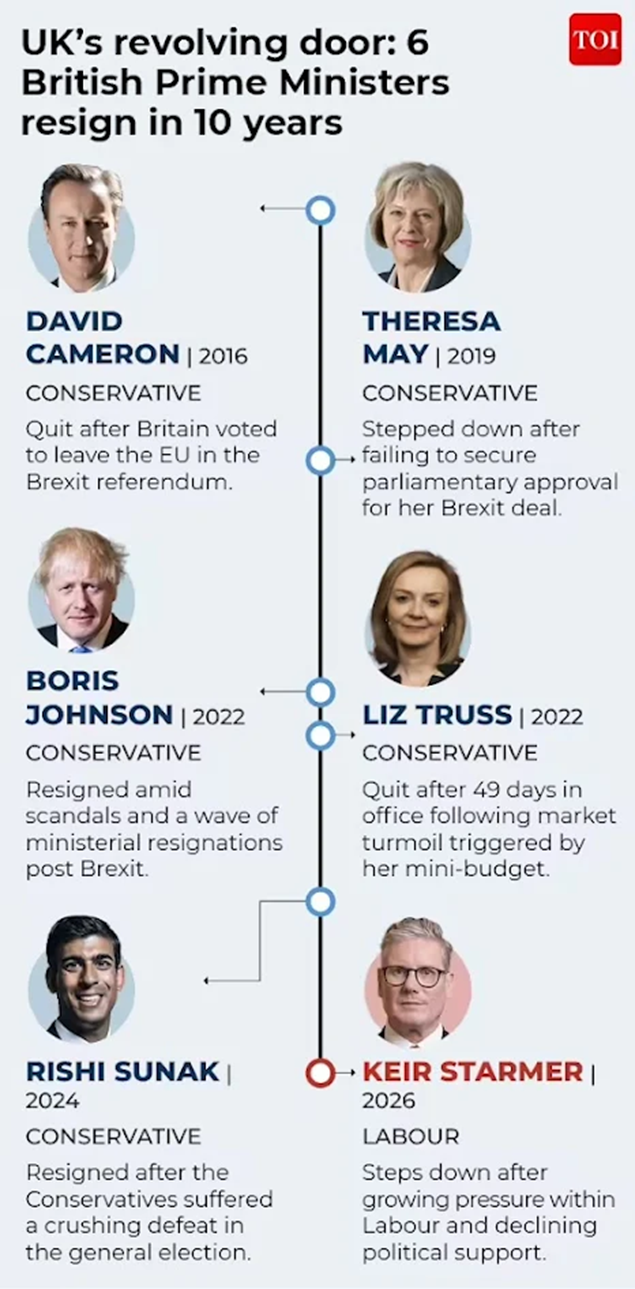
What comes next is a feature of British political life dominated by conventions: the leadership election.
What comes next is a feature of British political life dominated by conventions: the leadership election. Britain, which does not have a codified constitution, important constitutional moments are governed by constitutional conventions – rules, written, unwritten, ancient, and modern, which determine how the rat race is to be run. The first, and most important, conventional requirement is that the Prime Minister, and the leader of a party seeking to govern, must be a member of the lower house of parliament. It is the satisfaction of this requirement which explains, at least in part, Starmer’s decision to resign. Until late last week, Andy Burnham, the top contender to replace Starmer, was not a member of the House, instead serving as the popular Mayor of Manchester. With Burnham parachuting into Westminster via a by-election, he became eligible to replace the beleaguered premier. In the past, promising candidates have lost out on the chance to lead their party (or the country) owing to this convention. Tony Benn, the firebrand leader of the left wing of Labour Party in the 1980s, missed his best chance at leadership of the party as he was ineligible to stand, having lost his parliamentary seat at the 1983 general election. Unlike in India, modern British PMs may not, by convention, sit from the upper house of parliament – the House of Lords. Twice in the past century, this de facto disqualification was thrust upon promising leaders. In 1923, Stanley Baldwin was chosen as the Conservative Party leader (and hence Prime Minister) over Lord Curzon (of Bengal fame) as it was, on balance, considered unwise to have a titled aristocrat, unanswerable to the lower house, as Prime Minister. Four decades later, in 1963, when the Earl of Home was chosen as the leader of the governing Conservative Party, it was considered totally unacceptable. Sir Alec Douglas-Home, as he subsequently became, then disclaimed his peerage (gave up his hereditary title) and stood for byelection to the lower house to legitimise his claim to the premiership.Rajya Sabha being an indirectly elected rather than a hereditary or nominated House, there is no such bar to legitimacy in India. Four Indian PMs: Indira Gandhi (1966 to 1967); Deve Gowda; IK Gujral; and Manmohan Singh have held that office from Rajya Sabha. The last British PM to sit from the Lords was the Marquess of Salisbury, who held the office from 1895 to 1902.The second convention that must be followed is that the PM must demonstrate to the King that he or she has the confidence of his parliamentary party. Starmer cited the loss of this confidence as a reason for his exit. Burnham will now have to demonstrate his. Indeed, in the past, PMs have used resignation as a threat to whip their parties into line. In 1995, John Major famously resigned, daring the internal critics of his European policy to “put up or shut up” and to challenge him openly in a leadership contest. Except for a token contest from the Oxford don and Welsh Secretary John Redwood, they did neither. But the gambit allowed Major to remain in post for another 2 years. Labour Party’s rules now state that in order to get on the leadership ballot, a candidate must show support from 20% of the party’s MPs (that is, 81 MPs) and 5% of all the constituency-level Labour Party groups in the country or at least 3 of the ‘affiliated’ organisations of the Labour Party (mostly the larger trades unions). Every candidate who clears these hurdles is put to a vote of all party members in a ranked-choice voting system, with the winner being crowned leader.The final convention is, of course, appointment by the King. Once internal party formalities are complete, the new leader must go to Buckingham Palace to ‘kiss hands’ and accept formal appointment as the monarch’s first minister. Of course, the new PM’s real work – an anaemic economy, an especially troubled special relationship, and a resurgent right wing – will only begin after this grand processional, with all its pomp and circumstance, is complete.