Odisha and Odiya consciousness before this decade, and present
Odisha, historically as a poor state has faced significant neglect and discrimination from various central governments prior to the current decade and a bit earlier. This, however, is less pronounced, and Odisha appears to be gaining some significance in the recent times. This article seeks to explain the transformation and its impact on Odisha and Odiya identity Consciousness.
Introduction
Societal recognition and respectful treatment are vital for any region, individual, or society. Recognition, importance, and treatment accorded to an individual, community, or region determine confidence, dignity, and self-respect. This is because individual identities are shaped by interactions with others, as highlighted by Renger & Passini (2024). When a society recognises and values its members’ worth, it fosters dignity and helps build self-esteem and confidence. This positive conduct leads to internalised self-respect, empowering people to live authentically, pursue personal growth, and contribute positively to society. It is worth corroborating the above with reference to Odisha and Odiya consciousness.
There was a time when Odiya identity consciousness was not convincingly present, so much so that some people living outside Odisha were reluctant to identify with their identity, language, or culture. Historically, the state was marked by poverty, backwardness, and underdevelopment, resulting in unfair perceptions of its people as unprofessional, idle and subjected to various other discouraging nomenclatures. In the current decade, however, there is no doubt that Odisha and Odiya consciousness are emerging strongly, both within and outside the state. Today, Odisha is recognised for numerous positive developments, and its people are seen as hardworking, honest, spiritual, truthful and progressive. The evolution of Odiya identity consciousness has roots in specific factors and events over time.
The Transformation
The attempt, therefore, has been to compare Odisha and Odiya consciousness before this decade and present in certain aspects, including financial, political, cultural, administrative, and infrastructural development.
- Financial Aspects: A decade ago, it was common to read about the neglect and discriminatory treatment against Odisha by the various central governments published in Odiya dailies. Issues surrounding resource sharing and financial assistance were prominent complaints. The Odiya dailies were widely found publishing, Odisha prati kendra ra baimatruka monobhaba (The Central Government’s step-motherly attitude towards Odisha). Currently, however, such news does not seem to appear. Complaints regarding discriminatory treatment from the state government concerning resource allocation are notably absent in this decade.
- Infrastructure Development: Disappointment was common in Odisha following rail budget announcements due to limited allocations for railway infrastructure and the number of trains. People of Odisha had to console themselves with a few and a meagre allocation of resources. However, this is no longer the case as Odisha now receives numerous trains, including the best like Vande Bharat Express. Many infrastructure projects have been completed, transforming a single railway line into double and triple. Earlier, Odisha had only one airport, in Bhubaneswar. Now, a standard airport at Jharsuguda has been operationalised, and many others operate from Utkela (Kalahandi) and Rourkela. There is no neglect of the development of other infrastructure, such as ports and roads, at present, compared to the past.
- Political Aspects: In previous years, not only were the people and state overlooked, but also their top leaders. For example, one of the former CMs very often visits Delhi to meet the party head, but the party head may not always find time to meet the CM. The Odiya dailies will publish the same as, Aamaka Babu, Delhi re high command nku dekha kariba pain dera pakaichanti (the leader has camped in Delhi to meet the party high command). Additionally, the ministerial portfolios assigned to Odisha were extremely limited and often of lesser significance. The best of the ministerial portfolios that the leaders of Odisha usually settled down were the ‘Iron and Steel’ or ‘Mines and Minerals’.
At present, there is a discernible change. Notably, the President of India hails from Odisha, marking a historic point for the state. Leaders from Odisha hold three to four crucial portfolios, including Oil and Petroleum (earlier), Education, Railways, Skill Development, and Tribal Development. This reflects a newfound confidence in Odiya leaders to the point that they are even given multiple portfolios.
- Administrative Aspects: The pattern of neglect was also visible in terms of Odiya people occupying higher positions as administrators, officers, or educationists. A few were noticed in important positions earlier. Presently, there are/were many eminent Odiya people serving in the highest positions in various ministries and organisations. For example, the secretaries of the PM, the former governor of the RBI, the former CAG director, the former chairperson of NCPCR, the DG of IMD, and many others.
- Educational and other Infrastructure: In the past, Odisha was not a preferred location for establishing prestigious educational institutions. For any important institutions to be established by region (east, west, north, south), Kolkata appears to be the first choice in the east. There was no Central University, IIT, IISER, ISI, or IIM established in Odisha. When locations were identified for the establishments of IISER, Bhubaneswar was originally chosen, but it was shifted to Kolkata, and Odisha was satisfied with the institution called NISER. Presently, all the eminent national-level institutions are established in Odisha, and Bhubaneswar has emerged as one of the important destinations in eastern India. The World Class Skill Development Centre is located in Bhubaneswar. Two of the four chip-making plants are allocated to Odisha, and presently, the largest underground crude oil storage facility is being constructed at Chandikhol.
- Cultural Aspects (Padma Awards): The recent trend in Padma awardees from Odisha illustrates a significant increase in recognition (see Fig. 1). During 63 years from 1954 to 2016, the number of awardees was 66. Conversely, 39 eminent Odiyas have been conferred over a short period of the last 10 years (2017-2026). The average per year from 1954 to 2016 is slightly more than one (1.05), while it is nearly four times higher (3.9) in the last 10 years (see Table 1). This shift not only highlights increased acknowledgement of the contributions of Odiya people but also reflects the growing prominence of the state itself.
Fig.1: Year-wise Padma Awards to Odisha, 1954-2026
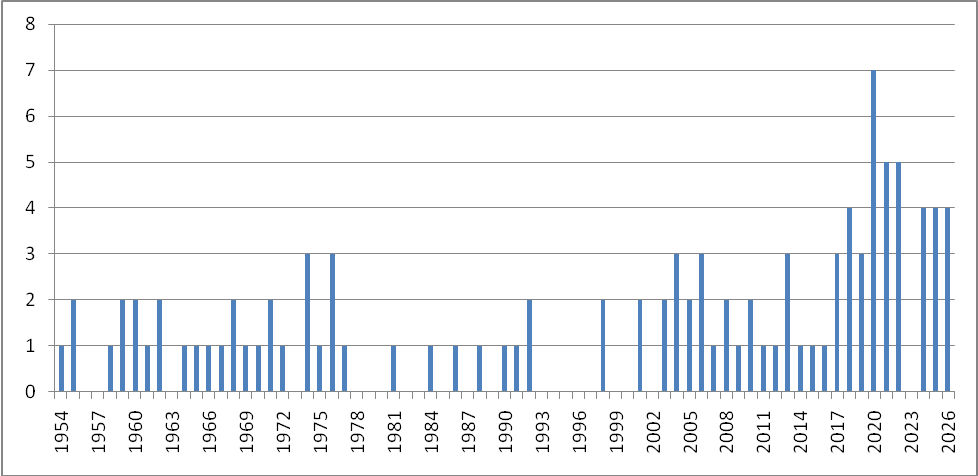

Table 1: Padma Awards to Odisha, 1954-2026
| Time Period | Duration | Total awards | Average Per Year |
| 1954-2016 | 63 | 66 | 1.05 |
| 2017-2026 | 10 | 39 | 3.90 |
Source: Padma Awards, Ministry of Home Affairs, Govt of India
Culturally, symbols such as the Konark Temple and its wheel have been showcased globally, particularly during the G20 meeting, reinforcing Odisha’s cultural significance. The Odiya community in Delhi also celebrates events like ‘Odisha Parva’ and ‘Nuakhai’ on a large scale, showcasing community pride in the present decade.
Conclusion
The perception of Odisha and its people at the national level has undergone a positive transformation, fostering a new sense of pride and Odiya consciousness. This change is promising for two primary reasons: it acknowledges long-overdue recognition for Odisha. Secondly, it highlights the benefits to the nation as a whole when competent, honest, and progressive individuals take on important responsibilities. Nonetheless, it is essential to recognise that this enhanced recognition hasn’t come about by chance. Factors and individuals behind these advancements deserve appreciation for their sincere efforts in elevating the image and consciousness of Odisha.
Disclaimer
Views expressed above are the author’s own.