TMC unravelling holds lessons for other parties
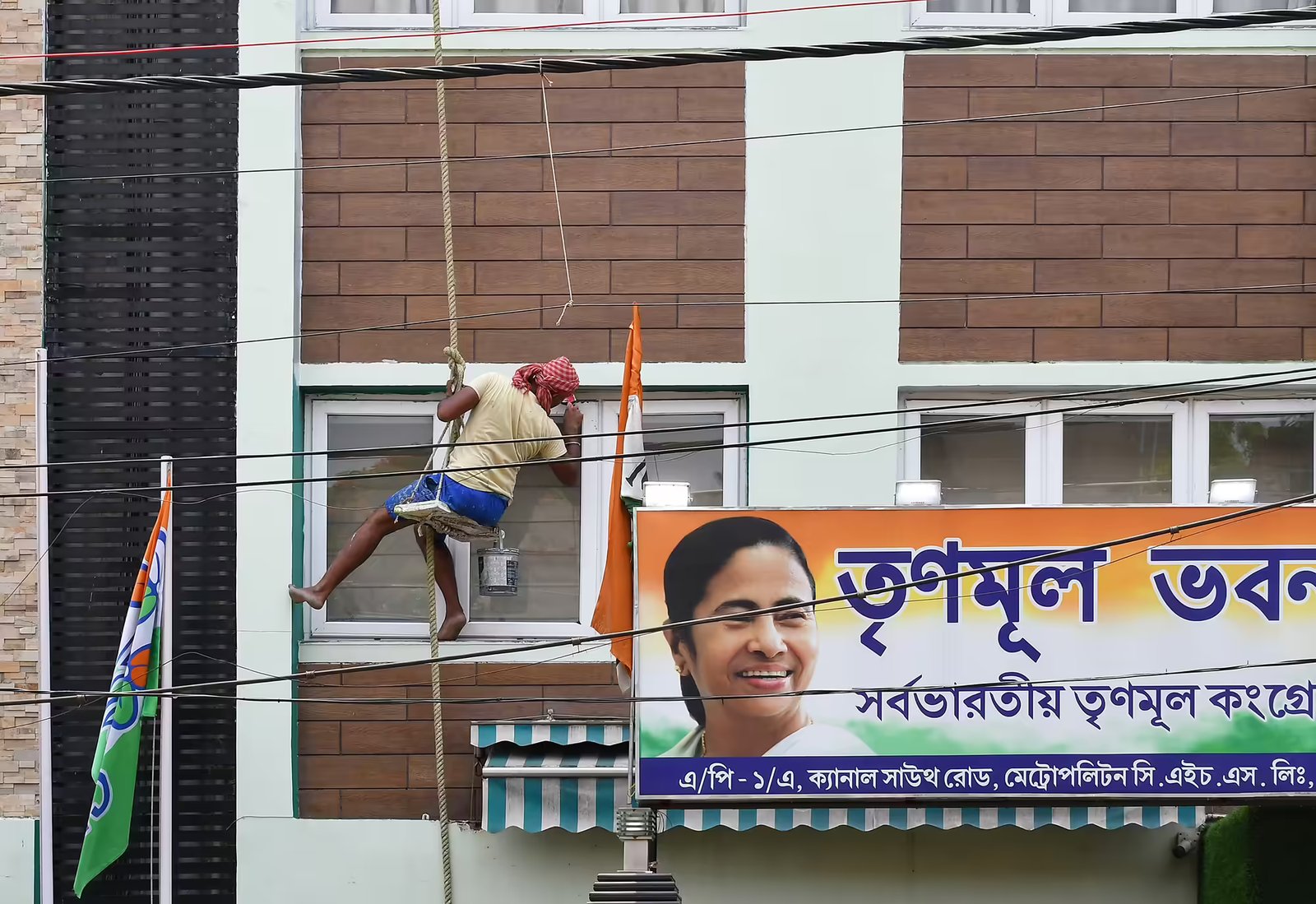
Rarely in India’s political history has a party unravelled so quickly after an electoral defeat as the Trinamool Congress (TMC) appears to be doing in the past two weeks. Is the rebellion inside TMC a familiar pattern or a unique event? The short answer is that it is both.
It’s familiar because Indian politics has witnessed a steady succession of ruptures over the last few years. Shiv Sena and Nationalist Congress Party (NCP) split in 2022-23, then earlier this year, seven Rajya Sabha MPs from AAP joined BJP, and now six MPs from Shiv Sena (UBT) are likely to merge with Eknath Shinde-led Sena.
However, what unfolded in West Bengal over the past two weeks is qualitatively different. Few regional parties have collapsed so dramatically with public outbursts, and breakaway factions walking away with a significant share of legislators, both in the assembly and in the Lok Sabha.

The common thread linking Shiv Sena, NCP, AAP and now TMC lies in the intersection of two forces. The first is the challenge of intergenerational succession. Most regional parties have evolved into family-centred political enterprises. As long as founders remain electorally dominant, they are rarely questioned. Problems emerge when the baton passes to the next generation. Earlier, succession battles tended to come from within political families or dissidents who often lacked the resources to mount a serious challenge. Now, ambitious lieutenants may accept a founder’s authority, but they are most likely to rally the troops when leadership is passed to a family heir.
And with the political dominance of BJP since 2014, such dissidents have an alternative destination. Aligning with the ruling party can ensure their political survival, protection from investigation, or simply a faster route to political advancement. BJP supporters will point out that the party did not create these conditions for rebellion. Yet, it has become remarkably effective at exploiting them and, in the process, reshaping the very structure of the opposition confronting it.
Still, the Bengal story cannot be reduced to succession and BJP strategy alone. After all, other regional parties have experienced leadership transitions and electoral defeats without such rapid disintegration.
There have been no such desertions so far from Samajwadi Party, which has been out of govt since 2017, or RJD, which has largely been out of govt since 2005, barring a few years in alliance with Nitish Kumar. YSR Congress Party (YSRCP) suffered one of the most dramatic defeats in recent memory in Andhra Pradesh. It too remained organisationally intact. Even AIADMK, despite years of factionalism after Jayalalithaa’s death, retained a substantial core organisation after the 2026 Tamil Nadu elections. Several MLAs who supported Vijay during the floor test returned to former CM E Palaniswami. In neighbouring Odisha, BJD lost to BJP after governing for nearly a quarter century. Despite the party being highly centralised around Naveen Patnaik, it retained a distinct organisational identity and administrative reputation that survived electoral defeat.
Why has the TMC proved more vulnerable? The answer lies in the nature of party-building itself. Unlike in other parties where ideology or long-standing social identities create loyalty beyond office, TMC came to rely on something different in its 15 years in office: fusion between party and state. As political scientist Dwaipayan Bhattacharyya has noted, the party-society model under the Left Front had transitioned into a “franchisee model” in which TMC’s leadership promoted local strongmen in exchange for delivering absolute loyalty and votes to the party. These local bosses were granted full autonomy to run their areas as personal fiefdoms, blurring the distinction between party and state.
Such arrangements are likely to generate formidable electoral machines, but they produce extremely fragile organisations. Once the ecosystem of political influence, physical control over territory, and access to state resources collapsed, so did the incentive to remain loyal. Also, in West Bengal’s winner-takes-all political culture, power shifts frequently carry social, economic and even violent consequences for local actors.
TMC’s troubles carry lessons beyond Bengal. For parties, especially family-centric ones, closing leadership pipelines, discouraging internal competition, and suppressing organisational renewal may quickly turn electoral defeat into organisational collapse. For Congress, which has struggled with similar problems for decades, the message is equally uncomfortable: leadership succession without organisational renewal may preserve control, but rarely produces resilience.
And for BJP, there is a warning hidden inside its successes of facilitating splits within the opposition. Many of the vulnerabilities it exploits —centralisation and overdependence on individual leaders—are hardly unique to them. As long as BJP remains electorally dominant, these issues will remain under the surface. The TMC episode shows how resilience can erode when power begins to recede.
Disclaimer
Views expressed above are the author’s own.