
‘Too much tea’?: Leeds man told to cut back on tea diagnosed with THIS devastating neurological disorder at just 20
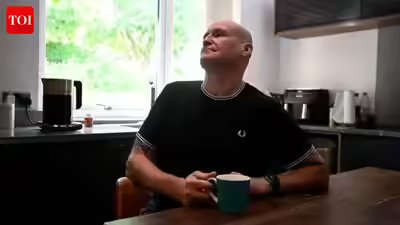
For years, John Granahan, an IT technician from Leeds, figured his constant shaking was just a side effect of drinking too much tea. It’s pretty normal in Britain, as everyone’s got a cuppa in their hand. Doctors stuck to the idea that his caffeine habit was behind the tremors. Nobody suspected anything more serious. But after years of uncertainty and confusion, Granahan finally found out the real reason: at just 20, he was diagnosed with Parkinson’s disease. That’s a neurological disorder that usually doesn’t show up until much later in life.Now, Granahan is 54, and his story has gotten attention far beyond Leeds. People are drawn in by the shock of his delayed diagnosis, but even more by his determination. When he was first diagnosed, doctors warned he’d probably be wheelchair-bound by age 25. He never accepted that fate.
John Granahan’s story: What happened to him?
Per People, John’s troubles began young. At 13, he first noticed his leg shaking during an English class. “I’ll never forget it,” he says. “My leg just wouldn’t stop. It was totally out of my control.” At first, he tried to brush it off, but the symptoms kept getting worse. He started walking on tiptoes, slouching, and the tremors grew more obvious. Even then, he didn’t worry too much. But by age 18, he knew things weren’t right and finally went to see a doctor: “I knew it wasn’t right, but I didn’t know what it was.”The answer? Tea. Because he drank up to 10 cups a day, doctors quickly assumed caffeine was to blame. They put him on beta-blockers, but nothing changed. “I thought, ‘Am I mad? Is it just me?’” Granahan recalls.Nothing improved, so his dad pushed for more tests through private health insurance. That’s when they finally got the truth: Parkinson’s. Granahan was only 20.
What is Parkinson’s?
Parkinson’s is a progressive disorder that happens when nerve cells stop making enough dopamine, which helps control movement. When dopamine fades, people get tremors, muscle stiffness, slow movement, trouble with balance, and sometimes coordination issues. Normally, it shows up in folks over 50, but sometimes, like with Granahan, it hits much earlier.There’s a whole catalogue of symptoms. The classic movement signs are: tremors, even when resting, slowness making simple tasks take forever, stiff limbs that hurt, and balance so bad you risk falling.Sometimes, it starts with subtle signs: losing your sense of smell, sleep problems, messy handwriting, a monotone voice, a blank face. Mood and thinking take a hit too — think depression, anxiety, sometimes even dementia later on.Constipation, swallowing issues, bladder problems, weird blood pressure drops, and relentless fatigue are the kind of non-motor issues that just pile on.
John Granahan’s Parkinson’s diagnosis: How he went through it
Ironically, Granahan felt relief when he finally got diagnosed. After years of worrying, at least he knew what was happening. “It was the happiest day of my life, as weird as it sounds,” he says. “When I didn’t know, my mind just went crazy with possibilities. But after I met a kid in hospital who died from a stroke at age 12, Parkinson’s didn’t seem so bad anymore.” Before the diagnosis, he barely knew what Parkinson’s was. “I didn’t have a clue about Parkinson’s,” he admits, In my mind, even now, it makes me think about an old person in an old people’s home, shaking in the corner.”Doctors said he’d be in a wheelchair by age 25. He refused that idea outright: “No, I won’t. I’ll do everything in my power not to.” He stuck to his motto: never give up, “I just find ways around things. Never give up, that’s my motto.”Over the years, he’s tried medication and different treatments. The disease has good and bad days. Parkinson’s messed with his social life too, as sometimes people thought his strange walk meant he was drunk. He’s actually been turned away from pubs because of it.In 2024, he tried brain stimulation surgery. It helped with tremors, though balance and falls are still a challenge. “Parkinson’s is unpredictable. You’re fine one minute, terrible the next,” he says. “People assume I’m drunk just because of the way I walk.”He’s learned how to manage his condition with medications, adapted routines, and even by using hand controls to drive. The brain surgery helped, but now he has new battles with balance. The disease is complicated; it isn’t just movement, it affects every part of daily life.Granahan encountered his share of personal struggles, too. Since 2016, he’s been raising his daughter, Olivia, alone, after her mother passed away. He credits his determination for keeping him going despite everything.Although doctors warned he’d be wheelchair-bound by 25, he’s managed without one. He uses a walker sometimes, but mostly gets around fine. By adapting, learning to drive with hand controls, changing his routine, he’s lived a surprisingly normal life.Today, Granahan hopes that his story encourages others — not just to never give up, but also to pay attention to the minutes of living. Forty years after the bleak prognosis, he’s still working in IT, still living independently, raising his daughter, and even has a mortgage. “People can’t believe I’ve had Parkinson’s for 40 years and I’m still working, still driving,” he says. “I wish I didn’t have Parkinson’s, but it’s made me who I am. I honestly think it’s made me a better person.”