‘Zero chance of restoration of monarchy in Nepal’: Ex-PM Bhattarai
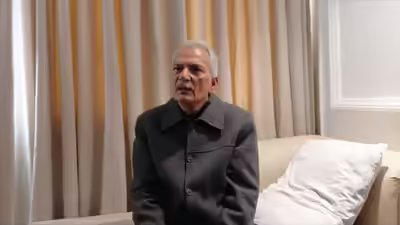
Former prime minister of Nepal and one of the architects of Nepal’s constitution, Baburam Bhattarai, sat down for an exclusive one-on-one interview with TOI’s Rudroneel Ghosh, discussing the recent Gen-Z protests that rocked Nepal, New Delhi-Kathmandu ties, the Agnipath scheme, and the China factor: Following the Sept Gen-Z protests in Nepal, do you think the anger of the protesters has been addressed now?The situation is still in a flux in Nepal. My analysis is that Nepal is still going through a transitional phase. Because we democratised our society very late compared to the rest of the world. The monarchy was only abolished in 2008. Then after the institutions were not very strong until the promulgation of the constitution in 2015. That’s when institutions started developing but were not fully developed. So Nepali govts haven’t been able to deliver. Meanwhile, the aspirations of the youth have skyrocketed, especially after the advent of digital technology. So, frustrations were mounting and exploded in Sept. But things are still in a flux as of today.
Do you think some external elements pushed the protests in Sept?The crisis should be seen as a manifestation of internal contradictions in Nepali society – political, social and cultural. That was the principal factor. The triggering factor was the banning of social media by the then govt. There was also tremendous antagonism against the leadership of the traditional parties, namely the Nepali Congress and the two Maoist factions. These three parties and their leaders simply reshuffled their chairs and couldn’t deliver anything. Plus, corruption was mounting and there was utter failure on the economic front. So, these factors together gave rise to the revolt on the first day. Then there was heavy repression by govt which triggered things further. On the second day there was natural resistance by the youth, and then different vested interests, both internal and external, naturally tried to fish in troubled waters. That’s the reality.Notwithstanding elections being slated for next March, many in Nepal say this is unconstitutional and parliament should be reconvened. What’s your take?I think the question doesn’t arise. In constitutional law you already have the doctrine of necessity. When people’s aspirations are not fulfilled by govt, people have the right to express their views through the street. That is also a part of democracy. So, when govt is forced to resign and the parliament dominated by outdated parties and leaders was not accepted by the people, it was dissolved. So, the natural corollary is to hold elections on time and bring constitutional democracy back on track. If you keep postponing elections under various pretexts, the danger is collapse of constitutional democracy. That won’t be in the interest of anybody, including international players. So, should there be a constitutional amendment with regard to Article 76(5) that allows any member of Nepal’s parliament to stake claim to form govt with adequate support of any other members?I was one of the makers of the constitution. We had certain reservations then also. Given Nepal’s specific case and tremendous diversity, we needed to have a directly elected executive and a fully professional parliament. Only then we could ensure stability. That was our point of view at that time, but our view could not prevail. So, we made a hotch-potch-type electoral system and form of governance that led to not any party mustering enough seats, and therefore they were forced to enter into coalitions, giving rise to horse-trading and instability. To minimise this, certain provisions were kept in the constitution but even these didn’t work. One of the demands of the Gen-Z movement is to make a progressive amendment to the constitution so that these anomalies can be addressed. That can be done after the election – it could be one of the issues of the election. How do you see calls from certain sections for the restoration of the monarchy?This is not true at all. In every society there are some fringe elements, 1-2% of the population, who are very conservative with retrograde mindset and nostalgia about the past. This happens even in Europe and America. In Nepal’s case the monarchy was overthrown by the mandate of the people. It was abolished through the duly elected constituent assembly. Monarchy had totally failed. Monarchical institutions had staged coups against democracy in Nepal since the 1960s. That is why monarchy was democratically abolished and people realised the importance of democracy. They are not at all in favour of monarchy. This bogey of monarchy is only raised by certain vested interests. There is zero chance of restoration of monarchy.How is the current situation impacting India-Nepal relations?India-Nepal relations are multifaceted. These things (political issues) won’t impact the relations. Yes, we have open borders, and therefore instability in Nepal may partially impact India. But overall, given our strong and broad bilateral ties, these things won’t impact much.What about updating the 1950 Treaty of Peace and Friendship?As you know, I was one of the major proponents of that idea. Because every treaty and agreement is time specific. If you see the ancestry of the 1950 treaty, the 1923 treaty was the first between British India and Nepal. This was partially revised in 1950 when Nepal was still under Rana autocracy. And in 1951 partial democracy was introduced in Nepal. So, our position is that the treaty needs to be updated once again with mutual agreement. Apart from that we have the open border issue, which is a bit problematic for both countries and needs to be regulated, and we have some boundary issues left over from the British days. So, let us review our relationship in totality and recalibrate ties for the 21st century. This was mutually agreed upon and the eminent persons group was constituted when I was PM. But unfortunately, it couldn’t fructify. I would request both sides to sit down and revise and strengthen our relations further.There is concern in some quarters in New Delhi about China’s growing footprint in Nepal. Do you see this as an issue?This is highly exaggerated. Geopolitics is fast changing in the region with the rise of both India and China as global powers. Add to this the interests of global superpower US. Naturally, their interests would collide to some extent. But I don’t think Nepal can be a playground for any external forces to the detriment of any of our neighbours. Nepal won’t come in between our neighbours and other powers. Nepal being an independent sovereign country would want to maintain its independence and territorial integrity, and won’t allow its soil to be used against anybody. So how does Nepal plan to balance between India and China?That is not a big issue. I think vested interests overplay these things. Just an example: When we had the Sugauli Treaty in 1816 between Nepal and the British, a delegation was sent to Beijing. The then Chinese emperor advised Nepal to have good relations with the south or the then British empire. Later on also in 1964, when Nepal’s PM visited Beijing, both Mao and Zhou Enlai also advised Nepal to have good relations with India. This is recorded. When I was PM, Chinese premier Wen Jiabao visited, he also gave us the same advice. So, I see that consistency on Beijing’s part. I don’t think any power would like to play Nepal against any power, including India. The Nepalese people are very sensitive about this and they won’t indulge in such games.Following the introduction of the Agnipath scheme, recruitment of Nepalese citizens in the Indian army has halted. Has this impacted our bilateral relations? Recruitment of Nepalese nationals in foreign armies of India and Britain has a long history. This has roots in the British days. The issue of review of our bilateral treaties included a review of recruitment of Nepali citizens in foreign armies. This also needs to be revisited. Again, my humble request is to review all the elements of our relationship as a package. Do you think Agnipath has forced Nepali citizens to other theatres like joining the Russian army and fighting in Ukraine? This is due to lack of fast economic development and industrialisation of Nepal’s economy. Many of our youths have been ejected from the agriculture sector. They are forced to migrate for employment to different countries. So Agnipath is not the main reason. Key factor is the lack of industrialisation of our economy and lack of gainful employment. How do we insulate India-Nepal relations from political changes in either country? We shouldn’t indulge in issues for partial gains of particular political party or leader. In a democracy, leaders and parties do change periodically. So, state policy should have continuity. In our case, as I have practically experienced, certain leaders for their own arrogance rake up these issues. But the Nepalese people and state shouldn’t engage in matters that vitiate relations with neighbours that will also impact our own economic development. I don’t see any problem between us that cannot be resolved through dialogue. We must propagate our relations for mutual benefit of both sides.India seems to have grown out of Saarc. What is the way forward then for regional cooperation?With the fast-changing geopolitical scenario across the world, this period is seen as one of a multipolar world. Even if you go by the latest US national security strategy, they have admitted that they are going back to the old Monroe Doctrine and withdrawing from regions outside the western hemisphere. So, they have accepted that the world is heading towards multipolarity. Naturally, this will also impact South Asia where countries have a common history and socio-economic conditions. There is reason for South Asian countries to cooperate and resolve their issues peacefully, and deal with a multipolar world. For that India being the largest country and biggest power in the region, should be taking the initiative and every country should be playing a positive role in this effort.