
What is exosome therapy? Can it support healthier skin and hair? |
Regenerative medicine has begun to influence aesthetic and dermatological practice in ways that extend beyond the realm of surface correction. Among the coming approaches, exosome therapy has gained attention for its proposed ability to support natural repair in skin and hair tissue. Exosomes are microscopic extracellular vesicles released by cells to facilitate biological communication, carrying molecular signals that help regulate inflammation, cell renewal, and tissue repair. Their growing use reflects wider interest in treatments that work alongside, rather than overriding, the body’s existing systems. As skin ageing, pigmentation irregularities, and hair thinning remain significant concerns across age brackets, exosome therapy is increasingly considered within both scientific and clinical discourse as a possible regenerative tool underpinned by cellular signalling rather than cosmetic camouflage.
What is exosome therapy and how it works in the body
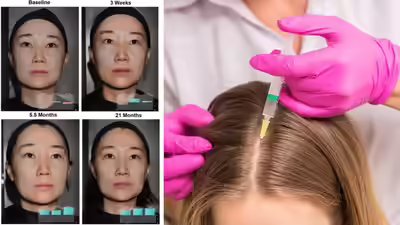
Exosome therapy is based on cellular communication. Exosomes are small vesicles that are released from various cell types and are made up of proteins, lipids, and nucleic acids that eventually alter recipient cells. Therapeutic exosomes are, in most cases, obtained from regenerative cells in culture, and then, after suitable processing, they are administered either topically or through a local injection in a clinical setting. Evidence of this mechanism is highlighted in such reports as Regenerative Skin Remodelling through Exosome-Based Therapy and Exosomes and Hair Regeneration, citing sustained biological changes of skin quality and hair growth parameters in extended observation periods, and thus suggests that exosomes may guide the behaviour of tissues rather than act as temporary cosmetic agents.
How exosome therapy improves skin texture, tone, and recovery
Whichever the case is, skin or scalp tissue, their cells penetrate with those fibroblasts, keratinocytes, melanocytes, and hair follicle cells that are involved in repair and regeneration and are, thus, the resident cells.Exosome therapy is a new technology whose potential is being realised in the fields of dermatology and aesthetics. It is supposed to support the process of skin repair, improve skin tone, and subdue inflammatory responses. The mechanism by which exosomes execute their function is not the surface but the cellular environment, where they change the behaviour of skin cells under stress, injury, or ageing. This has opened the door to their use in the recovery phase after surgical procedures, as well as in the treatment of chronic skin problems caused by inflammation or lack of healing.The various changes reported in the skin as a result of exosome therapy are:
- Smoothing of the overall skin texture, with increased action of collagen and elastin
- Reduction of chronic redness by supporting proper inflammatory signalling
- Gradual refinement of the pore appearance with improvement in the tissue organisation
- Moderation of hyperpigmentation by regulating melanocyte activity
- Supporting skin barrier recovery after aesthetic treatments
These effects tend to build up over time, which not only coincides with natural skin turnover cycles but also does not immediately result in any visible change.
How exosome therapy supports hair growth and scalp health
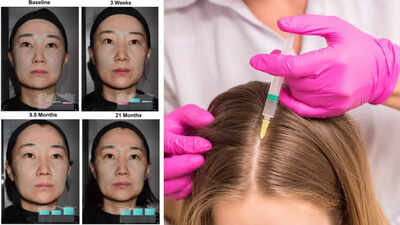
Regulation of hair growth is a complex process involving a number of signals between dermal papilla cells and surrounding follicular structures. Its disturbance is a feature in a variety of forms of alopecia and hair thinning that are generally recognised. Of late, exosome therapy has been explored for its influence on the follicular microenvironment to support healthier hair cycling and active follicles. Local exosome delivery, directly to scalp tissue, might convey growth-related signals; hence, exosomes are positioned as supportive, not replacement, therapies to established ones for hair loss.Clinical observations that may be related to exosome therapy for hair health are:
- Increased hair shaft thickness, which reflects improved follicle function
- A decrease in excessive hair shedding among the studied patient populations
- Improved scalp condition by modulating inflammatory pathways
- Support for hair density when follicles retain regenerative capacity
- Improved responsiveness of follicles to complementary treatments
Results depend on the origin of exosomes, the delivery route, and the cause of baldness.
Why do exosome therapy results vary between individuals?
Responses to exosome therapy can vary greatly among individuals, reflecting the intricacy of human biology. It is influenced by age, genetic predisposition, hormonal status, metabolic health, and environmental exposure, all factors that modulate how tissues respond to regenerative signals. In applications related to the skin, inflammation-driven skin concerns may respond differently from structural ageing associated with collagen loss. In hair applications, early-stage follicle miniaturisation may present different responses compared to longstanding follicular inactivity. These variables further underpin the importance of personalised assessment and expectation setting. Generally, exosome therapy represents a gradual, cumulative change rather than a rapid transformation, the pace of biological regeneration rather than cosmetic enhancement.
What are the safety and regulatory considerations for exosome therapy?
With regard to safe use, exosome therapy is considered to be free of major side effects if the products are obtained from reliable sources and the administration is done by experienced personnel. In the same way as they are acellular, exosomes cannot give rise to the pathological situations that are found in live cell therapy; however, quality control should always be maintained. Regulatory oversight continues to evolve as research expands and clinical use becomes more widespread.Major safety concerns for exosome therapy include:
- Importance of standardised sourcing and manufacturing process
- Requirement for practitioner expertise in methods of application
- Low incidence of reported adverse reactions when protocols are followed
- Ongoing assessment of long-term results through clinical research
- Regulatory variability across regions influences the clinical availability of the drug
In the context of regenerative aesthetics, exosome therapy represents an emerging frontier of evidence-based investigation, not a panacea, but rather one part of a larger platform of biologically inspired skin and hair management.Also Read | Dandruff is more than just poor hygiene; know what your scalp is telling you