What is döstädning: The Swedish death cleaning method that could completely transform your home and make life more organised |
Margareta Magnusson is the Swedish artist and writer who first brought the phrase “Swedish death cleaning” to the world stage. She rose to prominence due to her book The Gentle Art of Swedish Death Cleaning, where she explained the practice of getting rid of one’s things late in life to help one’s heirs cope with them after the person passes away. The practice, which has its roots in the Swedish term “döstädning,” was popularised worldwide due to its pragmatic perspective on aging and preparing for death.The concept of Swedish death cleaning became widely discussed in international media and was later incorporated into dictionaries and lifestyle discussions. Know in depth what is the concept and the woman behind the decluttering approach.
What is the concept of ‘Swedish death cleaning’
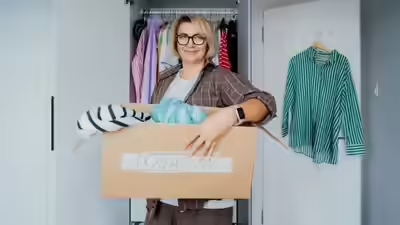
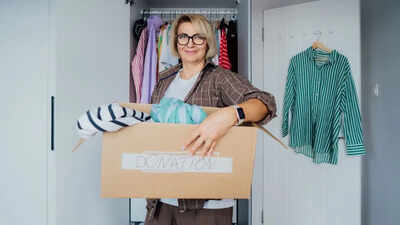
In Sweden, there is an activity called “döstädning” where the term “dö” refers to death and “städning” translates to cleaning. The beautiful process allows one to clean up unnecessary stuff and can be done regardless of your age but, of course, better when you start doing it earlier since the responsibility would then lie with someone else.In her book “The Gentle Art of Swedish Death Cleaning”, Margareta Magnusson shows how one should organize things in a funny and witty manner. This way not only can one arrange his or her possessions properly but also get a chance to talk with relatives in a meaningful manner.Magnusson advises to dispose of unnecessary clothing, unwanted gifts, unused objects around the house and, at the same time, to keep things that carry a particular meaning such as photos, personal letters or just some artworks from your childhood years. She does this by giving examples from her personal life where she cleans out the tools of her deceased husband or finds her hidden childhood souvenirs.
Tips to start start ‘Swedish death cleaning’ method
- Begin with non-emotional items
Start your decluttering journey with things that carry little or no emotional weight. The text highlights clothes, rubbish, and duplicate items as the easiest entry point. This helps you build confidence without feeling overwhelmed.
- Change the way you question items
Instead of asking, “Will I use this again?” shift your mindset to a more practical question: “If I didn’t already have this, would I go out and buy it again?” This makes it easier to decide what truly deserves a place in your home.
- Accept the emotional challenge
Letting go is not just physical but deeply emotional. The text emphasises that this is one of the biggest hurdles, so it’s important to recognise that feeling attached to belongings is natural.
- Take your time with sentimental objects
When you come across meaningful items, pause if needed. The example of finding paperwork linked to a beloved pet shows that it’s okay to reflect, remember, and process emotions before letting go.
- Use gradual, steady progress
Decluttering is not a one-day task. The writer describes multiple charity runs and ongoing effort, reinforcing that Swedish death cleaning is a slow, continuous process.
- Dispose of items responsibly
Be mindful of how you let things go. Recycling and donating to charity shops are highlighted as thoughtful ways to ensure items are reused and appreciated rather than wasted.
- Focus on reducing burden for others
A key motivation is not passing down clutter to family. Keeping this purpose in mind can make decisions clearer and more meaningful.
Margareta Magnusson’s Swedish death cleaning concept and ageing philosophy
The Gentle Art of Swedish Death Cleaning was written when Magnusson was in her eighties. The book outlined how individuals could approach decluttering in stages, starting with larger unused items and gradually moving towards smaller personal objects such as photographs and letters. The writing presented the method as an organised and deliberate activity carried out over time. The book was later published in multiple countries and translated into several languages, contributing to its international reach.Following the success of her first book, Magnusson published another work focused on ageing, titled The Swedish Art of Aging Exuberantly. The book included practical reflections on later life, presented in a straightforward style. Her ideas gained public attention due to their focus on simplicity, organisation, and preparation for ageing.
Who is Margareta Magnusson: Early life and artistic background
Margareta Magnusson worked as an artist before becoming a writer. She lived in Sweden and spent much of her life engaged in creative work. Her later writing drew on personal experiences and everyday observations, particularly those related to ageing, family life, and household organisation. She developed a perspective that connected practical living with long-term planning, which later formed the basis of her published work.Margareta Magnusson’s work contributed to broader conversations about ageing, organisation, and end-of-life planning. Her approach focused on reducing unnecessary accumulation of possessions and encouraging structured decluttering over time. The concept she introduced remains referenced in discussions about lifestyle management and ageing preparation.
Importance of Swedish death cleaning method
Döstädning has been popularised by Margareta Magnusson. The term döstädning is frequently misconstrued due to its name, even though it refers to a straightforward and effective method of arranging one’s life by progressively giving up unnecessary things that are no longer essential.In terms of importance, it is crucial since it provides a lot of ease to loved ones following an individual’s death. Loved ones are usually confronted with the challenging task of sorting through all their cherished belongings after someone dies. In this regard, döstädning makes it considerably simpler and easier for individuals to handle such circumstances.Furthermore, it enhances one’s daily life experience. The absence of extraneous objects from one’s house improves the quality of life. In addition, it makes life much more comfortable by eliminating the anxiety associated with cleaning the house. Thus, people may easily arrange their spaces when there aren’t any superfluous objects in their homes.