The art of no deal: Nuclear mistrust sinks Vance Mission
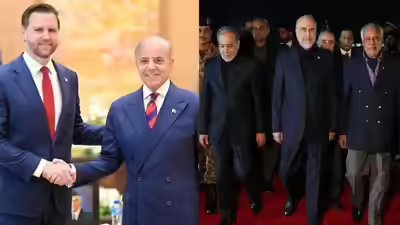
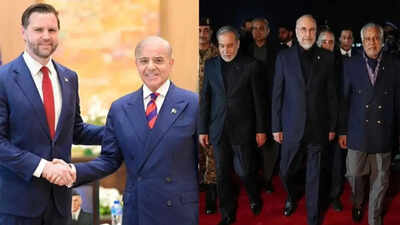
TOI correspondent from Washington: Washington and Tehran are returning to a crisis and confrontation mode — at the expense of rest of the world — after US vice-president JD Vance returned home empty-handed from his Mission Islamabad aimed at subjugating Iran into giving up its nuclear program. After almost a full day of talks in Pakistan, Vance acknowledged failure, striking a characteristically blunt note before he left Islamabad for Washington DC. “We’ve had a number of substantive discussions with the Iranians. That’s the good news. The bad news is that we have not reached an agreement,” he said in the early hours of Sunday, after all-night parleys with the Iranian delegation. “I think that’s bad news for Iran much more than it’s bad news for the United States of America,” the US veep added cryptically, underscoring the asymmetry of consequences that is seen as a warning to Tehran.Vance said Tehran had rejected Washington’s “final and best offer,” though he left the door ajar for future talks, before the two-week cease-fire expires on April 2. “We leave here with a very simple proposal: a method of understanding that is our final and best offer. We’ll see if the Iranians accept it,” the US veep said without providing specifics, while indicating Iran’s refusal to verifiably forswear nuclear weapons was the stumbling block. Iran, however, painted a very different picture of the impasse with its parliament speaker and leader of the delegation Mohammed Bagher Ghalibaf, saying the US was unable to gain the trust of the Iranian delegation in this round.” Earlier, Esmaeil Baqhaei, the spokesman for Iran’s foreign ministry, said in a post on social media that the talks spanned a wide range of issues — from the Strait of Hormuz and the nuclear question to sanctions relief, war reparations and a comprehensive ceasefire — but hinged ultimately on Washington’s willingness to recognise what Tehran called its “legitimate rights and interests.” These rights include a civilian nuclear program that Iran is entitled to as a signatory to the Nuclear Proliferation Treaty.Vance reiterated that Washington demands an “affirmative commitment” that Iran will neither pursue nuclear weapons nor retain the capacity to rapidly develop them. “We need an affirmative commitment — they will not seek a nuclear weapon, now or long-term. That’s President Trump’s core goal,” he said.Iran has long insisted it does not seek nuclear weapons — a position it maintains is consistent with both its strategic doctrine and prior international commitments — but refuses to relinquish what it considers its sovereign right to a civilian nuclear program. For Tehran, Washington’s demand appears less about weapons than about dismantling capability, a distinction that proved irreconcilable in Islamabad.A second fault line ran through regional security, particularly Iran’s network of allied middle east groups like Hezbollah and Houthis. US officials pressed for curbs on Tehran’s support for such proxies in Lebanon and elsewhere, demands Iran dismissed as “excessive” and beyond the scope of the current crisis.The most combustible disagreement, however, centered on the Strait of Hormuz. Iran has sought a greater degree of control over the international waterway, framing it as a matter of regional sovereignty and security. Washington, backed by allies and partners, views any such move as a direct threat to energy supplies and global economic stability.Tehran also pressed for the unfreezing of its overseas assets and raised claims for war reparations following recent US and allied strikes — demands Washington was unwilling to entertain in the absence of broader concessions.The failure of the talks casts immediate doubt on the durability of the tenuous ceasefire that had paused escalating hostilities. While neither side formally declared an end to the truce, the absence of progress — coupled with hardening rhetoric — suggests that renewed confrontation is a distinct possibility.Vance’s comments hinted at a belief in Washington that time is on its side. By stressing that the outcome is “bad news for Iran much more” than for the United States, he signaled confidence that economic pressure and military deterrence will eventually force Tehran back to the table on US terms. Iranian officials, by contrast, appear prepared for a prolonged standoff, betting that geopolitical realities — including global dependence on Gulf energy flows — will constrain U.S. options.Adding a layer of surreal contrast to the diplomatic drama was President Trump’s own schedule. Even as his vice president was engaged in high-stakes negotiations half a world away, Trump flew to Miami to attend a Ultimate Fighting Championship event bout — a spectacle critics often liken to choreographed brutality.Earlier, he had struck a tone of airy nonchalance in Washington, declaring the outcome of the talks largely irrelevant. “We win, regardless. We’ve defeated them militarily,” he said.The juxtaposition — peace talks in Pakistan and prizefighting in Florida — captured the paradox of a moment in which diplomacy and brinkmanship continue to collide, with consequences that could reverberate far beyond the region.
Poll
How likely do you think it is that the US and Iran will engage in another round of talks soon?
Financial markets in Asia are likely to react swiftly when trading opens Monday. Any threat to stability in the Strait of Hormuz typically triggers sharp spikes in oil prices, and analysts expect crude to surge on fears of supply disruptions. Equity markets, already sensitive to geopolitical risk, could see broad sell-offs, particularly in energy-importing economies.