
Nepal PM Balendra Shah Initiates Diplomatic Reset with 17 Envoys | World News
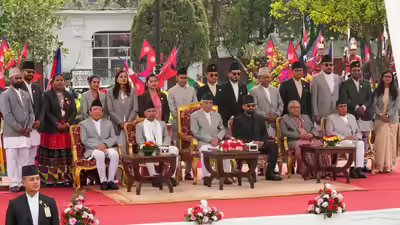
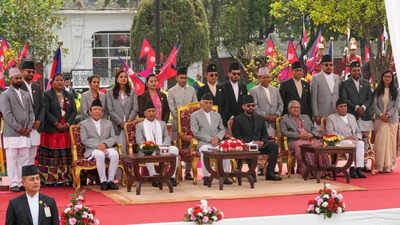
Prime Minister of Nepal (Photo credit: AP )
KATHMANDU: Nepal is committed to deepening relations with immediate neighbours, friendly countries and development partners based on “trust, mutual respect and shared prosperity,” Prime Minister Balendra Shah told a meeting of envoys, including from India, on Wednesday.In a departure from a long tradition of individual meetings, Shah held a joint courtesy meeting with as many as 17 Ambassadors and Heads of Diplomatic Missions based in Kathmandu at Singhadurbar, the prime minister’s office.The Prime Minister, who was sworn-in on March 27 after a landslide win in the general elections, met ambassadors and heads of missions from India, Pakistan, the Republic of Korea, the United Kingdom, Qatar, Switzerland, France, Israel, Japan, Bangladesh, Germany, Egypt, Sri Lanka, Saudi Arabia, China, the United States of America and the United Nations.The meeting took place on a day when all Cabinet ministers were briefed on Nepal’s foreign policy landscape and the diplomatic code of conduct.According to a foreign ministry statement, the foreign envoys conveyed greetings and messages from their respective heads of state/government during the meeting.“They also expressed support and cooperation to the new Government in delivering results for the benefit of Nepali people,” it said.Highlighting Nepal’s balanced and pragmatic foreign policy, Prime Minister Balendra Shah underscored the importance of deepening relations with immediate neighbours, friendly countries and development partners based on trust, mutual respect and shared prosperity, the statement added.Shah, popular as ‘Balen’, expressed appreciation for the continued goodwill and support extended to Nepal’s development efforts.Asserting that “peace must remain our shared priority,” the Prime Minister emphasised the importance the Nepal government attaches to the safety, security and well-being of Nepali workers and the larger Nepali diaspora.The Prime Minister also highlighted the government’s determination to ensure good governance, achieve economic development and improve the livelihood of Nepali people, the statement said.Reiterating policy continuity, the Prime Minister said a change in government does not signify a break from existing commitments, a media report said, adding, Shah emphasised the importance of maintaining political stability and ensuring a predictable policy environment.Foreign affairs minister Shisir Khanal and foreign secretary Amrit Bahadur Rai among other senior government officials were present on the occasion.Earlier, ahead of the prime ministerial meeting, foreign secretary Rai briefed all Cabinet ministers on Nepal’s foreign policy landscape and the diplomatic code of conduct – a protocol document that has existed since 2011 but has rarely been systematically enforced, The Kathmandu Post said.The briefing covered diplomatic etiquette, limitations on ministerial conduct in foreign policy, and technical norms governing meetings with foreign dignitaries, it added.“This is not a routine courtesy – it is closer to a strategic diplomatic reset briefing,” The Kathmandu Post quoted former Nepali army major general Binoj Basnyat as saying.The format of Wednesday’s joint meeting carried its own strategic message, Basnyat pointed out.Meeting all ambassadors together, rather than in a sequence that might suggest a hierarchy of relationships, sends a signal of neutrality at a moment of intensifying great-power competition in the region, he said. “Calling all ambassadors together is not routine – it’s a signal at a time of rising competition between India, China, and the US and the West,” he said.“The format matters because meeting everyone together means no visible tilt,” Basnyat added.