
March 2026 rains: How will the Western Disturbance impact the standing Rabi crop? Is it beneficial or harmful? |
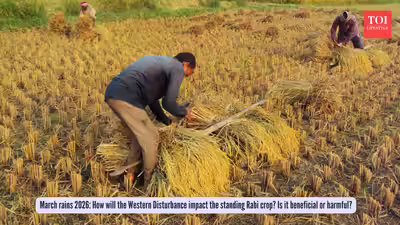
Nature can be a tricky partner for farmers, delivering gifts one season and disasters the next. In northern India, where vast fields feed millions, March usually means harvest time, a moment of relief after months of toil under the Sun and tending to the crops. But when unseasonal rains and snow arrive right at the time for reaping, it stirs a mix of worry and wonder about what’s best for the land and livelihoods.The recent change in the weather conditions with the arrival of unexpected rains and snow, Rabi crops like wheat stand tall, ready for the sickle, yet a sudden downpour can flatten hopes overnight.
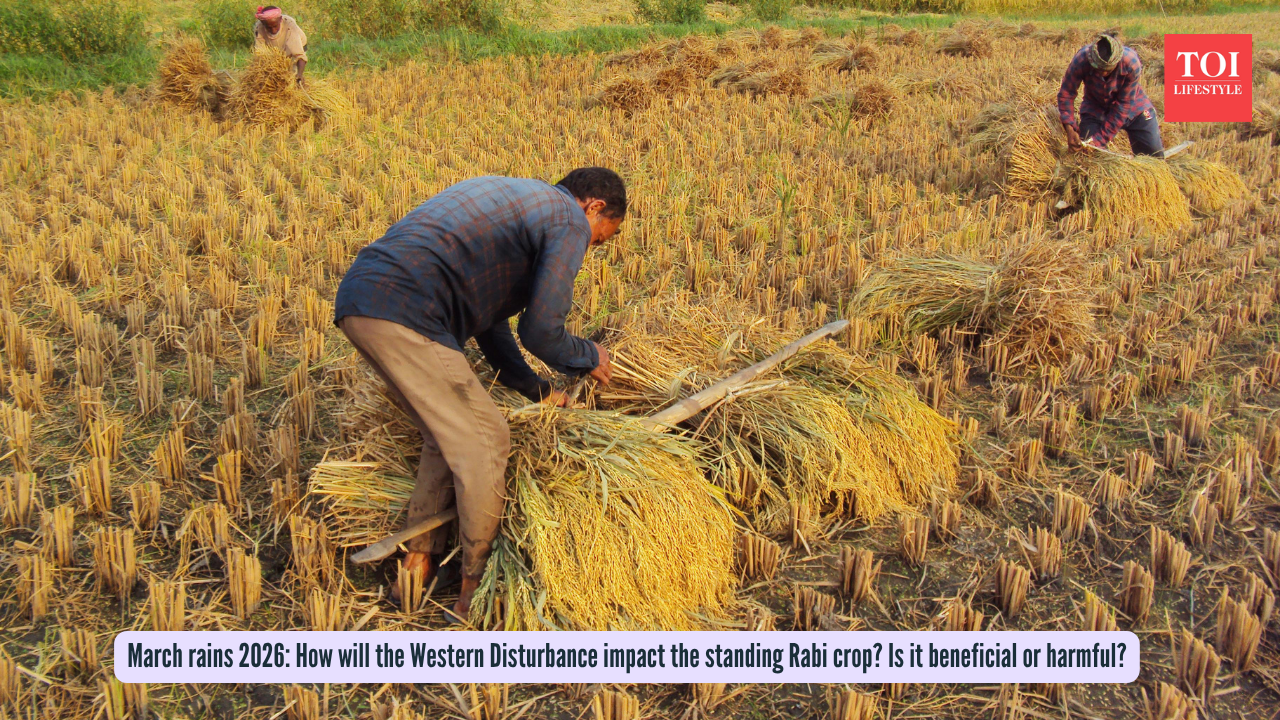
March rains 2026: How will the Western Disturbance impact the standing Rabi crop Is it beneficial or harmful ?
Why is there untimely rain in March this year?
A string of western disturbances, weather systems from the Mediterranean, has brought rain, snow, thunder, hail, and gusts to Himalayan states and nearby plains like Punjab, Haryana, Delhi, and Uttar Pradesh.Devendra Tripathi of MausamTak noted these are creating pre-monsoon vibes, with showers likely until March 21 across the Western Himalayas, Delhi, UP, Rajasthan, Punjab, Haryana, Odisha, Bihar, and Telangana. “The weather will get calmer for a day and then dark clouds will return by March 24,” he added. A fresh system is approaching northwest India starting the night of March 17.“Farmers and farmers will face a threat from this rain,” Tripathi said, though it offers cooling relief.
These rains might cause harm to the Rabi Crops at harvest
March marks the prime harvest for Rabi crops, sown in winter, reaped in spring, like wheat, mustard, gram, and potato, leaving them vulnerable. Moderate rain eases heat stress, but fierce winds and hail flatten maturing stalks, while wet harvested piles rot and sprout fungus.Rajiv Kumar Singh, principal scientist at Indian Agricultural Research Institute (IARI), explained that hail and rain can “damage crops like wheat and mustard.”Even standing crops risk lodging from gusts. Past hits: 2023 saw Punjab-Haryana rain exceed norms by 200% March-April; 2024 storms battered Bathinda, Ludhiana, Patiala, and Amritsar. UP has already reported losses in wheat and mustard across 25 districts, like Gonda, Shravasti, and Barabanki, according to the Wire report.
This could cause crop loss and price hikes
When crops suffer damage, prices for everyday staples, vegetables, and fruits climb higher, putting pressure on family budgets through rising food inflation. India could see up to 10% losses if more rain hits on March 24, along with increased pest problems requiring extra pesticides.In 2022, an unusually hot March cut wheat production well below the 111.32 million tonne target. Rains and heat in 2023-24 further depleted stocks. The IMD warns of continued risks ahead. Farmers should stay vigilant, protect harvested stacks with covers, and speed up harvesting where possible.This late, unseasonal weather highlights climate change’s heavy impact, winter rain that’s helpful early on becomes a real threat right at harvest time.