
Lab Grown Diamonds: Science behind the lab-grown diamonds: How centuries of failed experiments led to affordable gems |
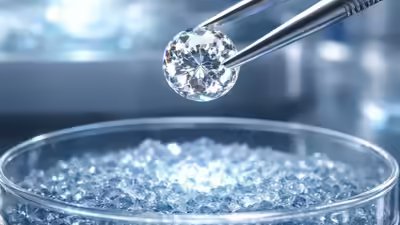
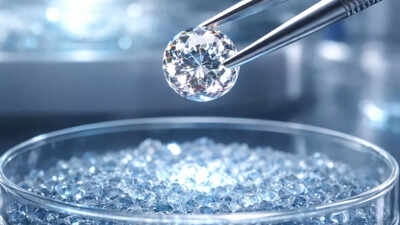
Lab-grown diamonds feel like a modern miracle! Stones that look just like the real thing, but without the astronomical price tag. And the story behind them is surprisingly long. Humans have been fascinated with replicating diamonds for centuries, ever since Antoine Lavoisier identified them as pure carbon in the 18th century. From early experiments in high-pressure ovens to modern labs humming with high-tech machines, the journey has been slow but steady.Today, these diamonds are not just cheaper but ethically sourced, eco-friendly, and increasingly preferred by younger buyers. But getting here took decades of trial, error, and some genuinely clever science.
How lab-grown diamonds evolved from centuries of failure
People tried making diamonds almost as soon as they knew what they were. In the 19th century, there were all sorts of wild claims. H.G. Wells even wrote about it in The Diamond Maker in 1894. The story involved high temperatures and pressure, and it’s oddly close to what later scientists would actually do. Still, it wasn’t until the 1950s that real, verified lab-grown diamonds appeared.General Electric (GE) kicked things off in 1954 under something called “Project Superpressure.” Using tiny seed crystals, high heat, and extreme pressure, they managed to turn graphite into diamonds. The first crystals were too small for jewellery, so they mostly went into industry. Around the same time, Sweden’s ASEA reportedly grew a few tiny crystals, but they kept it quiet.
Evolution of lab-grown diamonds: from early experiments to modern CVD technology
By the 1970s, GE figured out how to make stones big enough for rings and earrings. Early samples sent to the Gemological Institute of America (GIA) were 0.26–0.30 carats, often yellowish and with inclusions. Not exactly flawless, but a start. Scientists discovered nitrogen caused the yellow tint. Adjustments over the next few decades allowed for clearer, colourless diamonds. Then, labs in the US, Russia, and China started producing stones that could rival or even exceed natural diamonds in size and clarity.These days, most lab-grown diamonds come from chemical vapour deposition (CVD). Instead of crushing graphite under extreme pressure, carbon gas coats a tiny seed crystal in a chamber, slowly building a gem. It’s more controlled, more predictable, and cheaper than high-pressure methods. Some labs can now grow dozens of diamonds at once. Reportedly, the cost to make a diamond has dropped from thousands to just a few hundred dollars per carat.
Impact of lab-grown diamonds on the traditional diamond industry
According to the International Gem Society, lab-grown diamonds reportedly cost 40–50% less than natural ones. Mining is expensive, complicated, and messy. Labs are neat, controlled, and fast. Fewer middlemen, fewer markups. Technology keeps improving, and there’s no ‘rarity premium.’ Younger buyers in India and elsewhere seem especially drawn to them, not just for price, but for ethical sourcing and environmental concerns. Some still worry ‘cheap’ might mean lower quality, but certified stones from trusted labs are real diamonds, just grown differently.Lab-grown diamonds are no longer just a novelty; they are part of the mainstream market. They combine sparkle, ethics, and affordability. And, for many buyers, that mix is irresistible. It might not replace mined diamonds entirely, but it’s certainly rewriting the rules of the game.