India-EU FTA: Deal set to be signed today; why it’s being called the ‘mother of all deals’
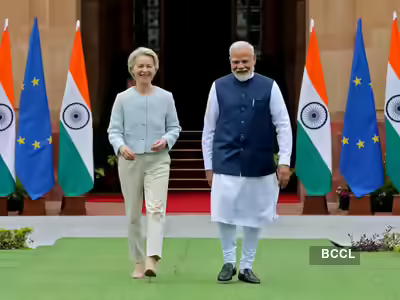
India-EU FTA: After almost two decades of negotiations, India and the European Union are set to sign the Free Trade Agreement on Tuesday. Announcement for the FTA, which both sides have referred to as the ‘Mother of all deals’, is expected at the EU-India summit. Ahead of the Summit, European Commission President Ursula von der Leyen highlighted the importance of the partnership, saying, “India and Europe have made a clear choice. The choice of strategic partnership, dialogue and openness. Leveraging our complementary strengths. And building mutual resilience. We are showing a fractured world that another way is possible.” European Council President Antonio Costa said, “India is a crucial partner for the EU. Together, we share the capacity and responsibility to protect the rules-based international order.”Here’s why India-EU trade deal is the ‘Mother of all deals’:
- The upcoming Free Trade Agreement has been dubbed the ‘mother of all deals’ due to the growing economic and strategic partnership between the two nations. At present, India and the EU together account for nearly one-fifth of global trade and about 25% of the world’s population.
- The FTA is expected to help India regain competitiveness after the EU started withdrawing tariff concessions under the Generalised System of Preferences in 2023 on products such as garments, pharmaceuticals and machinery, while also cushioning the impact of higher US tariffs. India is also seeking greater access for its professionals and the export of IT services.
- At the same time, EU’s shipments to India face significantly higher barriers, with a weighted average tariff of around 9.3% on goods worth $60.7 billion in 2024/25. Duties are especially high on automobiles, auto components, chemicals and plastics, Reuters reported. Cutting tariffs would create opportunities in cars, machinery, aircraft and chemicals, while also improving access to services, public procurement and investment in one of the world’s fastest-growing large markets.
- Investment ties: Speaking at the India Energy week, PM Modi said that the country’s energy sector offers $500 billion investment opportunities. In 2024, the EU’s
foreign direct investment in India stood at over €132 billion, positioning the bloc as India’s leading foreign investor. - The two nations have seen their bilateral goods trade has doubling over the past ten years. EU imports from India recorded a growth of 140%, while EU exports to India rose by 58%. The EU is currently India’s second-largest trading partner in terms of trade goods, accounting for 11.5% of India’s total goods trade. Back in 2024, EU-India goods trade crossed €120 billion. EU’s imports from India were valued at €71.4 billion, while exports to India amounted to €48.8 billion.
- The services sector has also recorded strong growth, with trade between the EU and India more than doubling over the past decade. Services trade crossed €66 billion, comprising over €37 billion in EU imports and around €29 billion in exports. Over the last ten years, services trade has expanded by 243%, with key areas including telecommunications, computer and information services, professional and management consulting, and transport services.
India-EU trade
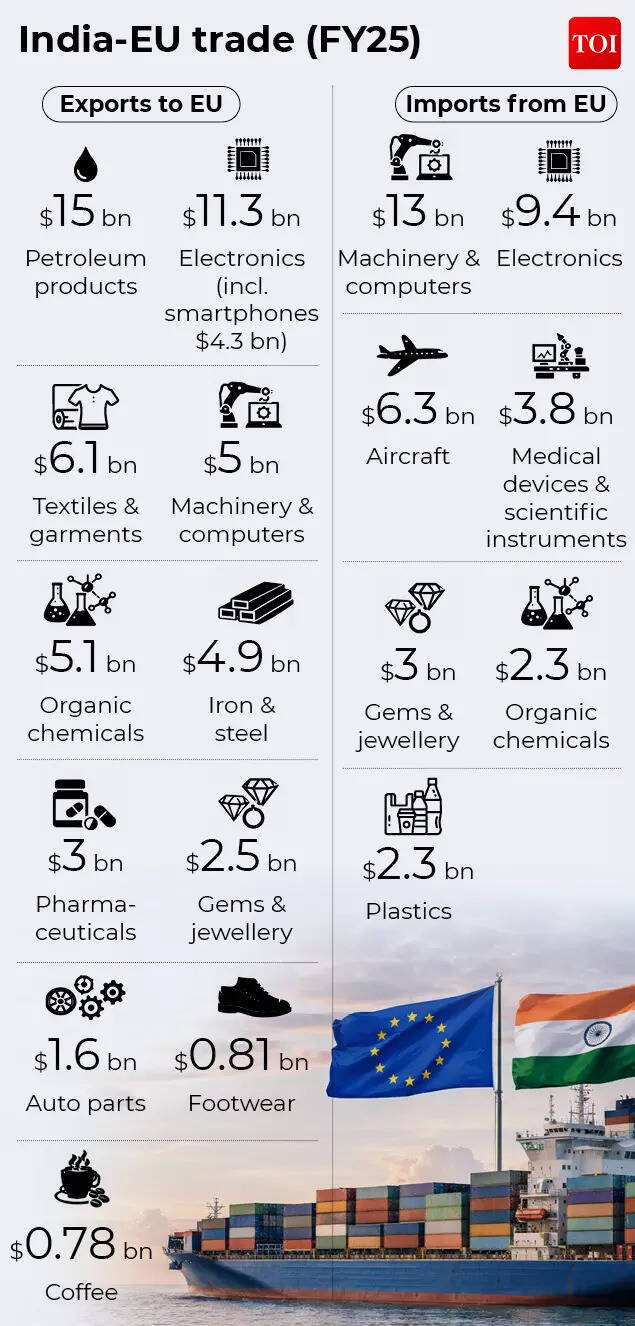
EU’s exports to India majorly consist of machinery and appliances, transport equipment and chemicals. At the same time, the bloc’s imports from India machinery and appliances, chemicals and fuels dominate EU imports from India. Negotiations for the free trade agreement were relaunched in June 2022, alongside parallel talks on investment protection and geographical indications. The trade discussions aim to remove barriers, boost exports and open up services, reinforcing the economic foundation of the India-EU partnership.